


The magic trick of 1950s appliance ads was not that they made a refrigerator look cold, a washer look sturdy, or an oven look hot. It was that they made household machines feel like proof that the future had finally entered the kitchen. A gleaming door, a push-button dial, a freezer compartment, a pastel enamel finish: these were not just product features. They were emotional cues. They told families that modern life could be cleaner, calmer, faster, and more respectable.
That promise landed at exactly the right cultural moment. After wartime scarcity and years of postponed purchases, the postwar home became a stage for optimism. Suburbs expanded. Credit loosened. Kitchens grew more coordinated. Manufacturers did not simply introduce appliances as tools; they framed them as the visible machinery of a better life.
Why 1950s appliance ads made machines feel miraculous
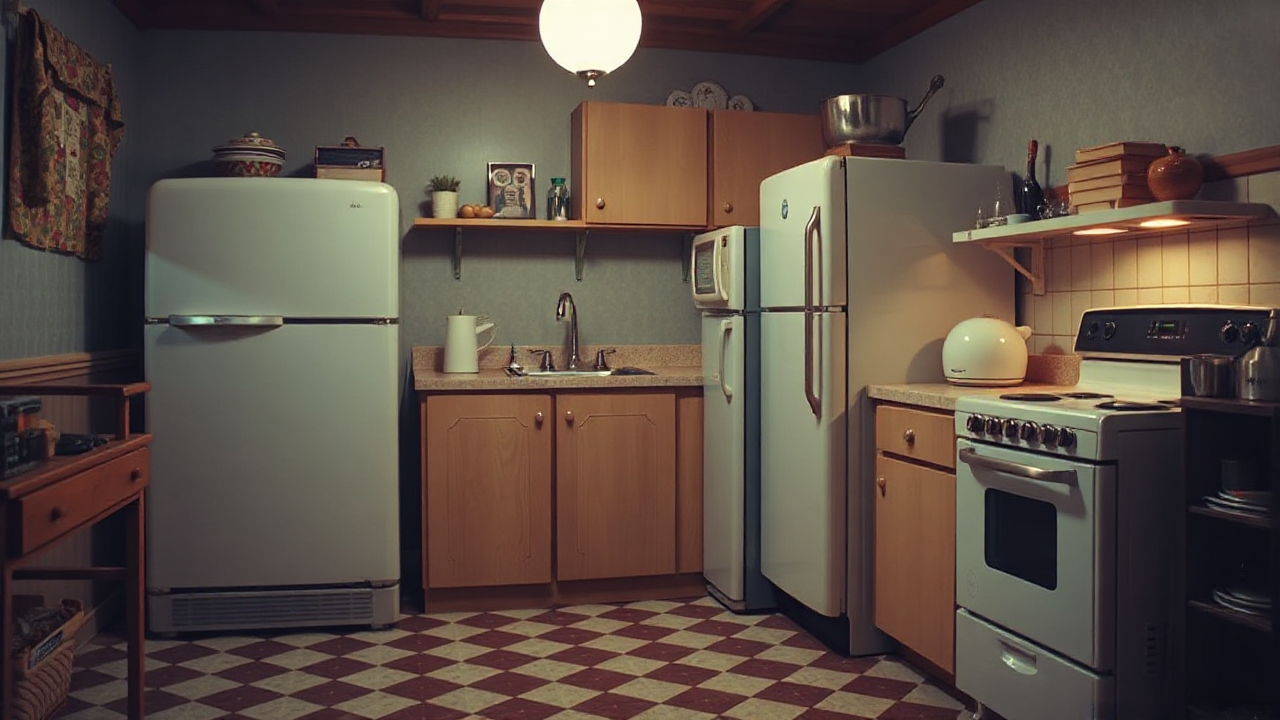
The word “miracle” shows up so often around mid-century appliances because the ads needed to translate engineering into emotion. A refrigerator compressor or automatic washing cycle was not especially romantic on its own. But a mother opening a spotless refrigerator packed with fresh food? A woman smiling beside a washer while wearing a crisp dress instead of looking exhausted? A roast sliding from a futuristic oven as guests arrive? That was the miracle.
The miracle was control.
In 1950s appliance ads, domestic labor was still largely presented as women’s work, but the machines promised to soften that labor with modern efficiency. The copy often leaned on phrases like “saves hours,” “does the work for you,” “automatic,” “no more drudgery,” and “at the touch of a button.” The deeper message was not merely that chores would be easier. It was that the household itself could be managed with the confidence of a small, gleaming command center.
These ads sold three ideas at once:
- Freedom: less time scrubbing, wringing, checking, defrosting, reheating, or worrying
- Efficiency: more predictable routines, fewer mistakes, better storage, faster meals
- Status: a home that looked modern enough to belong to the new middle class
That combination was powerful because it turned appliances into identity objects. Buying a washer was not only about laundry. It was about becoming the kind of household that had moved beyond old-fashioned inconvenience.
The postwar kitchen as a showroom for progress
The classic 1950s appliance ad rarely looked like a working kitchen in the messy sense. You do not usually see crumbs, damp towels, dented pans, tired faces, or a child melting down in the corner. Instead, the room is staged like a showroom with domestic props: a cake cooling perfectly, a pitcher of milk, a bowl of fruit, a smiling child, a husband admiring the result from a respectful distance.
That idealized setting mattered. The appliance was not floating in a void. It belonged to a world.
Manufacturers understood that consumers were not just evaluating capacity, cycle speed, or oven temperature. They were imagining themselves into a version of home life. Ads often used wide, tidy compositions that let the kitchen feel spacious and orderly. Counters were uncluttered. Cabinets matched. Floors shone. The appliance’s finish harmonized with the room, turning a machine into decor.
The visual language borrowed from both science and fantasy. Chrome edges suggested precision. Rounded corners made machines feel friendly rather than industrial. Pastel colors softened the hardware. Open doors revealed abundance: trays, bins, shelves, compartments, and neatly arranged food. The message was unmistakable: modernity did not have to look harsh. It could be cheerful, feminine-coded, and family-safe.
This is one reason these ads remain so visually sticky. They capture a moment when technology was domesticated through design. The future arrived wearing turquoise enamel.
Refrigerators sold abundance, safety, and social confidence
Among the great stars of 1950s appliance ads, the refrigerator may have been the most symbolic. It promised a new relationship with food: fresher, safer, more plentiful, and more organized. The open refrigerator shot became a genre of its own. Inside, every shelf looked like a small museum of prosperity.
The visual strategy was simple but effective. Show the door open. Show the interior bright. Show food in abundance. Then let the viewer connect the dots: this machine protects the family, stretches the grocery budget, and makes the homemaker look competent.
Refrigerator ads often emphasized features that seem ordinary now but felt exciting then:
- Separate freezer compartments
- Adjustable shelves
- Crisper drawers
- Butter keepers and egg storage
- Larger capacity for growing families
- Less frost, less maintenance, more convenience
But the emotional pitch ran deeper than storage. The refrigerator was a promise against scarcity. In the postwar imagination, a full fridge suggested stability. It meant the household was prepared. It meant a mother could serve cold drinks to guests, keep leftovers safely, and offer children variety. It turned food management into a visible sign of care.
The best refrigerator ads also played with status anxiety. If the neighbors had a newer model with more shelves, brighter lighting, or a stylish exterior, your own kitchen could suddenly feel behind the times. Modern convenience became competitive. A refrigerator was not hidden in a utility room; it stood in the kitchen like a badge.
Washers turned drudgery into “automatic” freedom
If refrigerators symbolized abundance, washing machines symbolized rescue. Laundry was physically demanding, repetitive, and time-consuming. The washing machine ad did not have to invent the pain point. Everyone knew it. The task was to dramatize escape.
That is why so many washer ads lean into the word “automatic.” Automatic sounded almost magical. It suggested that the machine had crossed a threshold from tool to helper. The homemaker no longer had to wrestle with washboards, tubs, wringers, or endless monitoring. She could load, set, and step away.
Of course, the ads often exaggerated the freedom. Laundry did not disappear. Sorting, carrying, drying, folding, ironing, and putting away clothes remained. But advertising does not sell the whole chore. It sells the moment of relief.
Visually, washer ads frequently showed women who were too polished to have just completed a hard household task. That was the fantasy. The machine preserved composure. Instead of sweat and strain, the viewer saw a dress, heels, a smile, maybe a hand resting lightly on the lid. The washer was presented as an ally that protected femininity from fatigue.
This is where the gender politics of 1950s appliance advertising become hard to miss. The ads promised liberation inside a narrow domestic frame. They rarely questioned who should be responsible for laundry. Instead, they offered a better machine for doing it. Freedom meant more time, but usually more time to be a better wife, mother, hostess, or household manager.
That contradiction gives these ads their strange charge today. They are both genuinely excited about labor-saving technology and tightly bound to an ideal of domestic performance.
Ovens and ranges made cooking look effortless, elegant, and scientific
The 1950s oven and range ad brought together two fantasies: the warmth of traditional home cooking and the precision of modern engineering. The meal still mattered. The family table still mattered. But now the cook had dials, timers, thermostats, windows, lights, and sometimes push-button controls that made the process feel almost laboratory-perfect.
Oven ads loved the reveal. A spotless door opens. A roast appears browned just right. A cake rises without drama. A casserole emerges in a dish that looks too clean to have been anywhere near bubbling cheese. The image reassures the viewer that modern appliances can remove uncertainty from cooking.
Copy often promised even heat, automatic timing, faster meals, and fewer failures. The oven became a confidence machine. It helped the homemaker serve not just food, but proof of skill. If a washer saved her from drudgery and a refrigerator helped her manage abundance, the oven helped her perform hospitality.
The styling also mattered. Ranges with sleek control panels and matching finishes looked less like inherited iron workhorses and more like cockpit equipment for the domestic age. A push-button range could make dinner feel futuristic without threatening the sentimental value of a home-cooked meal.
That balance was central to the advertising: modern enough to feel exciting, familiar enough to feel emotionally safe.
The copy promised time, but sold emotional permission
The most obvious promise in 1950s appliance ads is time-saving. But the ads were rarely just about minutes and hours. They were about what saved time supposedly allowed a woman to become.
She could be calmer. She could be prettier. She could be more attentive to her children. She could entertain without panic. She could keep a spotless home and still appear relaxed. In other words, appliances were sold as permission to meet impossible standards with a smile.
The copy frequently made ordinary household stress feel solvable through a purchase. If meals were late, laundry was endless, or groceries spoiled too quickly, the problem was not the structure of domestic expectations. The problem was that the home lacked the right modern machine.
That framing made convenience emotionally necessary. A new appliance was not a luxury splurge; it was the rational solution to being overworked, embarrassed, or behind the times. The ads often pushed that feeling with lines built around urgency: now, at last, finally, today, no more, never again.
Those words mattered. They made domestic modernity feel like a threshold. Before the appliance: struggle. After the appliance: ease.
Status was hidden in plain sight
The status pitch in 1950s appliance advertising was rarely subtle, but it was often wrapped in practical language. Bigger capacity meant you were a smart shopper. Matching appliances meant you had taste. A newer model meant you cared about your family. A coordinated kitchen meant the household was successful enough to keep up.
This is one reason appliance ads worked so well alongside broader mid-century consumer culture. The postwar home was becoming a canvas for aspiration. Cars, televisions, furniture, packaged foods, and appliances all participated in the same story: the good life could be purchased, arranged, and displayed.
For more on how older campaigns still shape modern creative instincts, Tavern Cellar’s piece on retro ads as creative fuel for modern content teams is a useful companion. The appliance category is a perfect example because the ads did not simply describe products. They built worlds around them.
Appliance advertising also overlapped with food marketing. A better refrigerator made the modern breakfast possible. A better oven made convenience cooking respectable. A cleaner kitchen made packaged goods feel like part of an efficient household system. That same family-centered persuasion shows up in 1950s cereal ads and the parenting pitch behind breakfast, where breakfast becomes less about cereal alone and more about care, routine, and parental competence.
The ideal home scene did the hardest selling
What makes these ads so revealing is how much persuasion happens before the copy is read. The viewer sees the room, the posture, the colors, the family arrangement, and the appliance’s shine. The emotional conclusion arrives almost instantly: this is what a modern home should look like.
Common visual cues did enormous work:
- The smiling homemaker: calm, competent, and visibly approved by the product
- The admiring family: children and husbands as witnesses to successful domestic management
- The open appliance door: proof of abundance, cleanliness, and technical sophistication
- Pastel and chrome finishes: softness plus modernity in one design language
- Spotless surfaces: the fantasy that machines reduce mess without creating new work
- Coordinated rooms: appliances as part of a complete lifestyle, not isolated purchases
These scenes did not reflect everyday life so much as discipline it. They offered a model to chase. The kitchen became a moral space where love, efficiency, taste, and status were measured in shine.
That is why 1950s appliance ads can feel charming and unsettling at the same time. They are beautiful little engines of persuasion. They celebrate real technological improvements while quietly raising the bar for what a “good” home should provide.
Why the miracle still resonates
Today, refrigerators, washers, and ovens are ordinary to the point of invisibility. We complain when they break, compare energy ratings, and maybe admire a sleek finish, but we rarely treat them as miracles. Looking back at 1950s appliance ads restores the shock of newness.
These campaigns remind us that convenience is never only practical. It is emotional. The promise of “less work” often carries another promise underneath: less anxiety, less embarrassment, less falling behind. That deeper promise still drives advertising now, whether the product is a smart fridge, a meal kit, a robot vacuum, or an app that claims to organize your life.
The mid-century appliance ad perfected a persuasive pattern that has never really disappeared:
- Identify a daily frustration.
- Show a product that makes the frustration vanish.
- Place the product inside an aspirational lifestyle.
- Suggest that adopting it is the sensible, modern, loving thing to do.
That formula is part of why retro ads still work. The surface details age: the dresses, the fonts, the turquoise kitchens, the chrome trim. But the emotional machinery remains familiar.
The shine was never just shine
The lasting fascination of 1950s appliance ads comes from the way they made machines feel intimate. A refrigerator was not only cold storage. A washer was not only a motorized tub. An oven was not only a heated box. Each appliance became a character in the story of the modern home: helpful, reliable, attractive, and quietly status-bearing.
The ads sold domestic modernity by making convenience feel morally and emotionally necessary. They told families that the future could live in the kitchen, that technology could protect love from labor, and that a better machine might produce a better day.
Of course, the promise was selective. It simplified work, gender, class, and family life into polished scenes of effortless success. But that is exactly why the ads are worth studying. They show us not only what companies wanted to sell, but what a culture wanted to believe about progress.
Which vintage refrigerator, washer, or oven ad sticks in your mind? Share your favorite examples, odd details, or strong opinions in the comments — the shinier and stranger, the better.