
Retro beer ads and the code of mid-century manhood
The smartest retro beer ads never seemed to sell beer first. They sold a feeling: that a man who had earned his place in the world would know where to stand, what to hold, and who to share it with. In the postwar decades, beer advertising wrapped masculinity, leisure, and sociability into one tidy visual promise. A cold bottle was never just a drink. It was a signal that the workday was over, the weekend had begun, and adulthood came with a specific set of rituals.
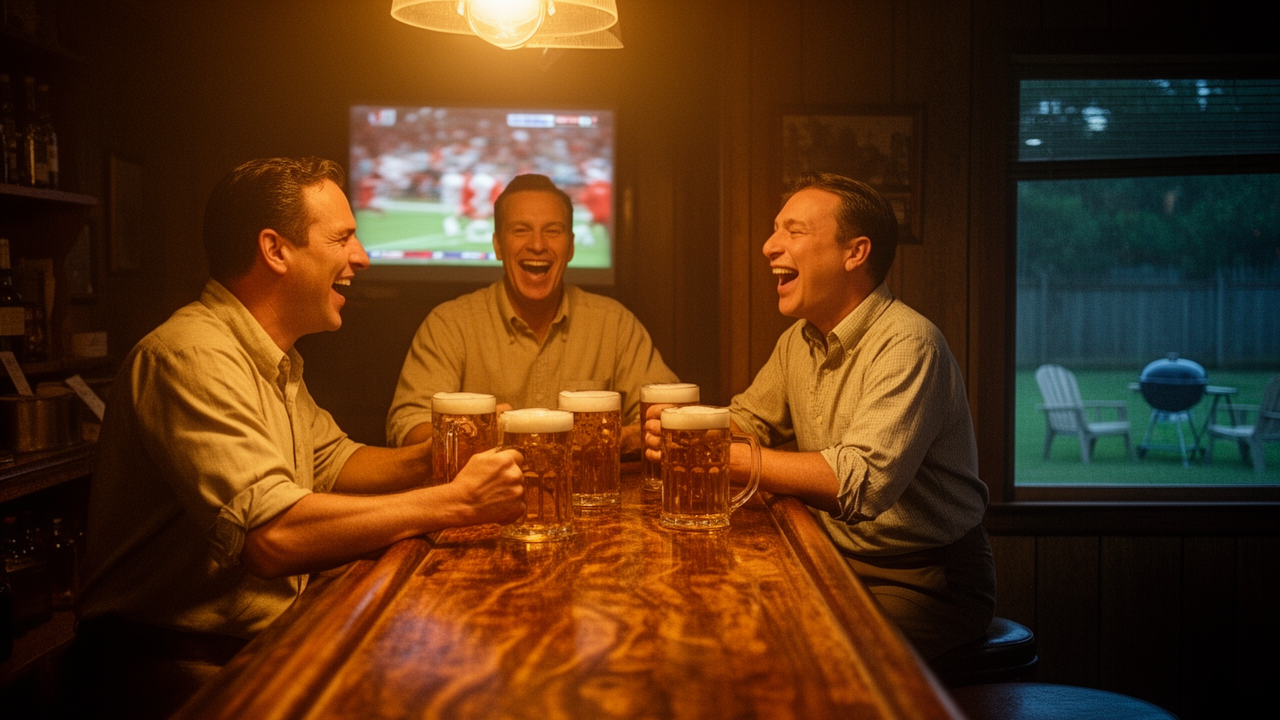
What made these ads so effective was not subtlety. It was repetition. Again and again, they returned to the same settings and cues: taverns with glowing back bars, backyard grills with smoke curling into summer air, men clustered around radios or televisions for the game, and a friendly refusal to show women as the main audience. The message was simple enough to read at a glance: this is what belonging looks like.
How retro beer ads framed masculinity as a social performance
Mid-century beer advertising understood that masculinity is rarely presented as a private trait. It is performed in public, measured by posture, confidence, and group approval. The ads translated that performance into easy-to-spot visual shorthand.
You see it in the way men are posed:
- Shoulder to shoulder rather than face to face, as if conversation is less important than mutual recognition
- Relaxed but sturdy, with wide stances and bent elbows that suggest ease without softness
- At work-adjacent moments of transition, like after mowing the lawn, closing the garage, or finishing a shift
- Rarely alone, because solitary drinking would weaken the social code the ads wanted to protect
The men in these ads are often in motion, but not in a hurry. They lift glasses, lean against railings, flip burgers, or pass bottles across a table. Each gesture says the same thing: competence without fuss. Beer becomes the accessory that confirms they have entered the adult world on the right terms.
That is one reason retro beer ads feel so culturally revealing. They did not invent masculinity, but they helped standardize an image of it: calm, capable, and always one handshake away from fellowship.
The recurring settings that made beer feel like belonging
Beer advertisers did not need a new setting every season. They needed a few strong stages where social life could keep repeating itself. The best-known backdrops were less about realism than ritual.
The tavern as clubhouse
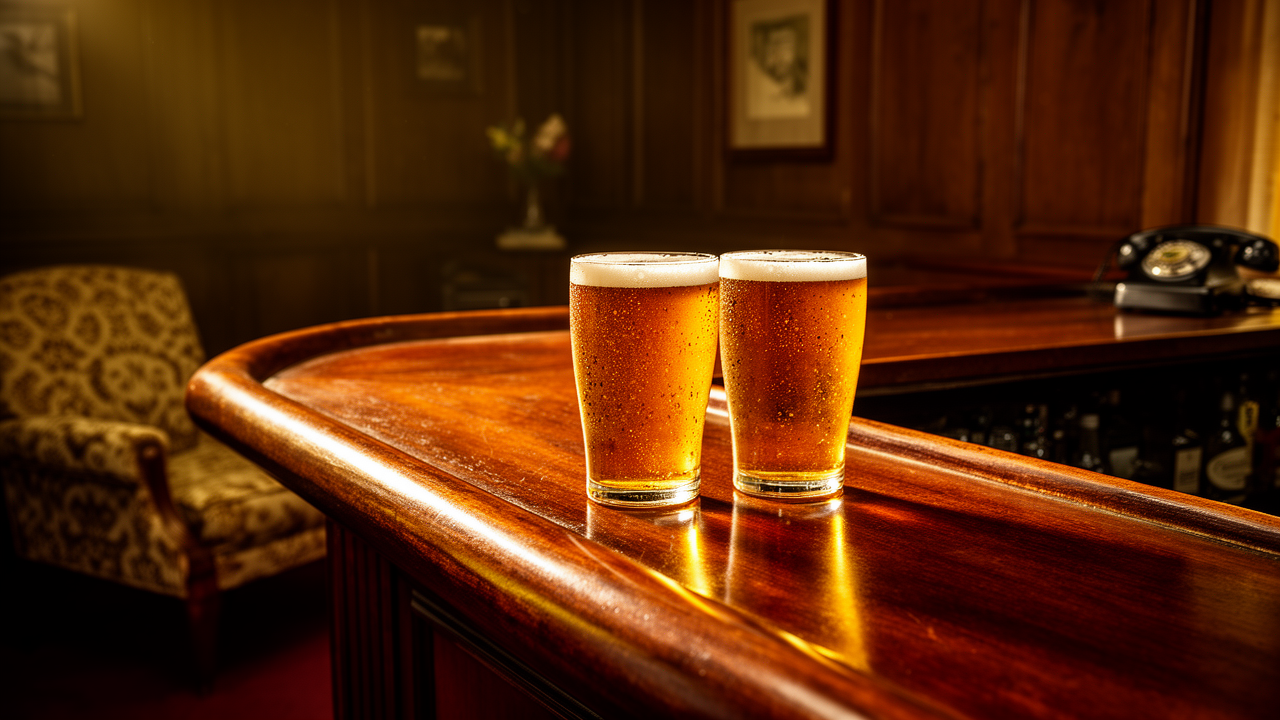
The tavern was one of the most reliable spaces in beer advertising because it solved several problems at once. It gave men a place to gather after work, a place where conversation seemed effortless, and a place where the beer itself looked native to the environment. Wood paneling, brass fixtures, bar stools, and a glowing tap handle all worked together to make the room feel like a private club with public access.
The visual tone was warm rather than rowdy. These were not ads for chaos. They were ads for a controlled, socially approved version of release. The tavern stood in for male friendship made respectable.
The backyard grill as domestic territory
If the tavern was public brotherhood, the backyard grill was its suburban cousin. Here the man of the house moved from employee to host. He handled the tongs, checked the charcoal, and accepted compliments as if he had personally authored the whole evening.
That shift mattered. Beer advertising used the grill to suggest that male leisure could be productive. Cooking outside was not domestic labor in the conventional sense; it was a masculine performance of command over fire, timing, and appetite. The message was that a man could be relaxed and in charge at the same time.
The sports space as proof of shared feeling
Sports ads gave beer a ready-made emotional rhythm. The game supplied suspense, the crowd supplied energy, and beer supplied the acceptable form of celebration. Whether the scene was a radio broadcast, a living room television, or a stadium-facing gathering, the logic stayed the same: beer belonged at the moment when collective feeling became socially legible.
Sports also allowed advertisers to borrow credibility from ritual. A game has rules, teams, loyalties, and recurring seasons. Beer advertising wanted to seem equally natural, as if cracking open a bottle during the big game were not a choice but a tradition.
Why beer ads leaned so hard on leisure
Postwar beer marketing was not just trying to make drinking appealing. It was trying to make leisure itself look earned, organized, and masculine.
This is the deeper trick behind retro beer ads: they present leisure as a reward for responsibility. The worker has done his part. The homeowner has finished the chores. The fan has endured the week. Now comes the sanctioned pause. Beer is the punctuation mark at the end of obligation.
That structure mattered in the 1950s and 1960s, when middle-class life was increasingly organized around schedules, suburbs, and consumer rituals. Advertisers knew that adults did not simply want alcohol; they wanted a script for how to enjoy it. Beer became a shorthand for the end of effort and the beginning of ease.
The ads also softened leisure by making it communal. Nobody is meant to drink into isolation. Instead, beer is shown as the lubricant of easy conversation, shared jokes, and mutual recognition. It is less about intoxication than about social permission.
The visual grammar: sleeves rolled up, smiles measured, bottles chilled
The power of these ads lives in small details. The imagery does a lot of heavy lifting, often before any slogan enters the picture.
Common cues include:
- Rolled-up sleeves that signal work completed or work about to begin
- Foamy mugs and sweating bottles that imply coldness and freshness without needing product jargon
- Grills, tools, lawn furniture, and folding chairs that ground the scene in familiar postwar life
- Smiles that look relaxed, not ecstatic, because the point is ease rather than frenzy
- Clean, well-kept settings that suggest respectability, not rebellion
The ad style was rarely messy. Even when it celebrated camaraderie, it kept the frame orderly. That mattered because beer had to remain respectable enough for the family magazine, the sports page, and the evening television break. The imagery reassured viewers that drinking could be part of ordinary adulthood, not a detour from it.
This is also why the ads often feel emotionally restrained. They are not selling wildness. They are selling controlled pleasure. The beer is cold, the men are good-natured, and the social world is intact.
What the ads promised about postwar sociability
At the center of the campaign was a bigger promise: that postwar life could still feel neighborly, casual, and connected despite its new routines.
After the war, American culture prized stability. The suburbs expanded. Work became more segmented. Home life became more idealized. In that environment, beer advertising offered a portable version of fellowship. If the modern world was increasingly private, beer ads suggested a way to recreate the old pleasures of public sociability.
They did this by presenting drinking as a social adhesive. A bottle on the table meant the conversation would keep going. A six-pack on ice meant the guests would stay. A round of beer meant the night had found its shape.
The ads also framed sociability as male-coded competence. Good hosts had beer ready. Good friends brought beer. Good fathers knew the right brand for the backyard gathering. The result was a world where belonging was not abstract; it was served chilled.
The gender politics hiding in plain sight
It is easy to read these ads as harmless nostalgia, but they also reveal how narrow the era’s ideas of adulthood could be. Women appeared, when they appeared at all, as decorators of the social scene, not the defining audience for the product. The emotional center of gravity remained male.
That did not mean the ads were always hostile to women. Sometimes they positioned beer as the drink that fit a household or party. But the identity being built was unmistakably masculine: the man as host, fan, worker, and relaxed authority figure.
The exclusion was part of the appeal. Beer advertising sold a version of adulthood that felt clear, bounded, and culturally approved. If you knew where you stood, and you knew which brand belonged in your hand, you were participating in a shared social order.
Why these images still linger
The staying power of retro beer ads has less to do with beer than with the social fantasy they perfected. They pictured a world where adulthood had legible markers, where leisure looked deserved, and where friendship could be staged around a table, a grill, or a bar without awkwardness.
Modern audiences may read those images differently now. The gender script feels tighter. The social world feels more curated. The promised ease can look like theater. But the ads remain useful because they understood how people attach identity to ritual.
They knew that the best-selling product is often not the thing in the bottle. It is the story around the bottle:
- You belong here
- You’ve earned this pause
- You know the rules
- You are among your people
That is the real legacy of mid-century beer advertising. It made consumption look like membership.
A final pour
Seen now, these ads are part archive, part cultural script. They tell us how postwar America imagined men relaxing, how advertisers converted leisure into a badge of adulthood, and how a drink could be made to stand for friendship itself. If you keep looking, the same visual code shows up everywhere: in taverns, on lawns, by the grill, and at the edge of the big game.
If you have a favorite example of retro beer ads or a theory about what they were really selling, share it in the comments—I’d love to hear your take.