
Game of Thrones S1E1 “Winter Is Coming” Episode Guide
Winter is Coming does more than open a series. It sets the rules, the stakes, and the tone of Game of Thrones S1E1 “Winter Is Coming” episode guide territory: power is fragile, family loyalty has a cost, and the old threats in Westeros are not nearly as dead as the nobles believe. In one hour, the show builds a political drama, a family tragedy, and a supernatural warning sign that most of the realm ignores.
This is the episode where the board is set. The Stark household looks stable until it isn’t. The Lannisters look polished until their fractures show. Beyond the Wall, the opening scene tells you that the real danger is older than any throne. If you are building a full Game of Thrones compendium, this is the episode that explains why everything that follows can happen at all.
What happens in “Winter Is Coming”
The pilot opens far north of the Wall, where a Night’s Watch ranger finds the aftermath of something unnatural. The bodies are arranged wrong, the forest is silent, and the dead do not stay dead. It is a brutal thesis statement: winter is not just weather, and the supernatural threat is already moving.
From there, the story shifts to Winterfell, where Eddard Stark receives word that Jon Arryn, Hand of the King and former guardian to both Ned and Robert Baratheon, has died. King Robert is coming north with his queen, Cersei, and their children, to ask Ned to take the Hand position. The visit is cordial on the surface, but everyone in Winterfell can feel the pressure underneath.
At Winterfell, the episode introduces the Stark children, the household order, and the family’s place in the North. We see Robb, Sansa, Arya, Bran, Rickon, and Jon Snow, each positioned differently in relation to power and inheritance. Ned’s sons and daughters are not just background pieces; the pilot quietly shows how each one will matter later.
The episode then follows the royal party’s arrival. Robert and Ned reunite as old comrades, but their friendship has cooled into something shaped by obligation and history. The king is heavy with years, drink, and disappointment, while Cersei arrives with immaculate control and visible contempt for the Stark way of life. Jaime Lannister’s presence only sharpens that tension.
The most important political movement comes when Robert asks Ned to become Hand of the King. Ned does not want the job, but the offer is not really optional. The king is losing trust in court politics, and he needs someone honorable enough to look like stability. That choice drags Ned away from the North and straight into the center of the story.
Elsewhere, Daenerys Targaryen and Viserys live in exile across the Narrow Sea. Their scenes establish a very different kind of threat: one based on lost inheritance, foreign alliances, and the long memory of a fallen dynasty. Viserys is hungry for a crown he believes was stolen from him, while Daenerys is treated as a bargaining chip in his plan to win it back.
The episode closes with one of the most famous endings in television fantasy: Bran Stark climbs the tower, accidentally witnesses Jaime and Cersei together, and is shoved from the window. The final shot does not just end the episode. It detonates it.
Why the pilot matters to the whole series
A great pilot does three jobs at once: introduce characters, define conflict, and promise a larger story. Winter Is Coming nails all three.
First, it establishes that Westeros is a world where public honor and private corruption are constantly colliding. Ned is honorable, but honor alone will not protect him. Robert is king, but kingship has become a performance. Cersei is controlled, but control hides danger. Even before anyone says the word “war,” the episode makes it clear that the realm is already unstable.
Second, it creates the central divide that drives the early seasons: the North versus the court. Winterfell is colder, harsher, more direct. King’s Landing is warmer, richer, and much more poisonous. The episode uses that contrast to tell you where the clean lines are and where the rot lives.
Third, it reminds viewers that the fantasy element is not decorative. The White Walker opening is not a prologue to skip past. It is the series telling you that the political game is happening in the shadow of something much worse.
Key character moves and what they mean
Ned Stark is pulled into the game he does not want
Ned’s defining move in the pilot is not a speech or a battle. It is hesitation. He does not crave power, and that makes him dangerous in a different way. Robert trusts him because he seems incorruptible, but the show is already hinting that being honorable in King’s Landing may be a liability.
His acceptance of the Hand job is the moment the series begins to tighten around him. He leaves the North, which means leaving behind not only his home but also the relative moral clarity of Winterfell.
Cersei and Jaime are revealed through implication, not exposition
The pilot does not fully explain the Lannister secret, but it does not need to. Their first scenes give away their emotional temperature. Cersei is guarded, icy, and deeply aware of hierarchy. Jaime is confident to the point of carelessness. Together, they radiate privilege and danger.
That final Bran scene is not random shock. It confirms that the Lannisters are willing to protect themselves through murder, and that the consequences will reach far beyond one child falling from a tower.
Daenerys is introduced as both victim and future force
Daenerys has little power in this episode, but she is not passive in a narrative sense. Her presence matters because the series positions her as someone with the bloodline of kings but none of the security that bloodline is supposed to buy. Viserys treats her like a tool, yet the episode quietly suggests she will not remain one forever.
Jon Snow is separated from the rest of the Stark world
Jon’s place in the pilot is one of the most important bits of structuring in the episode. He is technically part of the family, but not fully inside it. He is observant, reserved, and already thinking about the Night’s Watch. That separation matters because the series will keep returning to Jon as a bridge between identity, duty, and the larger threat beyond the Wall.
Lore connections the episode plants early
The pilot is dense with lore, even when it keeps the exposition light.
- The White Walkers are real. The opening sequence establishes the supernatural threat immediately.
- The Wall matters. It is not scenery; it is a boundary between the known realm and something older.
- The Targaryens are in exile. Daenerys and Viserys remind viewers that Robert’s reign is built on the fall of another dynasty.
- The Starks are tied to the North’s deeper sense of duty. Their family saying, “Winter is Coming,” is less a slogan than a worldview.
- The Iron Throne is unstable. Jon Arryn’s death is the first sign that the court’s balance has already shifted.
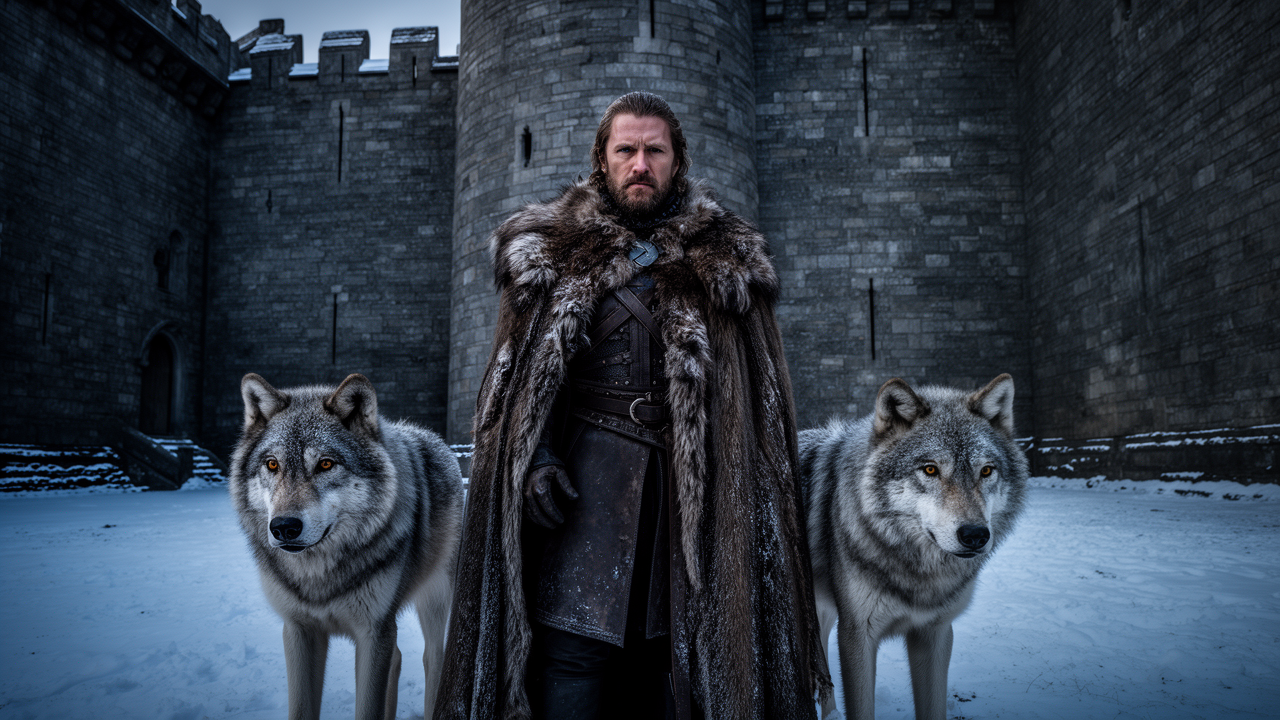
Even small details matter. The direwolves discovered near Winterfell are not just a visual flourish. They foreshadow the Stark children’s bond with something wild, ancient, and tied to the North itself.
Standout scenes worth remembering
The dead ranger and the White Walker reveal
The opening sequence is one of the sharpest pilot cold opens in modern fantasy TV. It signals that death is not a closed system in this world. It also establishes a visual language for terror that the show will revisit for years.
Robert’s reunion with Ned
This scene is heavy with history. The men speak like old friends, but their version of friendship is built on war, compromise, and memory. Robert wants Ned near him because he trusts him. Ned wants to stay away because he knows what courts do to men like him.
The direwolf discovery
Finding the mother direwolf dead beside the newborn pups is a quiet but crucial scene. The North is already marked by loss, but the surviving pups create a symbolic bond between the Stark children and the fate of the region.
Bran’s fall
No moment in the pilot has the same lasting force. It turns the episode from setup into crisis. More importantly, it makes the story personal. Political intrigue is no longer abstract when a child is thrown from a tower to hide a secret.
The ending: why Bran’s fall changes everything
The final scene is the episode’s true engine. Bran seeing Jaime and Cersei together creates a chain reaction that will shape the entire first season. The immediate question is simple: will Bran survive? The larger question is more dangerous: how far will the Lannisters go to protect what they have?
That ending also transforms the pilot from an ensemble introduction into a story with irreversible consequences. Before the fall, the episode is about movement into the unknown. After the fall, it becomes about violence, concealment, and the cost of seeing too much.
In practical terms, the ending does three things:
- It gives the season its first major mystery.
- It exposes the true ruthlessness of the Lannister inner circle.
- It forces the Starks into conflict with a family that already has the crown within reach.
What new viewers should remember next
If you are watching the series in order, here is what this episode wants you to carry forward:
- Ned is now tied to the king’s court, whether he wants to be or not.
- The Lannisters are more dangerous than they look.
- Jon Arryn’s death is not a background event; it is the start of a larger political unraveling.
- The White Walker threat is real and will matter.
- Bran’s fall is the first domino.
- The Stark family is entering a period of separation, and that separation will matter more than anyone expects.
This is why Winter Is Coming works so well as a starting point. It gives you enough information to understand the world, but it also withholds enough to keep the series moving. The pilot is careful, but it is never sleepy. Every scene is doing double duty: introducing the world while quietly loading the next problem.
Final take
The first episode of Game of Thrones succeeds because it understands that a pilot is not just a sample. It is a contract. Game of Thrones S1E1 “Winter Is Coming” episode guide readers should note how efficiently the episode lays out the series’ core tensions: family versus ambition, honor versus survival, and politics versus the ancient cold gathering beyond the Wall.
It is not only the beginning of a story. It is the moment the story admits what kind of world it lives in.
If you’re revisiting the pilot or building out your own compendium, share your thoughts in the comments — especially your favorite scene, character move, or first-time reaction to that ending.