
Blood and Fire at the End of Season 1
If you need a clean, useful Game of Thrones S1E10 “Fire and Blood” episode guide, this is the episode where the story stops feeling like a court drama and starts feeling like destiny. Season 1 closes by severing old loyalties, crowning new powers, and planting the first unmistakable seeds of the series’ larger mythic scale. It is the finale, but it also reads like a beginning.
This episode is structured around three endings: Ned Stark’s story reaches its brutal conclusion, Daenerys Targaryen steps into a new kind of power, and the Wall storyline points toward a threat far bigger than southern politics. The result is one of the most important episodes in the entire series, not because it resolves everything, but because it makes clear that nothing will ever go back to normal.
Game of Thrones S1E10 “Fire and Blood” episode guide: what happens in the finale
The episode opens in the aftermath of shock and preparation. The kingdom is unstable, the capital is tense, and every major house is reacting to the collapse of the political order. By the end, the North is burning with grief, the Dothraki are shattered by loss, and the far north is moving toward supernatural danger.
Here’s the broad shape of the episode:
- Ned Stark is forced into the final stage of his public humiliation and execution.
- Joffrey begins his reign with cruelty and theatrical power.
- Sansa is trapped in the capital, with little hope and no easy ally.
- Arya disappears into chaos, setting up a very different path from her family.
- Robb and the northern hosts begin to rally in response.
- Daenerys suffers a devastating personal loss, then claims a terrifying new future.
- Jon Snow rides north with the Night’s Watch as the danger beyond the Wall becomes impossible to ignore.
The finale is not about a single twist. It is about consequences. Every choice from the season starts collecting interest.
The capital turns cruel: Ned Stark’s last stand
Ned Stark spends the episode in a prisoner’s logic trap. He has admitted treason, hoping to save his daughters and prevent further bloodshed, but the court has no interest in mercy. Varys, Petyr Baelish, Cersei, and Joffrey all orbit the same central question: what is power worth when it is public and theatrical?
The most important part of Ned’s arc here is not that he is defeated. It is that he remains honorable even when honor no longer protects him. He tries to preserve life, stop war, and keep Sansa alive. Those are not abstract virtues in this episode; they are the exact reasons he loses.
Joffrey’s order to execute Ned after promising clemency is the defining act of the episode. It transforms the boy king from a spoiled menace into a genuine political disaster. The realm learns something crucial in this moment: the Iron Throne is now in the hands of someone who confuses authority with cruelty.
Why Ned’s death matters
Ned’s death is not just a shocking end to a major character. It breaks the series’ apparent rules.
Until this point, many viewers could still imagine that inherited nobility, sincerity, and good intentions might eventually steer the story. The finale destroys that illusion. In Westeros, decency is not automatically rewarded. Sometimes it is exactly what gets you killed.
That matters for the rest of the series because nearly every major player recalibrates after this point. Robb becomes a wartime king. Catelyn becomes a political operator. Arya becomes an orphan in motion. Sansa becomes a hostage. The story fractures, and it fractures because Ned dies.
Joffrey’s first real act of kingship
Joffrey’s public betrayal of his word is one of the episode’s clearest political statements. He is not just cruel; he is unreliable, and unreliability is deadly in a feudal system built on oaths, hostages, and alliances.
The capital’s court is forced to watch a king ignore the last visible boundary between law and spectacle. That is what makes the scene unforgettable. Joffrey is not quietly wicked. He performs his power in front of everyone, and that performance sends a message to every lord in Westeros.
For readers building a Game of Thrones compendium, this is one of the core takeaways from Season 1: the final authority in King’s Landing is no longer legitimacy, but volatility.
Sansa, Arya, and the splintering Stark household
The Stark children are scattered in different directions by the episode’s end, and that separation becomes one of the central engines of the entire series.
Sansa: trapped in plain sight
Sansa’s horror is not physical escape, but emotional captivity. She is close enough to see what is happening and powerless to stop it. Her storyline in the finale is a lesson in how courts use sympathy against the vulnerable. She is told one thing, promised another, and forced to endure the consequences of men deciding her future for her.
The key point is that Sansa does not simply “lose” here. She learns how the court works. That knowledge becomes survival later.
Arya: disappearing into the city
Arya’s path is more immediate and more dangerous. She escapes the worst of the capital’s collapse, but not into safety. Instead, she becomes part of the city’s underworld and confusion, which is exactly where her story needs to go. Unlike Sansa, Arya’s response to trauma is motion. She does not remain in place long enough to be controlled.
This split between the sisters matters enormously. One learns the rules of power from inside the cage; the other learns how to survive without the cage at all.
Robb’s northern response and the first steps toward war
While the capital plays games with Ned’s life, Robb is forced into a war posture. The northern houses begin gathering around the idea that justice and vengeance may now be the same thing. Season 1 spends a lot of time establishing Robb as cautious, dutiful, and young. In the finale, those qualities become liabilities and strengths at once.
Robb’s movement into leadership is one of the episode’s most important political turns. He is no longer just Ned’s son. He is now a claimant, a commander, and a symbol around which the North can organize.
The larger consequence is obvious: the realm does not settle after Ned’s death. It divides. The Iron Throne loses moral authority, and the North prepares to answer blood with blood.
Daenerys loses everything and gains something bigger
The finale’s most famous transformation belongs to Daenerys. Her storyline in “Fire and Blood” is built around the collapse of the world she thought she had saved for herself.
Drogo is dying. The khalasar is unstable. Mirri Maz Duur’s revenge is devastating. Daenerys loses her husband, her unborn child, and the promise of a safe future in one brutal sequence. On paper, this is a total defeat.
But the episode refuses to leave her in defeat.
The funeral pyre and the rebirth scene
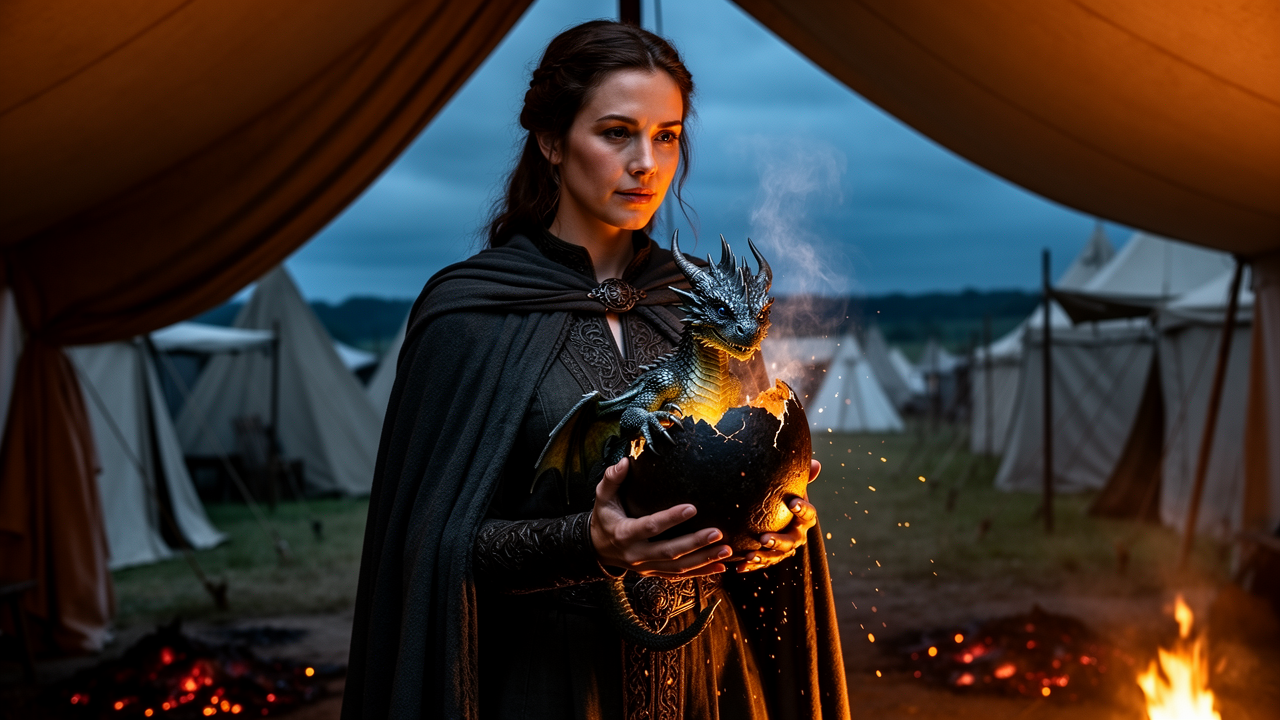
Daenerys chooses fire, not mourning. She steps into Drogo’s funeral pyre with the dragon eggs, and the episode turns from tragedy into myth. When the flames clear and she emerges with the hatchlings, the series changes genre in front of the viewer.
This is the moment where Game of Thrones stops being only a political drama. Dragon magic is no longer history and rumor. It is back.
The scene matters for three reasons:
- It proves that the old Valyrian bloodlines still carry power.
- It confirms that dragons are not just symbols; they are returning creatures of the world.
- It makes Daenerys something unprecedented: a ruler whose rise is tied to supernatural rebirth, not just inheritance.
For any lore-focused guide, this is the episode’s central revelation.
What the finale reveals about dragon lore
The dragon egg payoff is one of the most important lore moments in the first season.
Up to this point, the eggs have functioned like exotic gifts and historical relics. In “Fire and Blood,” they become evidence that the old world has not fully vanished. The rebirth scene suggests several larger truths:
- Dragons are part of Westeros’ deep history, not fairy tales.
- House Targaryen’s identity is inseparable from fire, conquest, and transformation.
- Magic in the series returns in cycles, often when political order is breaking down.
The episode never explains too much, and that restraint is part of its power. The show doesn’t hand viewers a lecture about how dragons work. It shows the event and lets the mythology widen around it.
Jon Snow at the Wall: the other ending that matters
Jon’s storyline in the finale is quieter than Daenerys’s, but it is crucial to the larger structure of the series. He joins the Night’s Watch and heads north, toward a frontier that the rest of the realm treats as an afterthought.
That positioning matters. The Wall is not merely a remote location. It is the series’ pressure valve, the place where neglected truths begin to surface. Jon’s arc in the finale signals that the story is going to keep splitting between human politics and whatever waits beyond civilization.
This is the episode’s great balancing act: while one side of the world burns over thrones and inheritance, another side marches toward a threat that does not care who sits the throne.
Ending explained: why “Fire and Blood” closes Season 1 so well
The final minutes of the episode are effective because they complete three different transformations at once:
- A political collapse: Ned’s death proves the capital is no longer stable.
- A military shift: Robb and the North move from grief into resistance.
- A mythic return: Daenerys becomes the mother of dragons.
That combination is why the finale matters so much to the larger series. It resets the story’s center of gravity. We do not end Season 1 with a single winner. We end with a world in motion.
The title, “Fire and Blood,” is also a statement of method. From here on out, that is how the series understands history: as violence, survival, and legacy mixed together. The Targaryens are not just a fallen dynasty anymore. They are part of the future.
Key character moves to remember after Episode 10
If you are using this as a compendium reference, these are the essential end-state changes after the finale:
- Ned Stark: executed, becoming the season’s defining martyr.
- Joffrey Baratheon: publicly establishes himself as a dangerous king.
- Cersei Lannister: survives the immediate crisis, but with the realm destabilized.
- Sansa Stark: remains trapped in King’s Landing.
- Arya Stark: escapes the direct line of capture and enters a harsher survival path.
- Robb Stark: begins moving as a wartime leader.
- Daenerys Targaryen: emerges from fire with dragons, marking her rise.
- Jon Snow: commits to the Night’s Watch and the northern frontier.
Those are the pieces that shape the next stage of the series.
Why this episode matters to the larger series
Season 1 ends here because it has to. Any later and the show would risk pretending the old order still held.
“Fire and Blood” establishes the series’ long-term structure:
- the Starks are broken apart but not erased;
- the Lannisters gain the capital but not security;
- the Targaryen legacy returns in a new and dangerous form;
- the Wall becomes essential, not decorative;
- and no character can rely on safety just because they are central to the story.
That last point is maybe the most important one. This finale teaches the viewer how Game of Thrones will work. Alliances matter, but they can collapse. Power matters, but it can be misused. Bloodlines matter, but they can awaken something far older than politics.
What new viewers should remember next
If you are moving into Season 2 after this episode, keep these story threads in mind:
- the North is heading toward open war;
- King’s Landing is unstable under Joffrey;
- Arya and Sansa are now on different survival tracks;
- Daenerys’s dragons are the biggest long-term wildcard in the series;
- and the Wall is no longer just a distant military posting.
Season 1 does not end by tying things up. It ends by opening the world wider.
Final thoughts
Game of Thrones S1E10 “Fire and Blood” episode guide coverage has to start with the obvious: this is one of the series’ most important hours. It delivers the season’s harshest political blow, its most famous fantasy reveal, and its clearest warning that the real story is only beginning.
If you want, share your take in the comments: what hit hardest in this finale, and which scene best defines the whole season for you?