
Image credit: Draft web reference from theringer.com
Roped Into Destiny: Game of Thrones S3E6 “The Climb” Episode Guide
Game of Thrones S3E6 “The Climb” episode guide readers usually come here for one reason: this is the hour where the series takes a breath on the battlefield and tightens the screw somewhere far more intimate. “The Climb” is not an episode built around shock for shock’s sake. It is built around choices, pressure, and the slow realization that power in Westeros is often decided by who can keep moving when every sane instinct says to stop.
What makes this episode so effective is that it uses the Wall as both a physical obstacle and a political one. Characters are forced upward, sideways, or deeper into the consequences of their earlier decisions. By the end, several storylines have shifted from preparation to momentum, and that matters for everything that follows.
What happens in Game of Thrones S3E6 “The Climb”
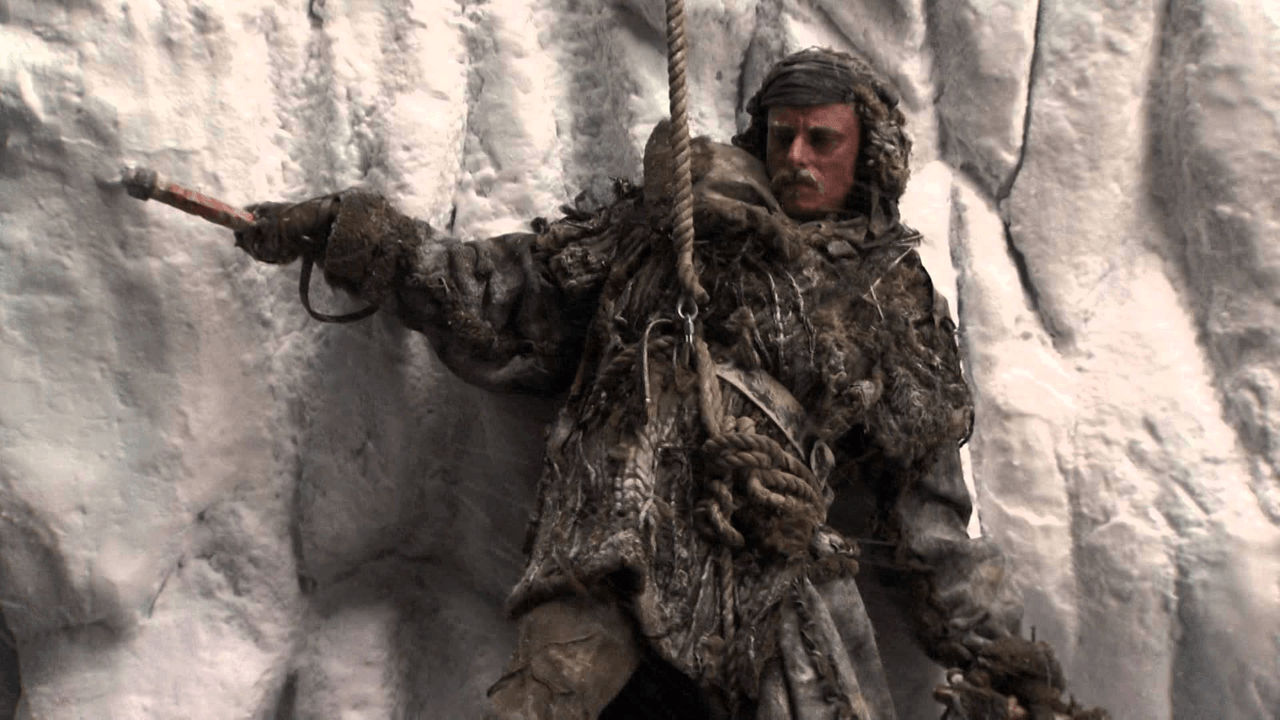
The episode’s backbone is the dangerous ascent of the Wall. Jon Snow travels with Ygritte, Tormund Giantsbane, and the wildling climbing party as they attempt to scale the frozen barrier and bypass the Night’s Watch defenses. The climb itself is the episode’s signature set piece, but it is also a crucible for trust. Jon is still pretending to belong where he does not, while Ygritte keeps testing whether his loyalties can survive close contact with the truth.
Elsewhere, the political machine keeps grinding.
- Daenerys arrives in Astapor and pushes deeper into her plan to buy the Unsullied, the slave soldiers trained to obey without hesitation.
- Tyrion continues navigating the aftermath of Blackwater, aware that survival in King’s Landing often counts for less than influence.
- Jaime and Brienne remain on their brutal road together, a pairing that keeps revealing new information about honor, identity, and what captivity can strip away.
- At Winterfell, the fate of the Stark home remains tangled in fear, damaged loyalties, and the growing sense that victory in the North will not look like a clean restoration.
The episode does not overload any one thread. Instead, it lets each storyline clarify the larger season theme: every path forward has a cost.
The Wall climb: tension, trust, and survival
The Wall sequence is the centerpiece for a reason. It is one of the rare scenes in the series where the danger is immediate, visible, and relentlessly physical. The climbers are exposed to wind, ice, and exhaustion. There is no courtly language to hide behind and no throne room to soften the stakes. One wrong handhold can end everything.
That matters because the climb is not just about getting over a wall. It is about what the act represents.
Jon is inside a group that sees the Wall as an obstacle to be conquered, not defended. That puts him in an impossible moral position. The longer he remains with the wildlings, the more he has to perform betrayal to stay alive. Yet the more he learns about their world, the less simple the Watch’s version of “us versus them” begins to feel.
Ygritte, meanwhile, remains one of the show’s sharpest forces. She understands that Jon’s identity is divided, and she uses that knowledge with a mix of humor, challenge, and emotional pressure. Their scenes are not just romantic; they are ideological. Every exchange asks whether someone can love a person without accepting the cause that person serves.
Daenerys in Astapor: power through purchase
Daenerys’s plotline in “The Climb” advances the larger question hanging over her arc all season: can a queen built on exile and prophecy win power without becoming the sort of ruler she claims to oppose?
Astapor is the answer in miniature.
The city’s slave economy is organized, ritualized, and monstrous. The Unsullied are presented as perfect soldiers, but the perfection is itself a form of violence. Daenerys must negotiate with Kraznys mo Nakloz, whose condescension exposes the moral rot under the transaction. She is not simply buying an army; she is stepping into a system that treats human lives as inventory.
This is one of the episode’s most important lore and worldbuilding beats because it expands the story beyond Westeros without losing the series’ central concerns. The show keeps reminding viewers that power is not only fought over in castles. It is also manufactured, trained, sold, and enforced.
For new viewers, remember this: Daenerys is no longer only gathering allies. She is learning how empire works from the inside.
Tyrion, the capital, and the politics of surviving a victory
After the Battle of Blackwater, the Lannisters’ position looks stronger on paper. “The Climb” shows why that can be deceptive. A victory does not automatically produce stability. It produces new debts, resentments, and arguments over credit.
Tyrion’s continued vulnerability remains one of the most important political threads in the episode. Even when he has helped save the city, he does not control the story of what happened. That asymmetry is central to Game of Thrones as a whole: the person who understands the board is not always the person who gets to move the pieces.
This episode reinforces Tyrion’s role as a survivor inside a family that often treats him as expendable. He is useful, but usefulness is not the same as safety. The distinction will matter more as the season continues.
Jaime and Brienne: another kind of climb
If the Wall climb is about literal elevation, Jaime and Brienne’s journey is about decline, endurance, and reluctant respect. Their storyline in “The Climb” keeps stripping away easy assumptions about power. Jaime is no longer the golden knight from the start of the series. Brienne is not merely a blunt instrument of duty. Together, they create a more complicated conversation about what survives when status falls away.
The episode keeps their arc moving through hostility and fatigue, but the emotional engine is mutual recognition. Neither fully trusts the other, yet each is beginning to understand that the other is governed by a code. In a story obsessed with lying, that alone is notable.
What the episode says about the North and the war to come
Even when the script is focused elsewhere, the North still hangs over everything. “The Climb” is a reminder that the war is not just a sequence of battles. It is a collapse of certainty.
The wildlings climbing the Wall, Daenerys assembling an army in Slaver’s Bay, Tyrion trying to remain relevant in the capital, and the Stark remnants scattered across the map all point to the same truth: no one is standing still. The world is rearranging itself around ambition, grief, and necessity.
That larger movement is why this episode matters in a compendium. It is not the flashiest chapter of the season, but it is one of the clearest examples of Game of Thrones using motion as meaning. People are climbing, bargaining, dragging themselves forward, or being carried by forces they cannot fully control.
Standout scenes to remember
A good episode guide should isolate the moments that stay with you after the credits. In “The Climb,” the standout scenes are the ones that fuse spectacle with character work.
- The Wall ascent, where the sheer scale of the climb turns every pause into dread.
- Jon and Ygritte’s exchanges, which keep mixing danger, attraction, and ideological friction.
- Daenerys’s negotiations in Astapor, where the language of trade masks an ugly moral hierarchy.
- The continued pressure on Tyrion, whose political value is never quite enough to buy him peace.
- Jaime and Brienne’s road journey, where captivity keeps reshaping the balance of power between them.
These scenes matter because they do more than move the plot. They lock in relationships that will influence later decisions.
Why “The Climb” matters to the larger series
This episode matters because it is one of the clearest demonstrations of the show’s core idea: ascent is never free.
At the Wall, climbing means risking death to cross a boundary.
In Astapor, power means negotiating with a system built on cruelty.
In King’s Landing, survival means understanding that praise can vanish faster than enemies.
On the road, honor becomes a burden, then a weapon, then a test.
That is why “The Climb” is a key midseason episode rather than a filler chapter. It sharpens the season’s central tensions and prepares the audience for the harder turns ahead. If you are building a full Game of Thrones episode compendium, this is one of the entries where the thematic wiring of the series is especially visible.
What new viewers should remember next
If you are tracking the story for the first time, keep these takeaways in mind after this episode:
- Jon is deeper inside wildling territory than ever, and the danger is now both emotional and strategic.
- Daenerys is moving from promise to execution, and her army-building has entered a more consequential phase.
- Tyrion’s position in King’s Landing remains unstable despite recent success.
- Jaime and Brienne’s journey continues to reshape both characters.
- The season’s big conflict is no longer distant. It is assembling in multiple places at once.
The takeaway
“The Climb” is a title that describes more than one plotline, but that is exactly the point. In this episode, nearly everyone is climbing something: a wall, a ladder of power, a steep moral compromise, or a future they do not fully trust. That shared struggle gives the episode its weight and makes it one of the most important connective pieces in Season 3.
For a guide, that is the real value: not just what happens, but how the episode rearranges the story around the people who survive it.
If you have a favorite moment from this episode, or a different read on its biggest turning point, share it in the comments.