

Image credit: Draft web reference from pinterest.com
The episode where every side chooses a gamble
Game of Thrones S4E7 “Mockingbird” episode guide readers usually come here for one reason: this is the hour when strategy turns ugly. “Mockingbird” is not a battlefield episode in the usual sense. It is an episode about leverage, reputation, and the moment when political talk finally collides with bodily risk. In the Vale, at King’s Landing, and on the road toward the Wall, the season keeps tightening until no one can hide behind distance anymore.
What makes “Mockingbird” endure is that it does not simply move pieces. It reveals what those pieces are willing to lose. Tyrion’s fate stops being a legal matter and becomes a public execution by another name. Sansa’s safety remains tangled in lies. Jaime’s promise to Tyrion lands with the weight of a confession. And in the North, the larger war starts to look less like a contest between armies and more like a test of survival in ruins.
What happens in “Mockingbird”
The episode splits its attention across several fronts, but the emotional center is clear: Tyrion Lannister’s life is closing in on him, while the people around him decide whether they are acting out of love, duty, fear, or opportunism.
Tyrion’s last hope becomes a contest he cannot control
Tyrion’s trial has already turned him into a spectacle, and in “Mockingbird” he learns that the system around him was never designed to protect him. The crowd, the court, and the king’s small-minded certainty all point in one direction. Tyrion needs a champion, but finding one is harder than making the plea.
Jaime tries to do something that feels almost impossible in this world: he wants to help his brother in a way that is both practical and emotionally honest. But his path is blocked by vows, distance, and the fact that every good intention in this story arrives late. Tyrion’s vulnerability is the point. He is intelligent enough to understand the trap, but powerless to prevent it.
This is one of the episode’s sharpest ideas: justice in Westeros is rarely about truth. It is about who has the stronger story and the better sword arm.
Sansa and Littlefinger reach the edge of the lies
At the Vale, Sansa begins to understand how much of her new life is built on staged appearances. Littlefinger continues to present himself as a protector, but the episode keeps exposing the rot underneath that protection. His method is simple: promise safety, then turn fear into dependency.
Sansa’s growing awareness matters because she is no longer just a hostage moving from one bad situation to another. She is learning how power works when it is disguised as kindness. “Mockingbird” pushes that lesson forward without turning her into a strategist overnight. She is still trapped, but she is no longer innocent about the nature of the trap.
The Hound and Arya keep drifting through the wreckage
Arya and the Hound remain one of the series’ most unusual pairings, and this episode uses them well. Their scenes are less about plot mechanics and more about contrast. Arya wants a direction. Sandor Clegane offers blunt survival. Neither one is sentimental, and that makes their bond feel more durable than many of the political relationships elsewhere in the episode.
If you are building a compendium, remember this: Arya’s storyline in “Mockingbird” matters because it keeps reminding the audience that the realm’s cruelty is not confined to castles. The road is just as dangerous as the throne room.
The Wall storyline keeps the war from feeling abstract
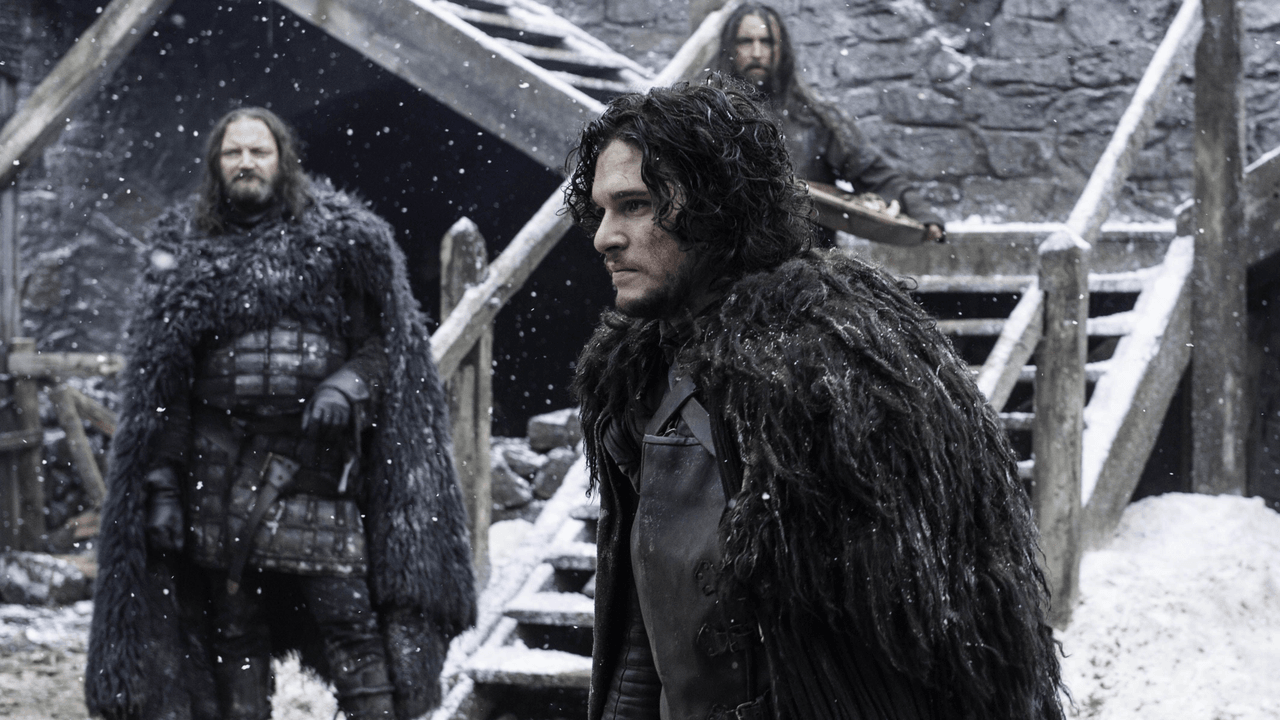
On the northern front, Jon Snow’s responsibilities continue to widen. The Wall remains one of the show’s best devices for showing that the realm’s political squabbles have consequences beyond dynastic pride. “Mockingbird” uses the Watch to remind us that power struggles in the south are still being played out against an approaching threat far older than any house feud.
That tension is important. The episode never lets the audience forget that the realm’s internal collapse is happening while something much bigger waits beyond it.
The key character moves that define the hour
If you are reading this as part of a full Game of Thrones episode guide archive, these are the moves that matter most:
- Tyrion realizes his survival depends on a champion, not on fairness.
- Jaime makes a dangerous emotional choice by trying to intervene.
- Sansa gets another lesson in how manipulation can wear a polite face.
- Littlefinger continues turning protection into control.
- Arya and the Hound keep moving through a world where violence is ordinary.
- Jon Snow remains tied to a larger conflict that is still being underestimated.
What gives the episode its force is the way each of these moves feels small in the moment but huge in retrospect. Nobody wins the season in this hour. They only commit themselves more deeply to the consequences.
Why the trial by combat matters so much
The Vale’s trial by combat is the episode’s signature scene for a reason. It condenses the series’ central moral problem into one brutal ritual: if institutions cannot deliver justice, someone will be forced to win it with force.
That is classic Game of Thrones logic. The law exists, but it is fragile. Honor exists, but it can be manipulated. Faith exists, but it can be weaponized. When all those systems fail, the blade decides.
The trial also deepens a theme the show returns to again and again: in Westeros, survival often belongs to the person who can turn an unwinnable situation into a performance. Public life is theater, but the injuries are real.
Ending explained: what “Mockingbird” leaves behind
By the end of the episode, the board is even more unstable than when it started.
Tyrion’s situation has narrowed to a terrifyingly simple proposition: he needs someone willing to fight for him, and the people around him are measuring the cost. Jaime’s options are morally loaded and personally expensive. Sansa’s future remains tied to Littlefinger’s schemes, which means her escape from one danger may simply be opening a door into another. Meanwhile, the show keeps widening the gap between the wars humans are choosing and the disaster many of them refuse to see.
The ending matters because it does not resolve anything cleanly. Instead, it locks in the next set of consequences. That is exactly why the episode is such a strong pivot point. It is not the climax of the season, but it is one of the clearest examples of the season’s thesis: power always asks for a price, and the bill usually comes due late.
Lore and world-building connections
“Mockingbird” is especially useful for readers who want the episode’s lore implications, because it reinforces how the world’s rules actually function.
Trial by combat as an old legal custom
The episode leans on one of the setting’s most famous traditions: resolving disputes through combat when formal justice is compromised. The custom is not treated as romantic. It is treated as alarming, archaic, and still very much alive.
The Vale as a political pressure chamber
The Vale has often felt separate from the rest of the realm, but this episode shows how isolation can become its own kind of political danger. The mountain clans, the court, and the hidden power behind the throne all make the region feel less like a refuge and more like a sealed room full of secrets.
The mismatch between noble law and real power
Across the episode, the show keeps underlining that noble titles do not guarantee safety. A court can condemn the wrong man. A protector can become a captor. A vow can block a rescue. A child can become a bargaining chip. That mismatch is part of the series’ larger world-building, and “Mockingbird” states it plainly.
Standout scenes worth remembering
A good episode guide should point readers to the moments they will still be talking about later. In “Mockingbird,” those include:
- Tyrion’s desperate need for a champion becoming impossible to ignore
- Jaime’s attempt to act like a brother instead of a knight bound by image
- Sansa’s dawning understanding of who Littlefinger really is
- The episode’s clean, pitiless use of the trial by combat idea
- The continued pairing of Arya and the Hound, whose relationship keeps shifting in interesting ways
These scenes work because they do more than advance the plot. They sharpen the season’s emotional geometry.
Why “Mockingbird” matters to the larger series
This is one of those episodes that does a lot of quiet work for the rest of Game of Thrones.
First, it pushes Tyrion’s story into a more desperate phase, and that changes how the audience understands his place in the Lannister family and in the wider war for survival. Second, it gives Sansa another crucial step in her long education about power, deception, and self-preservation. Third, it keeps the northern and eastern storylines from feeling disconnected by insisting that all of them are part of the same crumbling political order.
Most importantly, “Mockingbird” helps define the show’s worldview. Institutions are weak. Loyalty is conditional. Kindness can hide a knife. And when the formal order breaks down, people are left with improvisation, intimidation, and whatever courage they can still assemble on the spot.
That is why the episode stays important in a full-series rewatch. It is not just a bridge to bigger events. It is a clear statement of how the game is played.
What new viewers should remember next
If you are using this as a reference point for the next episode, keep these takeaways in mind:
- Tyrion’s fate is now tightly tied to whether anyone will fight for him.
- Sansa’s position in the Vale is still unsafe, even when it looks more comfortable than before.
- Jaime’s choices are becoming more emotionally complicated, not less.
- The Hound and Arya are still traveling through a world that rewards brutality.
- The broader war keeps building around a threat that most of the realm still treats as secondary.
Final take
“Mockingbird” is a pressure-cooker episode: less flashy than some of the season’s bigger shocks, but crucial because it shows how power, fear, and love keep colliding in the same narrow spaces. It gives Tyrion one of his bleakest turning points, deepens Sansa’s education in manipulation, and keeps the series’ larger machinery grinding forward.
For a season so concerned with what people owe each other, this episode is all about the cost of showing up too late.
If you’re compiling a full watch guide, or just revisiting Season 4, share your thoughts on “Mockingbird” in the comments—what scene hit hardest, and what moment do you think changes the series most?