
Image credit: Draft web reference from slantmagazine.com
Bridges, bloodlines, and the end of an era
Game of Thrones S4E10 “The Children” episode guide readers usually want one thing: the full map of where the season finale leaves the board. This episode is not just a closing chapter. It is a hinge point. It ends one major arc with fire, sends another character into a wholly different life, and drops a lore-rich sequence that expands the world beyond the political game in King’s Landing.
If Season 4 spent its time tightening the noose, “The Children” is where the rope finally snaps. The episode moves fast, but every scene matters. People die, alliances break, old identities are stripped away, and the supernatural edge of the story comes back into focus.
What happens in Game of Thrones S4E10 “The Children”?
The finale opens with the sense that the world is shifting under everyone’s feet. In the North, the Night’s Watch fights for survival at the Wall. In King’s Landing, the Lannister machine continues to grind forward, even as personal loyalties crack. Far to the north and east, Bran Stark’s journey reaches one of the most important lore scenes in the series so far.
At its core, this episode is about endings that are also beginnings:
- a king’s rise becoming visibly hollow,
- a son of the North making a ruthless choice,
- a rebel child proving she will not be tamed,
- a crippled heir reaching the threshold of something larger,
- and a warrior’s path ending so that a new identity can begin.
The episode’s title, “The Children,” fits that structure perfectly. It refers not just to age, but to inheritance, legacy, and what survives after power burns itself out.
The Wall: Stannis arrives, but the battle still changes everything
One of the most important developments in the episode is the arrival of Stannis Baratheon and his forces at Castle Black. He does not arrive as a savior in the sentimental sense. He arrives as a claimant, a king with his own claims and his own hard logic. But for the moment, his intervention matters because it saves the Night’s Watch from annihilation.
The wildling assault has pushed the Watch to its limit. The fight sequences are brutal and exhausting, and the episode captures the feeling of men standing on collapsing ground. Jon Snow is forced to do what leadership now demands of him: make decisions quickly, trust his instincts, and accept that heroism and guilt often arrive together.
A few key things happen here:
Jon Snow’s leadership hardens
Jon is no longer the uncertain young man who left Winterfell. He is acting like someone who understands command, loss, and the cost of delay. His choices in the episode are not clean, but they are effective. The Wall survives because someone keeps making hard calls.
The wildling threat is reframed
The battle does not erase the wildlings as a force. It shows them as a people driven by survival, not just chaos. That nuance matters because the series is always asking who gets labeled civilized and who gets labeled savage.
Stannis changes the board in the North
Stannis does not just rescue Castle Black; he adds another political layer to the story. The North is now a place where power, legitimacy, and the war against the dead all intersect.
Bran Stark reaches the edge of the unknown
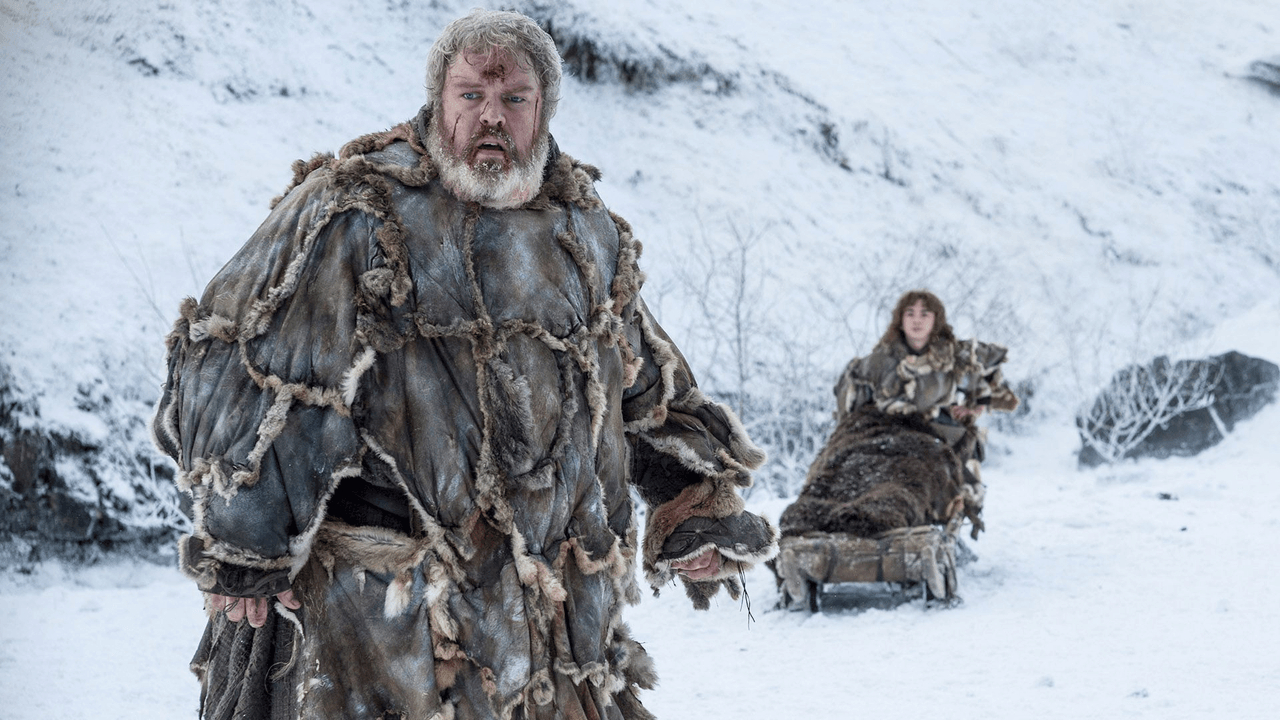
If the Wall scenes are about immediate survival, Bran’s storyline is about long-range destiny. He and his companions finally encounter the three-eyed raven, and the show leans fully into the mythic side of its world.
This is one of the episode’s most significant lore moments because it shifts Bran’s arc from escape and hardship into revelation. The cave, the mystical imagery, and the dreamlike cadence all signal that the story is widening. The political war over the throne is still central, but it is no longer the whole picture.
What matters here is not only that Bran learns new things. It is that the audience learns to expect a different kind of power from him. His journey is no longer about what he lost in Winterfell. It is about what he may become.
Why this scene matters
- It confirms that magic in the world is not fading into irrelevance.
- It ties Bran to ancient forces tied to memory, vision, and identity.
- It establishes that the North hides knowledge older than the kingdoms’ current feuds.
The episode uses this sequence to remind viewers that the series is a fantasy epic as much as it is a political drama.
Arya Stark and Sandor Clegane: the road becomes the lesson
Another major emotional turn comes from Arya and Sandor. Their story has always balanced violence with reluctant tenderness, and “The Children” pushes that balance toward separation. Arya finally gets the chance to choose her own path, and she takes it.
This is not a sentimental goodbye. It is a hard-earned break from a survival bond that has defined both characters for a long stretch of the series. Arya’s decision shows how far she has come: she is no longer simply being carried by events. She is acting on a direction of her own.
Sandor’s role in the episode is equally important because his arc has been one of the show’s sharpest examples of reluctant humanity. He has been cruel, wounded, funny, and unexpectedly honest. By the end of the episode, his story takes a turn that feels both fitting and tragic.
The meaning of their split
Arya’s departure is a statement of independence.
Sandor’s ending is a statement of exhaustion.
Together, they mark a clean break between dependence and self-definition.
Tyrion Lannister’s verdict and the collapse of family loyalty
In King’s Landing, the season’s legal and personal tensions finally explode. Tyrion’s trial has been building for a long time, and the finale turns the family drama into something far more devastating. His fate is sealed by betrayal, politics, and the grim reality that fairness has little to do with power in this court.
The important thing to remember is that this is not merely a bad day for Tyrion. It is the moment when the audience sees how thoroughly the political order can absorb truth and spit out a scapegoat.
Key consequences:
- Tyrion is pushed into a corner with no honorable exit.
- Jaime takes a decisive step that changes his future.
- Tywin continues to act as if the family name is bigger than the people in it.
The episode makes clear that the Lannister dynasty is holding together only because force, habit, and fear are doing the work of loyalty.
Jaime and Tyrion: the kind of brotherhood the series respects
One of the most moving pieces of the finale is Jaime’s private choice regarding Tyrion. It is a reminder that the show has always been interested in the difference between institutional loyalty and personal loyalty. Family is supposed to mean one thing in Westeros, but the series repeatedly proves that the people inside a family are often the ones most capable of betrayal or mercy.
Jaime’s decision matters because it shows growth. He is no longer just the infamous Kingslayer. He is a man trying, in his own compromised way, to act with honor.
That does not make his world less brutal. It just makes him more interesting in it.
The mountain road and the end of Sandor Clegane’s journey
Without getting too far from the episode’s emotional weight, Sandor’s final chapter here deserves direct attention. His arc ends in a bleak, almost casual way, which is exactly why it lands so hard. The series has never promised that a meaningful life earns a meaningful death.
Sandor’s exit is significant because it denies easy catharsis. There is no grand speech, no noble banner, no redeemed warrior pose. There is only the sense that one path has closed and the world will keep moving without waiting for closure.
That is very much in keeping with the tone of the episode as a whole. Nothing resolves neatly. Everything continues, but altered.
Why the ending of Game of Thrones S4E10 matters
The ending of Game of Thrones S4E10 “The Children” episode guide material is where the season’s real legacy becomes visible. This finale does not merely finish the season. It resets the story.
Here is why it matters to the larger series:
1. It expands the story beyond the Iron Throne
Bran’s sequence confirms that the supernatural and historical layers of the world are not side material. They are central to the endgame.
2. It changes the North’s political reality
Stannis’s arrival creates a new power structure at the Wall and in the surrounding region.
3. It pushes Arya into a new chapter
Her path is now more self-directed, and the road ahead feels wider and harsher.
4. It breaks the Lannister family illusion
The family’s unity has always been fragile, but this episode exposes the seams.
5. It leaves viewers with more questions than answers
That is the point. The episode does not close the story. It reorients it.
Standout scenes worth remembering
A good episode guide should not just summarize plot. It should highlight the moments people carry forward.
The most memorable scenes in this finale include:
- the desperate violence at Castle Black,
- the revelation-filled encounter in Bran’s storyline,
- Arya’s goodbye and the emotional cost of it,
- Tyrion’s courtroom collapse,
- and the quiet, devastating decisions that follow the season’s biggest conflicts.
What makes these scenes work is not spectacle alone. It is consequence. Every big moment feels like it will matter later, and in this series, that usually means it will.
What new viewers should remember next
If you are using this as part of a full compendium or a catch-up guide, keep these takeaways in mind before moving into the next season:
- The Wall is still contested, but the balance of power has shifted.
- Bran’s storyline is now deeply tied to ancient magic and memory.
- Arya is increasingly independent and harder to predict.
- Tyrion’s position in King’s Landing has become dangerously unstable.
- The North is no longer just a battlefield; it is a crossroads of mortal and mystical forces.
That combination is what makes this finale such a strong series pivot. It clears out one chapter and sets up another with unusual precision.
Final thoughts
Game of Thrones S4E10 “The Children” episode guide readers can think of this finale as the moment the show stops pretending the old rules are enough. War keeps going, but the terms are changing. Magic returns to the foreground. Family ties snap under pressure. And the next phase of the story begins with less certainty than ever.
It is one of the series’ most consequential episodes because it is brave enough to end several familiar ideas at once. That is not just good finale writing. It is the kind of structural shift that keeps a long-running saga feeling alive.
If you have thoughts on the finale’s biggest turn, your favorite scene, or the moment that changed the series for you, share them in the comments below.