

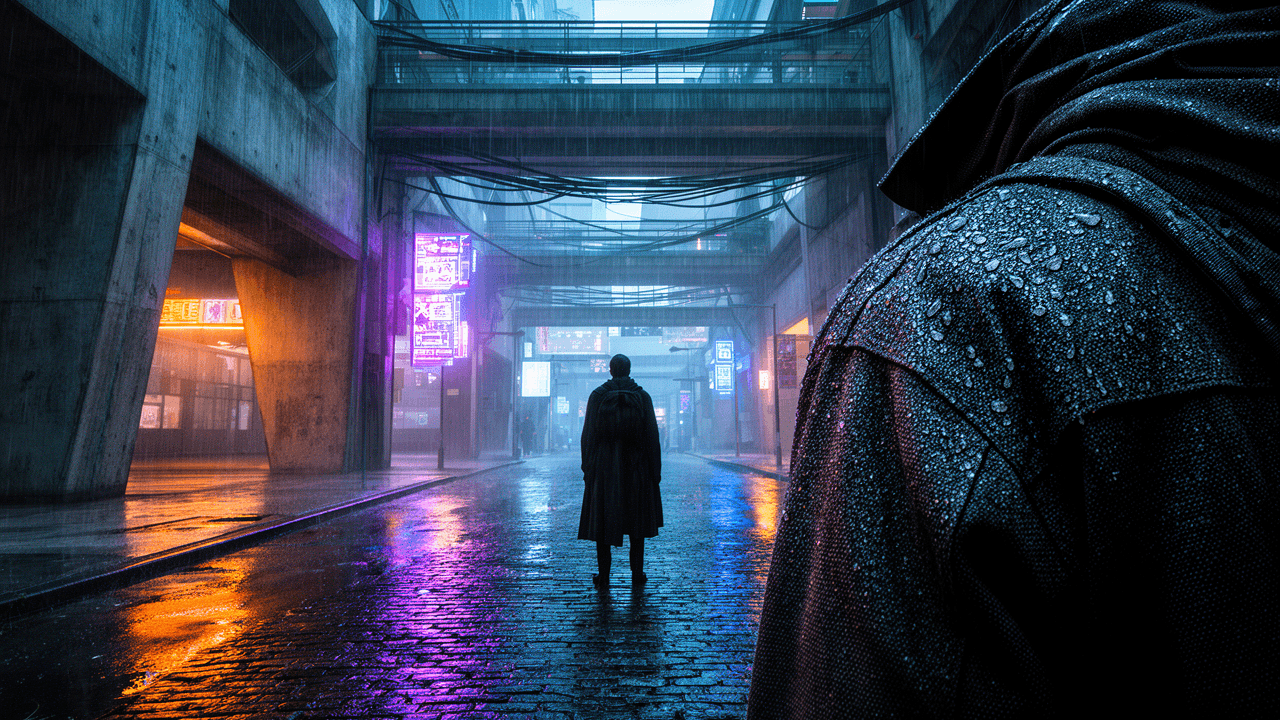
Worldbuilding That Changes Familiar Genres: Why Detail Matters
movie worldbuilding is the difference between a setting that looks expensive and a setting that feels inhabited. Anyone can build a backdrop. The harder trick is making a fictional place seem like people have been living under its rules long before the camera arrived and will keep living there after the credits roll.
That is why the strongest genre films rarely rely on scale alone. They use rules, social systems, visual cues, and tiny texture moments to make the audience believe in the world’s internal logic. When that logic holds, even a familiar setup can feel bigger, stranger, and more emotionally convincing.
A good world doesn’t just say, “Here is where the story happens.” It says, “This is how power works here. This is what people fear. This is what they eat, wear, fix, steal, hide, and celebrate.” That’s the real engine.
What movie worldbuilding actually does
Worldbuilding is often described like decoration, but it functions more like pressure.
A strong fictional setting does three jobs at once:
- It establishes rules. The audience learns what is possible, what is dangerous, and what has consequences.
- It reveals social order. Who has status, who serves, who profits, and who gets erased?
- It gives the story texture. Small visual and behavioral details make the world feel lived in rather than arranged.
That last part matters more than people think. Viewers do not need a encyclopedia of lore. They need the feeling that the world extends beyond the frame.
A scratched helmet, a customs checkpoint, a hand-painted street sign, a ration card, a local superstition, a ritual greeting—these are the details that convince us the setting has history.
Why familiar genres feel new when the world is specific
Genres are built on recognition. We know the skeleton of a western, a vampire story, a heist, a zombie outbreak, a space opera. The risk is repetition. Worldbuilding is how filmmakers dodge that trap without abandoning genre pleasures.
A familiar genre becomes fresh when the world gives it a new set of pressures.
1. The rules reshape the stakes
A story feels different when the environment has constraints that affect every choice. If water is scarce, a chase sequence changes. If magic has a cost, temptation becomes more interesting. If the law only protects certain classes, then every conversation carries politics.
Rules create friction, and friction creates drama.
2. Social systems make conflicts feel bigger
The best worlds are not just physical spaces; they are societies with habits and inequalities. When you understand who owns the streets, who gets surveillance, who has access to comfort, and who survives through improvisation, the story gains dimension.
That is why some genre movies feel strangely real even when their premises are outrageous. The audience recognizes systems. We know how bureaucracy works. We know how hierarchy shapes behavior. We know what it feels like when a place has official language and unofficial rules.
3. Texture makes the impossible feel ordinary
Great movie worldbuilding often hides its brilliance in the background. The audience may not consciously notice it, but they feel it.
A bartender already knows what people order after curfew. A mechanic has the right tools for a machine we’ve never seen before. A child plays with toys built from scrap. A guard is bored because this dangerous thing is, for him, routine.
That routine is crucial. It suggests a functioning civilization, not just a set.
The best details are often the smallest ones

Spectacle gets attention, but lived-in detail earns trust.
The most convincing worlds usually include moments that seem almost throwaway on first viewing:
- a market stall selling odd, practical goods
- a public announcement no one bothers to listen to anymore
- uniforms adapted by wear, repair, or local habit
- signage or architecture that hints at old regime changes
- meals, slang, and rituals that belong only to this place
- characters who treat extraordinary elements as ordinary procedure
These details do not stop the story. They deepen it.
A world feels credible when its people have adapted to it. Adaptation is the proof that history happened before the plot began.
How worldbuilding supports emotion instead of replacing it
One of the biggest mistakes in genre storytelling is assuming that more lore equals more feeling. It usually does not.
Worldbuilding works best when it intensifies character choices.
If a parent is protecting a child in a hostile city, the city itself should make that protection harder. If a rebel is trying to start a movement, the world should reflect the machinery that keeps people obedient. If two characters fall in love, the setting should tell us what that love risks and what it might cost.
In other words, the world should not be the story. It should be the force that shapes the story.
That is where emotional credibility comes from. We believe the characters because their decisions make sense inside the world’s pressures.
Good worldbuilding asks: what does this setting demand from people?
That question is more useful than asking how much lore can be packed into a script.
A credible world demands behavior:
- People ration.
- People trade favors.
- People lie to protect themselves.
- People develop customs that look odd from the outside but make perfect sense locally.
- People build private lives inside public systems.
The more the setting shapes daily life, the more the audience feels the stakes in ordinary moments, not just the big set pieces.
Exposition is not the same thing as worldbuilding
This is where a lot of films go wrong. They mistake explanation for immersion.
If a character spends five minutes reciting backstory, the audience may learn facts, but they do not necessarily feel the world. Good movie worldbuilding is usually distributed through action, design, and implication.
A few principles help:
Show systems in motion
A checkpoint, a queue, a license, a black market, a ritual, a ritualized insult, a repair shop, a family dinner—these can reveal more than a speech.
Let details repeat with variation

A repeated gesture or object becomes meaningful. The audience starts to understand what matters locally and what has become habit.
Use dialogue sparingly and specifically
Characters should not explain what they already live inside. They should speak around the obvious, the way real people do.
Trust the audience to assemble context
Viewers enjoy solving a world. If every piece is explained too clearly, the setting loses mystery.
Why strong worlds make genre films feel emotionally convincing
Emotion in fiction depends on consequence. Worldbuilding creates consequence.
A clean, abstract genre setup can feel flat because nothing in it seems to resist the characters. But when the world is dense with rules, institutions, and social pressure, every action leaves a mark.
That matters for the audience’s emotional response. We don’t just care because the hero is brave. We care because bravery has a cost here. We don’t just fear the monster. We fear the ecosystem around the monster—the people who have adapted to it, profited from it, or denied it.
The strongest settings make us feel that the characters belong to a real place with real limits. Once that happens, even the wildest premise becomes emotionally legible.
A few signs you are watching strong worldbuilding
If you want a quick way to spot effective movie worldbuilding, look for these signs:
- The environment has rules characters obey without a lecture.
- Background details repeat in ways that imply history.
- Side characters behave like residents, not plot devices.
- The setting changes how people talk, dress, trade, and travel.
- Information arrives through action instead of explanation.
- The world creates obstacles that are specific, not generic.
When those pieces are working, the world does not feel like packaging. It feels like cause and effect.
The real magic: a world that exceeds the plot
The most memorable fictional places are not just well-designed. They seem larger than the story we get to see.
That surplus is what viewers remember. They remember the hint of a larger economy, the sense of a hidden caste system, the whispered local rule, the side street that feels dangerous for a reason the script never spells out. They remember the feeling that the world existed before the hero arrived and will outlast the climax.
That is the highest compliment you can give a setting: it feels too alive to be only a backdrop.
Strong worldbuilding does not distract from narrative. It makes narrative land harder. It turns familiar genres into places of surprise, and it gives emotional beats a social and physical weight they would otherwise lack.
So when a film makes you want to linger in its streets, study its habits, and imagine the lives happening offscreen, that is not a bonus feature. That is the craft doing its job.
If you have a favorite example of movie worldbuilding that made a familiar genre feel brand new, share it in the comments—I’d love to hear what stuck with you.