

The real engine of suspense is control
Movie suspense works because it treats information like a lever. Show too much too soon, and the tension collapses. Hide everything, and the audience feels detached. The best suspense films live in the narrow space between those extremes, where every reveal changes the emotional temperature of a scene.
That’s why suspense can feel more gripping than constant action or nonstop scares. Action often spends its energy quickly. Horror can overwhelm with shocks. Suspense does something sneakier: it asks the viewer to wait, to interpret, to worry, and to keep rechecking every detail on screen. The payoff matters more because it has been delayed, and the delay itself becomes the experience.
At its best, suspense is not about a bigger explosion or a louder scare. It’s about precision. What does the audience know? What do they suspect? What is the film refusing to confirm?
Movie suspense depends on what the audience knows
A suspense film rarely gives everyone in the room the same information at the same time. That imbalance is the craft.
Sometimes the audience knows more than the characters do, which creates dread. We can see danger approaching while the characters keep talking, walking, or making the wrong choice. Other times the film withholds information from us entirely, forcing us to share the character’s uncertainty. Both strategies work, but they produce different kinds of tension.
When the audience knows too much
This is the classic anxiety machine. The camera shows a threat in the background, the audience notices it, and then the scene stretches. Suddenly every casual line of dialogue feels dangerous. Every delay feels cruel.
The emotional question is no longer “What will happen?” It becomes “When will they notice?” That tiny shift can make an ordinary scene feel unbearable.
When the audience knows too little
Here suspense comes from doubt. The film gives fragments, not answers. We get a strange sound, a partial conversation, an awkward reaction, a closed door. The mind starts building possibilities, and those possibilities are often scarier than any confirmed fact.
This is one of the reasons movie suspense can be so durable. The viewer becomes an active participant, filling gaps with inference. The film doesn’t just show fear; it recruits the audience to manufacture it.
Pacing is not speed; it’s pressure
A lot of people equate suspense with slow pacing, but that’s too simple. Great suspense is not about dragging scenes out. It’s about applying pressure in the right increments.
A suspenseful film knows when to advance and when to hold. A conversation can tighten because of a pause. A hallway can feel longer because the camera lingers just a little too long. A cut can arrive one beat later than expected, letting unease bloom before relief appears.
Good pacing in suspense often uses three moves:
- Advance the problem so the threat feels real.
- Delay the solution so the audience stays invested.
- Interrupt certainty before comfort can set in.
That rhythm matters because suspense is fundamentally about anticipation. If a film rushes, the mind has no time to lean forward. If it stalls, tension leaks away. The sweet spot is uncomfortable in exactly the right way.
Viewpoint shapes the size of the threat
Who the camera follows matters as much as what it sees. Viewpoint is one of the most underrated tools in movie suspense because it determines emotional alignment.
A tight point of view traps us inside a character’s limited understanding. We only know what they know, and that uncertainty becomes the engine. A wider viewpoint can be even more unnerving when it places the audience just outside the character’s awareness, allowing danger to hover in plain sight.
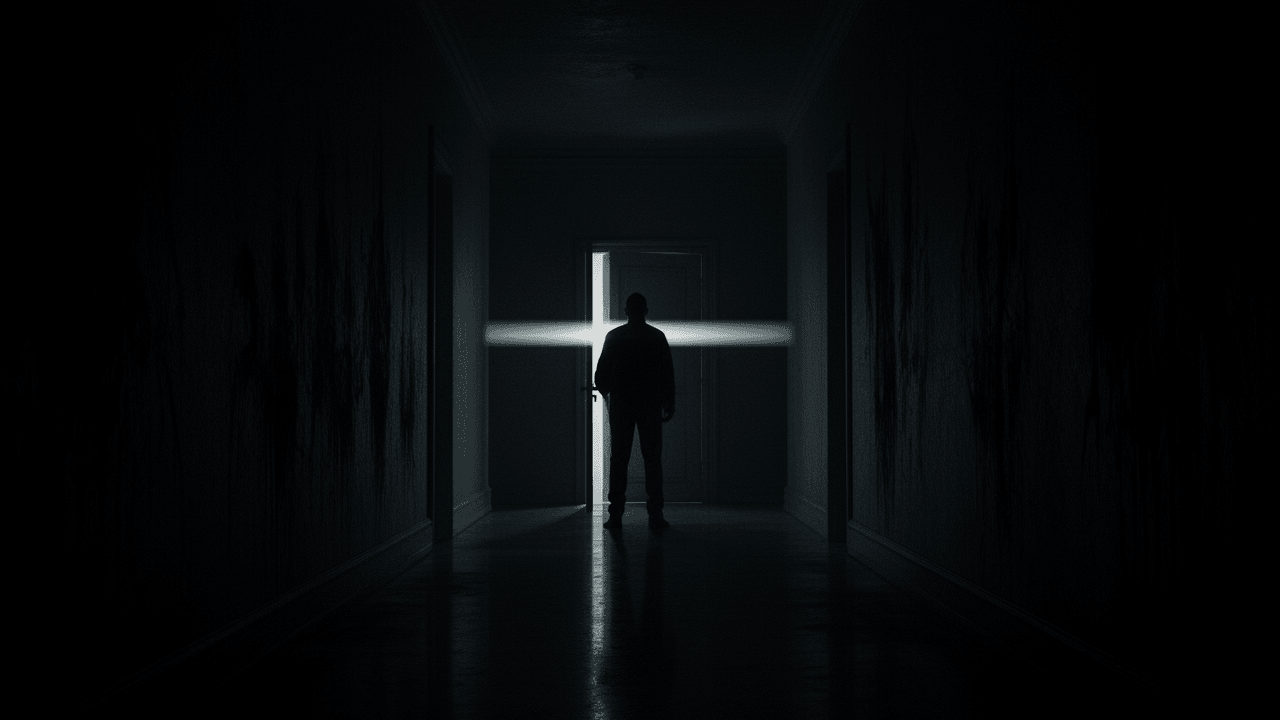
Directors use framing, blocking, and camera movement to control this feeling. A character isolated at the edge of the frame can seem vulnerable even before anything happens. A long corridor can become a countdown. A doorway can feel like a question mark.
Suspense is often less about what is literally on screen and more about the relationship between the viewer and the image. The frame says, “Look here,” while the mind says, “What am I missing?”
Sound design can make silence feel dangerous
If suspense has a secret weapon, it’s sound. Or more precisely, the careful use of sound and its absence.
Noise can sharpen fear by suggesting proximity. A faint scrape in the walls, a distant footstep, a mechanical hum, an offscreen crash—these sounds work because they force the viewer to search for a source. The brain hates unresolved audio cues.
Silence can be even more effective. When a movie removes its usual sonic comfort, the audience becomes hyperaware of small details: breathing, fabric rustle, floorboards, the creak of a chair. Silence does not mean calm. In suspense films, silence often means the opposite. It means the film is making room for something to happen.
Music matters too, but not always through big themes. Repeating motifs, low drones, and carefully timed stings can nudge the viewer’s nervous system without announcing the twist too early. The best scores in suspense don’t just accompany the scene—they manipulate its timing.
Withholding information is not the same as cheating
There’s an important difference between strategic withholding and sloppy storytelling.
Suspense works when the film hides information for a reason. A reveal may be delayed because the character doesn’t know yet, because the scene is building toward a change in power, or because the audience needs to feel the consequences rather than just hear them explained.
It fails when withholding becomes vague for its own sake. If a film refuses to clarify everything, but also gives no emotional or visual clues, the result is not suspense. It’s emptiness.
The strongest suspense movies are generous with texture even when they are stingy with answers. They may conceal the full truth, but they still give us enough detail to worry intelligently. That’s the key: the audience should feel engaged, not excluded.
Why tension can beat action and jump scares
Action delivers motion. Jump scares deliver spikes. Suspense delivers endurance.
That difference is why suspense often outlasts louder forms of stimulation. A well-built tense sequence stays in the body after the scene ends. The viewer remembers the wait, the hesitation, the almost-missed clue, the door that stayed closed one second too long.
Suspense can also make later payoffs feel bigger. When a film has spent time tightening the screw, even a modest reveal can land like a thunderclap. The audience has already done the emotional work. The movie just has to choose the right moment to release it.
This is why the most effective movie suspense often feels almost unfair while it’s happening. It stretches time. It denies relief. It makes normal actions—opening a door, answering a phone, walking down a stairwell—feel loaded with risk.
The best suspense films make us imagine the worst
Suspense is a collaboration between film and viewer. The movie supplies the conditions; the audience supplies the fear.
That’s why absence is so powerful. A footprint without a body. A sound without a source. A reaction before an explanation. Each missing piece invites the mind to complete the pattern, and the mind almost always errs on the side of danger.
A great suspense film understands that imagination is cheaper than spectacle and often far more effective. It doesn’t need to show the worst-case scenario in full detail if it can make us picture it ourselves.
That is the real genius of suspense: it delays payoff not because it has nothing to show, but because it knows the audience’s anticipation is the show.
What to look for in a great suspense movie
If you want to spot strong movie suspense at work, watch for these signs:
- Information is revealed in carefully timed pieces.
- The camera lingers where your eyes don’t expect it to.
- Silence or near-silence becomes unnerving rather than soothing.
- Characters make ordinary choices under abnormal pressure.
- Scenes end a beat before comfort arrives.
- The film trusts implication as much as explanation.
Those choices are usually invisible when they’re working. That’s the point. Suspense doesn’t announce itself as a craft lesson. It quietly engineers your attention until you realize you’ve been holding your breath for several minutes.
Why suspense still feels modern
Even in an era of constant content, suspense remains powerful because it resists speed for speed’s sake. It asks for patience and rewards attention. It turns every cut, pause, and sound cue into part of a larger design.
That’s also why suspense is so rewatchable. Once you know how the film controls information, you can see the machinery at work: the framing choices, the misdirection, the scene construction, the timing of each reveal. What once felt effortless suddenly looks exacting.
And that exactness is the point. Great suspense doesn’t simply ask what happens next. It asks how long the movie can make you wait before you can stand not knowing anymore.
If you have a favorite example of movie suspense—or a scene that had you absolutely locked in—share it in the comments. I’d love to hear what still gets under your skin.