

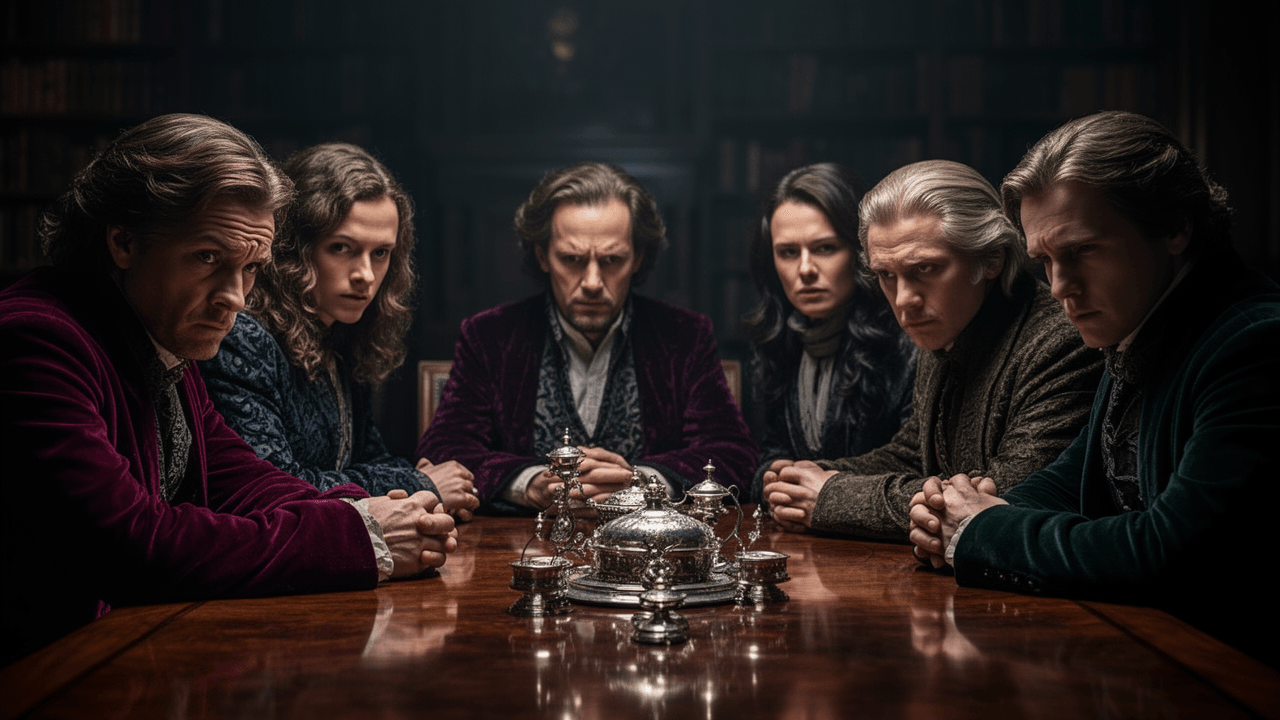
Why the best ensemble movies keep pulling us forward
The phrase best ensemble movies usually brings to mind crowded casts, sharp dialogue, and a sense that everyone on screen matters. But the real appeal runs deeper than “lots of interesting people in one film.” The strongest ensemble stories create a special kind of momentum. They don’t just give us multiple characters to enjoy; they let personalities collide, goals overlap, and tension move from one corner of the story to another.
That’s why ensemble films can feel larger than life without necessarily being bigger in budget or scope. A single protagonist can anchor a story beautifully, but an ensemble gives the narrative a built-in engine. Every interaction has the potential to change the shape of the plot. Every scene can belong to more than one character at once.
When an ensemble works, the movie feels alive.
What ensemble structure does better than a single-lead story
A lone-star narrative has a clean center of gravity. You follow one person’s choices, one arc, one point of pressure. That clarity is powerful. But an ensemble cast can add something different: friction.
Friction is what makes scenes move. If one person wants to leave, another wants to stay, and a third is hiding information, the story doesn’t need to manufacture energy. It already has it.
That’s why the best ensemble movies often feel denser than standard lead-driven stories. They can deliver:
- more competing objectives in the same scene
- more varied emotional tones without tonal whiplash
- more opportunities for surprise alliances and reversals
- more ways for the audience to choose a temporary favorite
- more texture in how a world looks, sounds, and behaves
The result is not just variety. It’s momentum.
Chemistry is the engine
People throw around the word chemistry so often that it can sound vague, but in ensemble storytelling it is the difference between clutter and coherence. Chemistry is what happens when characters don’t just occupy the same frame; they actively affect one another.
Great ensemble casts usually have a few different kinds of chemistry at once:
1. Complementary energy
One character is calm where another is chaotic. One is sarcastic where another is sincere. Those contrasts help the audience keep everyone distinct while also making dialogue feel spring-loaded.
2. Shared history
Characters who already know each other can skip exposition and go straight to tension, affection, or resentment. That shortcut saves time and makes the world feel lived in.
3. Unequal trust

Ensemble stories are often richer when not everyone is equally aligned. Suspicion forces behavior. People reveal themselves through what they withhold.
4. A sense of mutual dependence
The most satisfying ensembles make us believe that no one character can solve the problem alone. Even if one person is the unofficial leader, the group still feels essential.
Without chemistry, a cast is just a list. With it, the movie becomes a conversation.
Competing goals create the real drama
A good ensemble doesn’t simply distribute screen time evenly. It distributes desire unevenly.
That’s the key distinction. The audience doesn’t need every character to want the same thing. In fact, the movie is usually stronger when they don’t.
Competing goals give the story its internal pressure. One character wants speed, another wants caution. One wants profit, another wants justice. One wants to protect the group, another wants to abandon it. These clashes are especially effective because they happen inside the same narrative container. The characters are trapped together by circumstance, but divided by motive.
That is one reason the best ensemble movies feel so full. They don’t depend on one line of action. They create a web of tensions that keep recombining.
A single-star film can be elegant and focused. An ensemble film can be messy in a productive way. It can keep throwing new combinations at us until the story feels almost like a social experiment in motion.
Scene distribution: who gets the moment, and when
One of the hardest jobs in ensemble filmmaking is deciding who owns which scene. A film with too little discipline becomes shapeless. A film with too much discipline becomes mechanical, as if the cast were being sorted by spreadsheet.
The best ensemble structure solves this by thinking in terms of scene function rather than screen-time equality.
A scene might be there to:
- reveal a character flaw
- deepen a relationship
- shift alliances
- expose a hidden agenda
- add comic pressure before a serious turn
- change the emotional temperature of the group
In other words, a character doesn’t need the most lines to matter. They need the right lines at the right moment.
This is why memorable ensemble films often feel balanced even when one character dominates a stretch of the story. Attention can rotate as long as the rotation feels purposeful. The audience accepts temporary focus because they can sense that everyone still serves the larger pattern.
Why ensembles can make comedy funnier
Comedy thrives on timing, contrast, and interruption, which makes ensemble casts a natural fit.
A one-person comic framework has to carry the whole rhythm. An ensemble can generate laughter by creating collisions between different comic styles. Dry characters bounce off loud ones. Fast talkers frustrate slow thinkers. Optimists get punctured by cynics. The joke is not always in the line; sometimes it’s in the mismatch.
Ensembles also let comedy scale. A misunderstanding can spread from one person to another. A small lie can become a chain reaction. A group can escalate an ordinary problem into something absurd simply because too many personalities are reacting at once.
That’s one reason the best ensemble movies often feel more rewatchable in comedy mode. You notice new pairings, new reactions, and new background business every time.
Why ensembles make action feel larger

Action films often benefit most from ensemble structure because stakes are easier to feel when several people are exposed to them in different ways.
Instead of one person sprinting through danger, the audience tracks a whole system under pressure. Someone is forcing entry. Someone is improvising. Someone is panicking. Someone is trying to keep the plan together. The action becomes layered.
An ensemble also helps action sequences breathe. One character can drive forward while another provides logistical support, emotional grounding, or comic relief. That variation prevents fatigue and helps the set pieces feel like part of an ecosystem rather than a string of effects.
Just as important, group dynamics can make danger feel more unpredictable. If one character falls, the others have to react. That reaction changes the scene. The stakes aren’t abstract; they’re relational.
Why ensembles deepen drama
Drama gains a different kind of power from ensemble structure. Instead of concentrating conflict in one person’s inner life, it spreads pain, loyalty, regret, and ambition across several characters at once.
That creates richer moral geometry.
A decision can be right for one character and devastating for another. A sacrifice can look noble from one angle and selfish from another. A betrayal can hurt not because it happens, but because it lands in a relationship the audience has come to understand.
This is where ensemble storytelling often outperforms simpler narratives. It can show how pressure changes people in different directions. Not everyone breaks the same way. Not everyone heals the same way. That variety makes the story feel human.
The best ensemble movies understand that drama is rarely about a single argument. It’s about the accumulation of small loyalties, awkward silences, private resentments, and moments when the wrong person says the right thing too late.
How the structure keeps the film from losing focus
More characters mean more chances to drift. So how do the strongest ensemble films stay coherent?
Usually, they rely on a central organizing principle. That might be a shared mission, a confined location, a crisis with a deadline, or a moral problem everyone must confront from different angles. Whatever the setup, it gives the ensemble a common pressure point.
A focused ensemble film often has:
- a clear external goal
- a visible deadline or escalating threat
- distinct character functions
- scenes that advance multiple relationships at once
- a strong sense of cause and effect between subplots
The trick is not to minimize complexity. It’s to channel it.
When the structure is disciplined, the ensemble never feels scattered. It feels richly connected.
The hidden reward: the world feels bigger
One of the most underrated advantages of ensemble storytelling is scale. Not just visual scale, but social scale.
A single protagonist can reveal a world through one lens. An ensemble reveals it through many. We see different class positions, different moral instincts, different coping styles, different versions of the same event. That makes the setting feel less like backdrop and more like a living environment.
This is why some of the best ensemble movies linger in memory long after the plot is over. We remember the group’s rhythm. We remember who challenged whom, who softened whom, who kept the whole thing from collapsing. The movie doesn’t survive as one performance. It survives as an ecosystem of performances.
What to look for when an ensemble really works
If you want to spot a strong ensemble early, watch for these signs:
- no one feels disposable
- conversations change the direction of the story
- conflict grows out of character, not just plot mechanics
- different people get different kinds of wins
- the group’s balance shifts as the film progresses
- secondary characters still have clear motives
When those elements are in place, the movie doesn’t need to announce its ambition. You can feel it in every scene.
The lasting appeal of ensemble filmmaking
Ensemble stories endure because they mirror the way life actually feels: crowded, contradictory, funny at the wrong moments, emotional in bursts, and full of people trying to get what they want without fully understanding one another.
That’s why the best ensemble movies often feel more than entertaining. They feel social. They capture the electricity of being among other people when everyone wants something slightly different, and the next conversation could tip everything.
A strong lead can carry a film. But a great ensemble can make the whole movie vibrate.
If you have a favorite ensemble film—or a take on why certain casts click instantly—drop it in the comments. I’d love to hear what made it work for you.