
The highway was never just a road
Retro car ads made a bold promise: buy the car, and you buy a version of yourself. In the polished worlds those ads constructed, the highway was not a strip of asphalt so much as a stage for identity, mobility, and social arrival. Chrome gleamed like jewelry. Motion blur suggested urgency and power. Scenic roads opened into possibility. Even the interior shots—clean seats, wide dashboards, immaculate steering wheels—turned the automobile into a private lounge for modern life.
That was the genius of the best automotive advertising from the era. It sold more than horsepower or fuel economy. It sold a mood, a class position, a gender performance, and a fantasy of movement that felt larger than commuting. To drive was to appear forward-looking. To own the right car was to look like someone already on the way up.
Chrome as a social signal
The visual grammar of many mid-century car ads was unmistakable. Designers framed bumpers, grilles, and tailfins as if they were architectural details on a luxury building. The point was not simply that the car looked nice. It was that it looked carefully chosen. Chrome carried the message of polish, confidence, and spending power.
Ads lingered on reflective surfaces for a reason. They made the vehicle feel tactile and expensive, but they also invited the viewer to imagine how ownership would change public perception. A car with gleaming trim didn’t just move differently; it seemed to belong to a person with taste, discipline, and upward momentum.
That idea mattered because automotive ads were selling into a culture that linked objects to status more aggressively than ever. The car became a portable signature. Parked in a driveway, it spoke. Rolling down the boulevard, it announced. In this way, chrome functioned less as decoration than as shorthand for a modern social identity.
Motion blur and the fantasy of speed
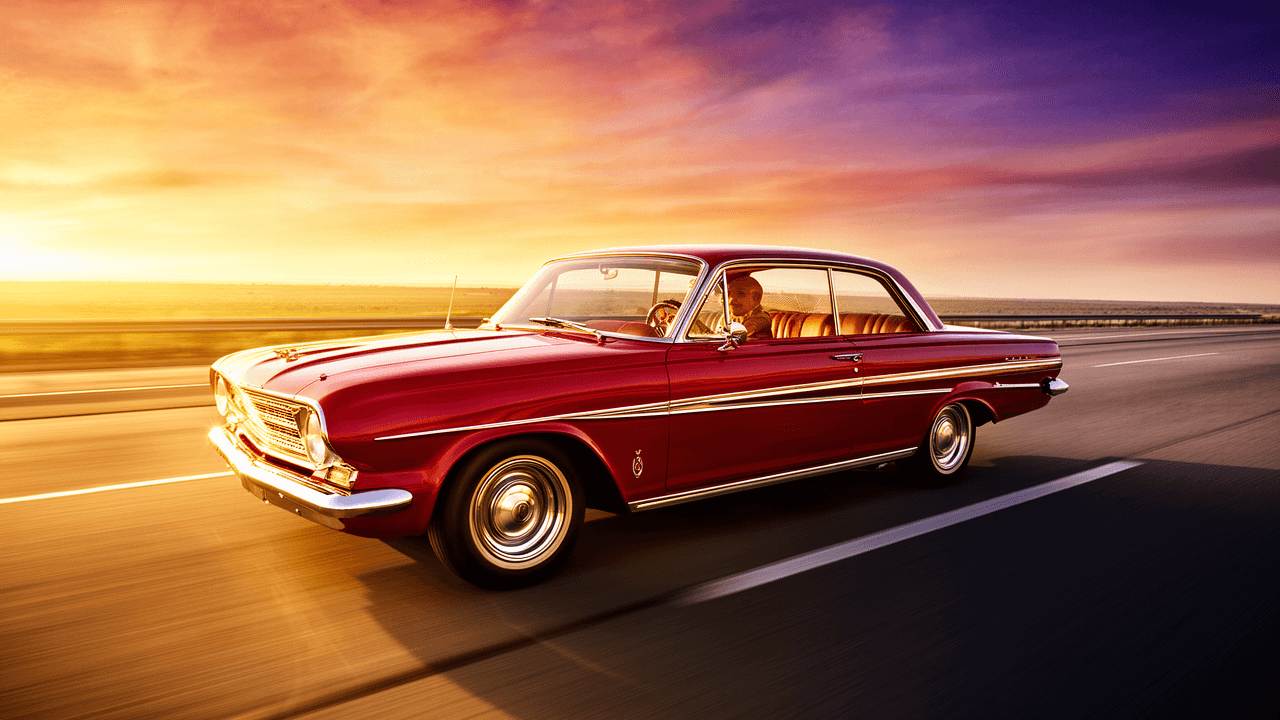
If chrome was the promise of refinement, motion blur was the promise of power. Advertisers loved to place cars in dynamic angles, streaking past backgrounds of trees, highways, and coastlines. The blur told a story before the copy did: this machine was not merely useful, it was alive with momentum.
That visual trick did something subtle. It made speed feel aspirational rather than reckless. The car did not look dangerous; it looked liberated. The road ceased to be an obstacle and became proof that the driver was not stuck in place. In the ads, the machine and the person merged into one image of progress.
This is where retro car ads became especially persuasive. They understood that velocity is emotional as much as mechanical. A fast-looking car can imply confidence, youth, sexual charisma, and mastery over time itself. You were not just arriving sooner. You were arriving with style.
The open road as a personal myth
Scenic roads in automotive ads were never neutral backgrounds. They were mythic settings. Winding mountain passes, empty coastlines, long desert stretches, and tree-lined highways all suggested a nation full of room to move, choose, and reinvent oneself.
That visual strategy tapped into a powerful cultural idea: the road as freedom. But freedom here was carefully framed. It was not the rough freedom of uncertainty. It was the managed freedom of a clean dashboard, a reassuring suspension, and a map that always seemed to lead somewhere desirable.
The road also helped advertisers link cars to independence. A person behind the wheel appeared self-directed, competent, and modern. Even when the ad showed a couple or a family, the car still implied agency. You could go where you wanted, when you wanted, with whom you wanted. The machine became a tool for choosing your own life script.
Family imagery softened the machine
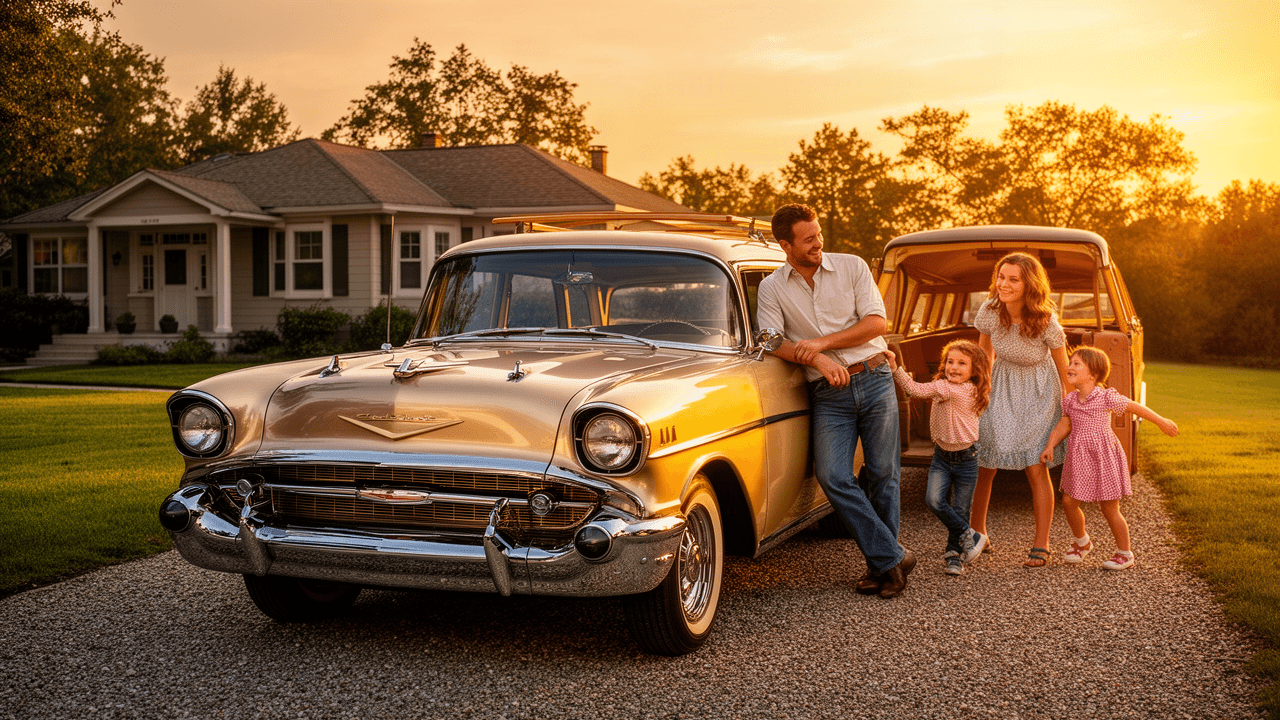
One of the most effective moves in automotive advertising was the use of family scenes. A smiling spouse. Well-dressed children. A picnic basket. A suburban driveway. These images reassured viewers that the car was not only a status object for lone drivers, but a responsible purchase that improved domestic life.
Family imagery did important cultural work. It made speed look safe, expense look prudent, and technology look nurturing. The car was cast as an extension of the home: comfortable, protective, and trustworthy. Wide bench seats and polished interiors mattered because they suggested that the vehicle could carry not just bodies, but family ideals.
At the same time, these ads quietly linked ownership to adulthood. To have the right car was to have arrived at a certain life stage—stable, organized, respectable. The highway remained a place of adventure, but the car turned that adventure into something family-friendly and socially approved.
Inside the car, the future looked clean
Interior shots were crucial because they transformed the automobile from metal object to lived environment. Advertisers spotlighted steering wheels, dashboard layouts, upholstery, and ample legroom with the same care a decorator might give to a living room. The message was clear: modern life should feel streamlined, controlled, and comfortable.
These interiors often looked almost too perfect. No clutter. No dust. No chaos. That cleanliness was part of the appeal. A car that looked orderly inside suggested a driver who was equally organized and self-possessed. The cabin became a miniature version of aspirational domesticity—private, tasteful, and technologically improved.
In that sense, the car was not only transporting people. It was transporting an image of the self. The ideal driver appeared composed within a machine designed for the future.
Aspiration, independence, and social mobility
Automotive advertising sold the car as a ladder as much as a vehicle. Owning a new model implied upward movement, not just geographic movement. The ad copy and imagery worked together to suggest that the right automobile could lift a buyer into a more confident social register.
That is why the messages around aspiration were so layered. The car promised independence to the young professional, reliability to the parent, prestige to the homemaker, and authority to the head of household. Different audiences could read different futures into the same vehicle.
The broader cultural fantasy was simple but potent:
- Aspiration: the car marks you as ambitious and modern.
- Independence: the road becomes yours to choose.
- Mobility: movement signals personal progress.
- Respectability: the purchase reflects good judgment.
- Belonging: the family or couple in the ad makes the machine feel socially grounded.
That combination is why these ads endure visually. They are not just product images. They are identity diagrams.
Why retro car ads still feel legible now
A lot of advertising from the era feels dated in its assumptions or styling. Car ads are different. Even when the copy is archaic, the core emotional logic still lands. People still want mobility to mean more than motion. They still want vehicles to communicate taste, freedom, and control over time.
The imagery remains familiar because it established a template that still shapes automotive marketing today. Sleek angles. Scenic routes. Interior comfort. Family togetherness. Solo mastery. The old ads taught viewers how to read cars as symbols of personality and status, and that lesson never fully left.
What makes them especially interesting now is the tension at their center. They presented the highway as a place of openness, but the ads themselves were highly managed visions of open space. They promised spontaneity through carefully art-directed scenes. They sold independence through an object that was always, in effect, designed to be seen.
The enduring lesson of the open road
The best retro car ads understood that selling a car meant selling a way of standing in the world. Chrome said you had taste. Motion blur said you had power. Scenic roads said you had somewhere to go. Family scenes said your ambition was socially safe. Polished interiors said the future could feel orderly, even luxurious.
Put together, those elements transformed the automobile into something bigger than transportation. It became a symbol of modern life itself: mobile, polished, optimistic, and just aspirational enough to feel within reach.
If you’ve got a favorite example of a car ad that nails this open-road fantasy, or a detail you think advertisers keep getting right, share it in the comments.