
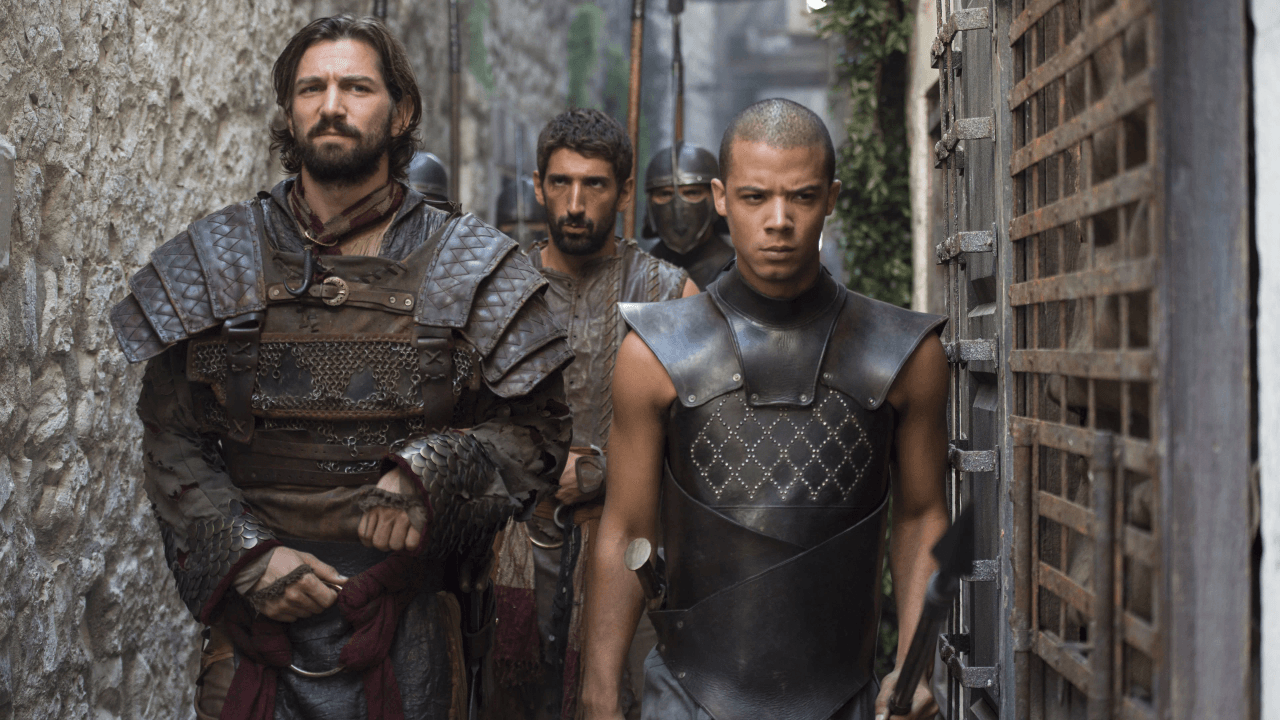
Image credit: Draft web reference from themoviedb.org
What Changes in Game of Thrones S5E2 “The House of Black and White”
The Game of Thrones S5E2 “The House of Black and White” episode guide is really a guide to transition: people cross thresholds, make bargains, and realize the world has moved on without asking their permission. This episode is quieter than a battlefield hour, but it does something just as important. It sets new destinations in motion for Arya, Tyrion, Cersei, Jon Snow, and Daenerys, while also showing how power works when no one is winning cleanly.
If you are building a full Game of Thrones compendium, this is one of those chapters worth treating carefully. It is an episode of first steps and false confidence. The action is not always loud, but the consequences are.
Game of Thrones S5E2 “The House of Black and White” episode guide: the short version
The episode splits its attention across several fronts:
- Arya arrives in Braavos and seeks the mysterious House of Black and White.
- Tyrion and Varys continue their uneasy travel east, with Pentos in the rearview and uncertainty ahead.
- Daenerys deals with the first real signs that ruling Meereen is harder than conquering it.
- Jon Snow begins the next phase of leadership at the Wall, where every decision has a cost.
- Cersei loses ground in King’s Landing as the political machinery around her keeps grinding forward.
The episode is about movement, but not momentum. Most characters are not getting what they want. They are getting where the story needs them to be.
Arya reaches Braavos, and the path finally narrows
Arya’s storyline carries the episode’s title, and the show makes that choice matter. She arrives in Braavos with the Iron Bank coin given to her by Jaqen H’ghar back in Season 2, but this is not a triumphant homecoming. It is a test of patience and identity.
She finds the House of Black and White, a place that looks less like a temple than a warning. The statues, the dark interior, and the ritual refusal of easy answers all reinforce the same idea: Arya is entering a world where she cannot force outcomes the way she has in the past.
What matters here is not just location, but direction. Arya has spent much of the series running, surviving, and adapting. Braavos is different. It asks her to surrender some control in exchange for a harder kind of training.
Why this scene matters
- It confirms that Arya’s arc is now tied to the Faceless Men.
- It deepens the worldbuilding around Braavos without turning it into a tourist stop.
- It shifts Arya from fugitive mode into apprenticeship mode.
For new viewers, the key thing to remember is simple: Braavos is not a detour. It is the start of a major reinvention.
Tyrion and Varys: exile, observation, and the long road east
Tyrion’s scenes continue the series’ most important post-escape storyline. He is no longer in King’s Landing, but he is still trapped by the political consequences of everything he knows. Varys keeps steering, but the companionship feels practical rather than warm.
This material matters because it preserves Tyrion’s defining trait: he sees structures clearly even when he cannot control them. He remains witty, but the wit is sharpened by failure. He is processing humiliation, danger, and exile all at once.
Varys, meanwhile, keeps operating as one of the show’s great uncertainty engines. He rarely reveals too much, but his presence means the audience should always assume a deeper plan is in motion.
Political fallout to track
Tyrion is no longer a player inside the capital. He is becoming a variable in a wider international board. That matters later, because exile can be a setback or an education depending on who survives it.
Daenerys discovers that taking a city is easier than holding one
In Meereen, Daenerys is no longer dealing with the fantasy of liberation. She is dealing with administration, resentment, and the practical mess left after revolution.
This episode does a strong job of showing the gap between conquest and governance. Daenerys can end slavery with force, but she cannot instantly build trust, institutions, or stability. Her authority is real, but it is also fragile.
That tension is central to her arc in Season 5. The show begins pushing her away from pure liberator imagery and toward the harder role of ruler. She has supporters, enemies, and a city that will not simply fall in line because she believes she is right.
Lore and series implications
This is one of the clearest reminders that Game of Thrones is not built on the idea that justice automatically produces peace. In Meereen, power creates obligation. Every good decision has side effects, and every delay invites a new problem.
Jon Snow steps into leadership at the Wall
Jon’s material in this episode is not built around spectacle, but it is foundational. He is settling into the responsibilities of command, and that means dealing with manpower, discipline, and the uneasy alliance between the Night’s Watch and the wildlings.
What the episode gets right is that leadership at the Wall is not about one heroic act. It is about making unpopular choices while no one fully trusts you. Jon has the moral seriousness to do the job, but the job itself keeps getting more complicated.
The broad takeaway is that the Wall remains one of the show’s most important pressure points. It is where the political and supernatural threats of the series quietly converge.
What viewers should remember
- Jon is now leading, not just reacting.
- The wildlings remain a critical part of the story.
- The Wall is still one of the main places where the future of the realm will be decided.
Cersei, the Faith, and the shrinking comfort of power
Cersei’s scenes continue the slow collapse of easy control in King’s Landing. She is powerful, but not secure. She is connected to the center of power, but increasingly unable to command the center itself.
This episode helps clarify one of the show’s recurring ideas: proximity to the throne is not the same as safety. Cersei can influence events, but she cannot contain them. The growing force of the Faith and the shifting alliances around the crown create a sense of pressure that will only intensify.
Her story here is not about defeat in the immediate sense. It is about the erosion of certainty.
The House of Black and White is an episode about thresholds
The best way to understand this episode is as a series of doors opening and closing.
Arya enters a new life.
Tyrion leaves the one he knew.
Daenerys confronts the limits of victory.
Jon accepts the burden of command.
Cersei feels the walls tightening.
That structure gives the episode its strength. It does not need a huge battle or a shocking death to matter. Instead, it repositions the board.
Standout scenes worth remembering
- Arya at the temple entrance — eerie, deliberate, and loaded with future meaning.
- Tyrion and Varys on the road — one of the show’s cleanest examples of political exile as character development.
- Daenerys facing Meereen’s reality — the moment where liberation starts looking like governance.
- Jon’s early leadership beats — quiet scenes that build the larger arc at the Wall.
- Cersei under pressure in King’s Landing — a reminder that power can shrink even while it still looks intact.
Ending and immediate consequences
By the end of the episode, no major war has been won or lost, but every major arc has been nudged into a new phase. That is exactly why the episode matters.
Arya has reached the destination that will define her next transformation. Tyrion has moved farther from the center of the realm. Daenerys is trapped in the work of ruling. Jon is learning what leadership actually costs. Cersei is facing a political landscape she cannot fully control.
The ending does not land like a shock. It lands like a door locking behind the characters.
Why this episode matters to the larger series
In a series famous for spectacle, this episode earns its place by changing trajectories rather than delivering a headline twist. It matters because it helps launch the next version of several core stories at once.
Here is the larger-series significance in plain terms:
- Arya’s Braavos arc begins in earnest.
- Tyrion’s exile becomes a major eastward storyline.
- Daenerys’ rule becomes harder than her conquest.
- Jon’s leadership becomes the real test of his character.
- King’s Landing continues to fracture under competing powers.
That combination makes the episode essential for anyone watching the series with the bigger map in mind. It is not one of the loudest episodes of Season 5, but it is one of the most structurally important.
What new viewers should remember next
If you are watching Game of Thrones for the first time or returning after a break, keep these points in mind after this episode:
- Arya is now in Braavos for a reason, and the reason matters later.
- Tyrion is not safe, and his escape has only changed the shape of his danger.
- Daenerys can win a city and still lose control of it.
- Jon’s authority at the Wall will be tested quickly.
- The political center in Westeros is still unstable, even when it looks formal.
That’s the real value of the episode: it teaches the viewer where the story is going next without spelling out the destination.
Final takeaway
Game of Thrones S5E2 “The House of Black and White” episode guide territory is all about setup with consequences. The episode is restrained, but not minor. It is where several of the show’s biggest arcs quietly cross from one phase into another, and that makes it one of the most useful chapters in the season.
If you’re tracking the series as a whole, this is the kind of episode that pays off later.
What did you think of this chapter, and which storyline stood out most to you? Share your thoughts in the comments.