
Image credit: Draft web reference from campustimespune.com
A battle of judgment, not swords
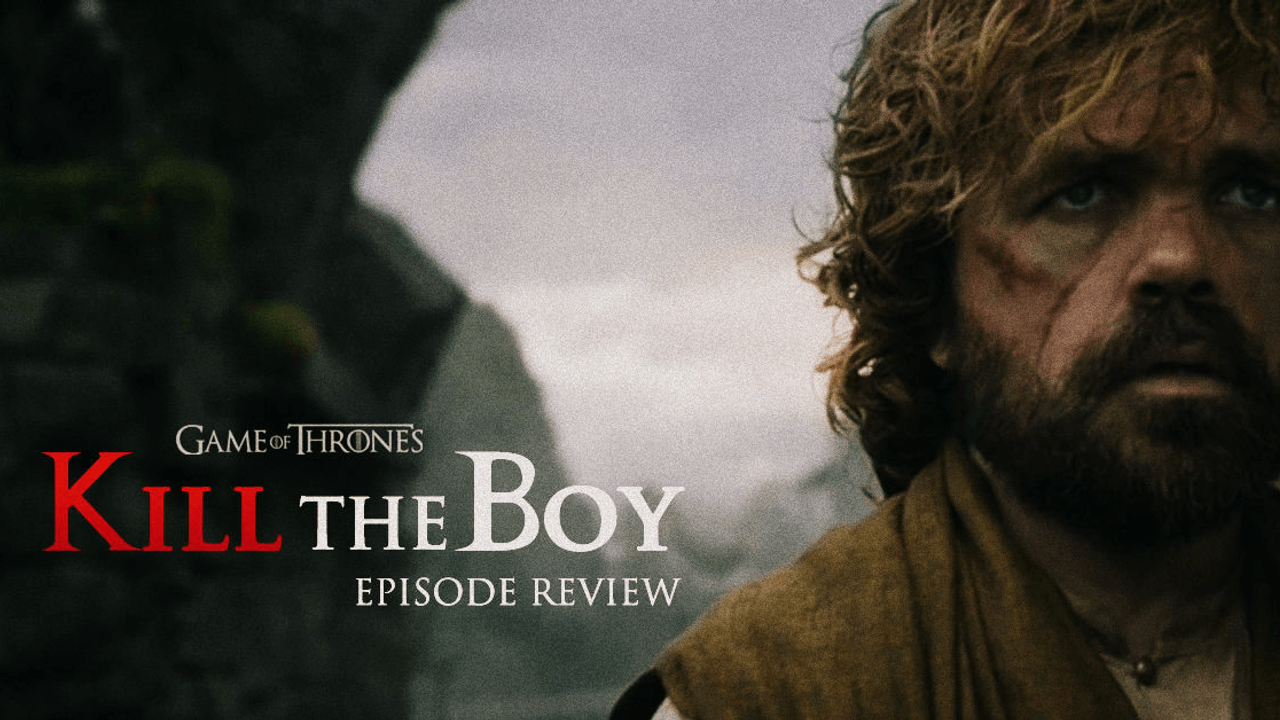
The Game of Thrones S5E5 “Kill the Boy” episode guide belongs in any serious episode compendium because this chapter is built around a simple but ruthless idea: growing up means choosing what kind of ruler, soldier, or survivor you are going to be. “Kill the Boy” is not an action-heavy spectacle in the usual sense. Instead, it moves the board by forcing characters to abandon old instincts and make decisions that will define the rest of the season.
At the Wall, in Meereen, in King’s Landing, and in Dorne, the episode keeps circling the same pressure point: power becomes real only when someone is willing to pay for it. That makes this hour one of the season’s most important connective tissues. It looks quieter than the episodes around it, but the fallout travels much farther.
Game of Thrones S5E5 “Kill the Boy” episode guide: the story in plain terms
The title comes from the blunt advice given to Jon Snow: if he is going to lead, he has to stop thinking like a frightened boy and start acting like a lord who can make hard calls. That theme spreads across the episode’s parallel storylines.
At the Wall, Jon faces the first major test of his new authority as Lord Commander. Stannis pushes an alliance-minded vision of the North, but Jon is also staring at a deeper threat: the dead are rising, and old feuds are suddenly irrelevant. In Meereen, Daenerys is dealing with the gap between abstract liberation and practical rule, especially as violence and instability continue to undermine the city. In King’s Landing, Cersei’s grip on the political game begins to slip further as the Faith gains momentum. Across the Narrow Sea, Tyrion’s path with Jorah and Daario edges the story toward another collision between captivity, loyalty, and survival.
The episode is structured like a hinge. Every scene asks the same question in a different language: what does leadership cost when sentiment stops being enough?
Jon Snow learns what command actually means
The episode’s clearest character shift belongs to Jon Snow. He is no longer just a dutiful member of the Night’s Watch trying to survive bad odds. He is now the man expected to lead other men through decisions they may not forgive.
Stannis’s offer is tempting because it looks like certainty. A king, an army, and the possibility of reclaiming the North can make even the bleakest situation feel manageable. But Jon’s thinking is shifting away from identity politics and toward existential necessity. He has seen enough to understand that the real threat is not simply the Boltons or southern ambition. It is the Long Night’s return, and that kind of danger does not care who sits where.
This is where the episode earns its title. Jon is being asked to kill the boy in himself: the version of him that still wants approval, clean morality, and heroic simplicity. What replaces that is not cynicism. It is responsibility.
Key Jon Snow move
- He starts thinking like a commander rather than a grieving outsider.
- He recognizes that the dead cannot be negotiated with.
- He begins separating duty to the realm from personal loyalty.
That shift matters because it is the first step toward the leadership style Jon will need later. The episode doesn’t crown him with triumph; it hands him a heavier burden.
The Wall and beyond: the Night’s Watch is changing shape
One of the smartest things about this episode is how it treats the Wall as more than a setting. The Night’s Watch is no longer a neglected border outpost. It is becoming a strategic choke point for the whole continent.
The real lore implication here is the growing awareness of the White Walkers and the army of the dead. The Watch has spent generations performing ceremonial vigilance while quietly decaying. “Kill the Boy” pushes the idea that the old order is obsolete. The world has changed, and so must the people trying to defend it.
That gives the episode an almost institutional tragedy. The Watch still has old customs, old resentments, and old ways of thinking, but the enemy ahead is apocalyptic. The series keeps returning to this contrast: medieval politics can seem enormous until something ancient and unnatural starts advancing from the far north.
Daenerys faces the ugly math of rule in Meereen
Daenerys Targaryen’s storyline in “Kill the Boy” is another reminder that conquest is easier than governance. She has power, symbolic authority, and a claim built on destiny. What she does not yet have is stable legitimacy on the ground.
Meereen is not simply waiting to be saved. It is a city with competing interests, frightened citizens, and enemies who are willing to weaponize public disorder. That matters because Daenerys cannot rule through inspiration alone. The episode keeps showing how easily liberation can curdle into retaliation when the structures underneath it remain broken.
Her scenes are important not because they offer neat answers, but because they sharpen the tension between idealism and statecraft. Daenerys wants to be a just ruler. The episode shows how hard that becomes when justice has to survive contact with real politics.
What Daenerys’s storyline adds to the season
- It shows the limits of charismatic rule.
- It reminds viewers that freed cities still need institutions.
- It deepens the cost of trying to build a better system inside a collapsing one.
King’s Landing: faith, power, and a quieter kind of threat
While the North and Meereen deal in armies and emergencies, King’s Landing is still playing the slower, deadlier game of influence. “Kill the Boy” continues the season’s setup of the Faith as a force that can destabilize the crown from within.
That matters because the series is not just telling one story of kings and queens. It is showing what happens when authority splits into rival forms. The crown can issue commands, but belief can shape public loyalty in a way that steel cannot always control.
The episode’s political value lies in that pressure. It demonstrates that the real contest in King’s Landing is no longer just between nobles. It is between institutions, and institutions have longer memories than individuals.
Tyrion, Jorah, and the road that keeps narrowing
Tyrion’s storyline helps keep the episode connected to the broader map of the show. His journey with Jorah Mormont and Daario Naharis is still about movement, but the emotional direction is narrowing. Each step makes the next betrayal, bargain, or revelation more likely.
What makes these scenes work is the tension between trust and usefulness. Nobody in this group is fully secure. Everybody has a motive. That is exactly why the story remains compelling: in Westeros and across the sea, alliances are rarely friendships. They are temporary arrangements held together by fear, ambition, or shared need.
The ending and why it lingers
The ending of “Kill the Boy” matters because it does not deliver a flashy twist. It delivers a perspective shift. By the time the episode closes, the audience should understand that several characters are no longer operating on the same assumptions they had at the start.
Jon is moving toward leadership with colder clarity. Daenerys is learning that power without order is fragile. King’s Landing is becoming more vulnerable to the Faith’s influence. The road stories are tightening toward conflict rather than adventure.
That is why this episode is easy to underestimate and hard to remove from the larger season. It is a transition episode that actually changes how the main characters see their responsibilities. Those are often the episodes that matter most once the final season-long consequences arrive.
What new viewers should remember next
If you are using this as part of a full Game of Thrones compendium, the most important takeaways from the Game of Thrones S5E5 “Kill the Boy” episode guide are simple:
- Jon Snow is no longer just reacting; he is beginning to lead.
- The Night’s Watch is tied to a threat far bigger than northern politics.
- Daenerys’s conquest is becoming a governing problem.
- The Faith’s growing power in King’s Landing is a slow-burn political bomb.
- Tyrion’s journey is still in motion, but trust is getting thinner by the mile.
These threads do not resolve here. They tighten. That is the whole point.
Why this episode matters to the larger series
“Kill the Boy” is one of those episodes that quietly redraws the series’ logic. Earlier seasons often ask who has the stronger claim, the sharper blade, or the better army. This episode asks a harsher question: who is ready to carry responsibility when none of the old answers work anymore?
That is why it matters.
The show’s biggest conflicts are not only about thrones. They are about adaptation. Characters who cannot evolve are crushed by history, while those who can survive often become unrecognizable. Jon’s arc in particular depends on this idea, but the episode applies it everywhere. The world is not waiting for anyone to catch up.
So if you are building a full episode guide library, this one deserves more than a quick summary. It is a pivot point. It marks the moment when several major stories stop being about setup and start becoming about consequence.
If this episode changed how you read Jon, Daenerys, or the wider political landscape, share your take in the comments—I’d love to hear which scene stood out most to you.