

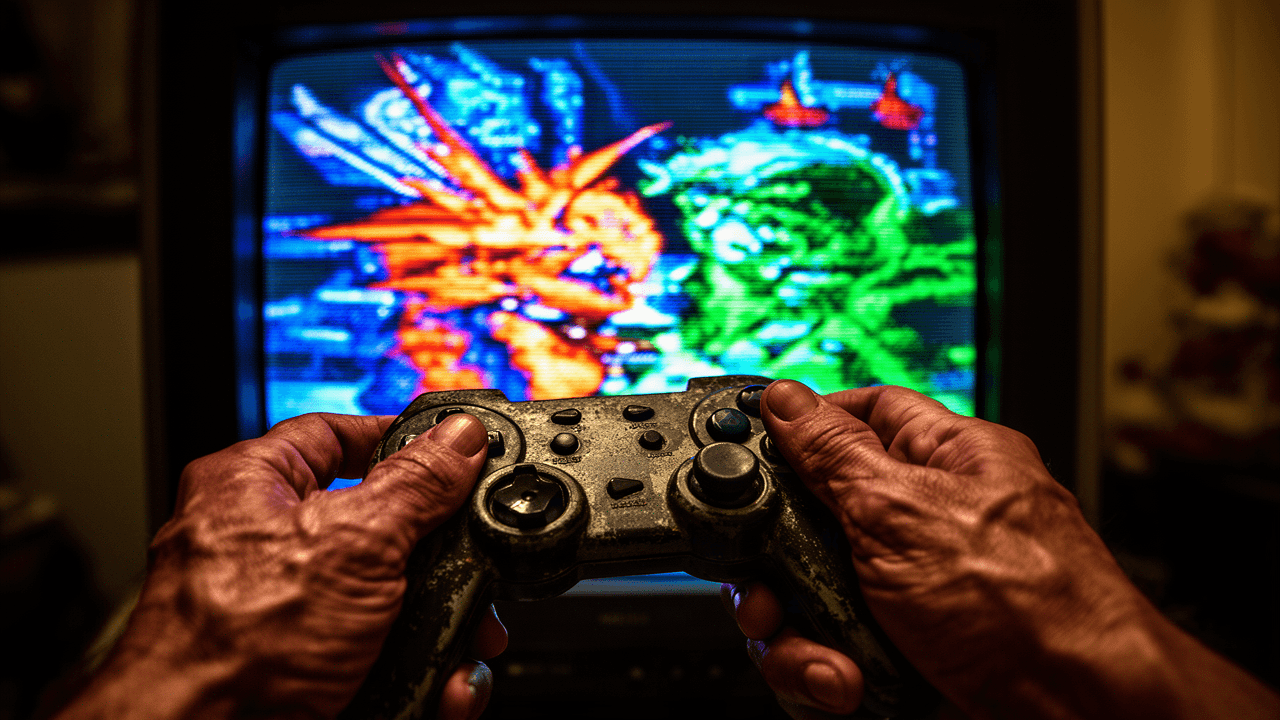
Why Retro Game Input Delay Became Part of the Skill Ceiling
Retro game input delay is easy to treat like a flaw, especially if you come to older games after years of instant-response modern controls. But in classic games, delay was often part of the texture, the pacing, and sometimes the challenge itself. Players didn’t merely tolerate it. They learned to read it, predict it, and build skill around it.
That’s why some retro games feel crisp and others feel heavy. The difference isn’t only about animation or frame rate. It’s about how quickly the game accepts your intent, how long it takes to see the result, and how much you have to plan ahead when the window between thought and action is wider than you expect.
What people mean by retro game input delay
Input delay is the gap between pressing a button and seeing the character respond. In the best-case scenario, that gap feels invisible. In many classic games, it was not invisible at all. Sometimes the delay came from the hardware. Sometimes it came from animation timing, collision checks, buffering choices, or a deliberate design decision to keep actions readable and weighty.
That distinction matters because not all delay feels the same.
- Hardware-era delay could come from older display technology, slower processing, or controller polling limits.
- Design delay could come from long startup frames, commitment-heavy attacks, or movement that was meant to feel deliberate.
- Genre delay could be built into the game’s language, where timing windows were part of the challenge rather than a side effect.
A game can be responsive and still feel heavy. It can also feel sluggish without actually being unfair. The player experience depends on whether the delay is legible, consistent, and learnable.
Why older games often felt heavier
A lot of retro games were built around stronger animation commitment than many modern players are used to. Characters had to wind up, turn, land, recover, and sometimes reset before the next action could start. That made movement feel physical, but it also meant the player was often acting one beat earlier than their eyes suggested.
That “heaviness” became part of the identity of the game.
In action platformers, that could make jumps feel dangerous and satisfying. In adventure games, it could make every turn or item use feel deliberate. In fighting games, it could separate beginners who mashed buttons from players who understood spacing, frame timing, and recovery.
The result was not always bad control. Sometimes it was a different kind of control philosophy.
Retro game input delay and the hidden skill of anticipation
Once players understood the rhythm of a game, they stopped reacting only to what was on screen and started acting slightly ahead of it. That’s the core skill many retro games quietly rewarded.
You didn’t wait for the perfect visual cue and then press the button. You learned the delay, trusted the timing, and entered your input before the moment arrived.
That kind of anticipation showed up everywhere:
In platformers
You learned how early to jump before the edge disappeared from view, how long the character took to accelerate, and how much recovery was attached to landing or changing direction. The best players weren’t just quick. They were calibrated.
In action games
Attacks often had startup and recovery that made reckless play feel bad. Players learned to commit only when there was space for the whole animation, not just the first frame of it. That turned combat into timing management, not pure reflex.
In fighting games
Delay became part of the meta. Players had to understand cancel windows, buffering, priority, and the cadence of moves. A match was often decided by who could predict the exchange rather than who could only react to it.
In RPGs and strategy games
Even when input delay was less obvious, menu navigation, battle pauses, and command confirmation shaped the tempo. The game asked for patience, and players adapted by thinking several steps ahead.
When delay was a hardware reality, not a design choice
It’s important not to flatten every old-game control issue into “the game felt slow.” Some of what players remember as delay came from the technology of the era, including displays, controllers, and the limitations of how games were rendered and processed.
That matters because it changes the conversation. A game built to feel weighty can be elegant. A game forced to absorb extra latency can feel muddy. Players often developed skill anyway, but that skill was about compensation as much as mastery.
They learned to:
- press earlier than instinct suggested,
- hold directions longer than modern expectations would require,
- memorize animation lengths instead of trusting visual immediacy,
- and account for the fact that the screen itself might not be showing the exact moment their input was registered.
That’s one reason some retro games still have a reputation for “feel.” The feel is not just visual style. It is timing knowledge.
Why the same delay feels forgiving in one genre and brutal in another
The impact of input delay depends heavily on what the game asks you to do.
In a turn-based RPG, a little latency may be almost irrelevant. The player is making strategic decisions, not frame-perfect ones. A slower menu can be annoying, but it usually doesn’t damage the core challenge.
In a platformer, the same amount of delay can be enormous. Jump timing is often the whole game.
In a fighting game, delay can reshape the competitive ceiling. Precision and consistency matter so much that even small amounts of latency affect what players can reliably execute.
In a shooter, delay can change whether the game feels responsive and empowering or stiff and disconnected. If the crosshair and the character movement do not match your instinct, the game starts to fight the player instead of partnering with them.
That’s why “input delay” is not a universal complaint. It is a genre-dependent variable.
Compensation became part of the skill ceiling
The most interesting thing about retro game input delay is that it didn’t just reduce skill; it created a different kind of skill.
Players who stuck with a game learned to compensate, and compensation itself became a marker of expertise. You could often tell a veteran not because they were reacting faster, but because they were operating comfortably inside the game’s timing system.
They knew:
- how early to start a jump chain,
- when to buffer a command before an opening appeared,
- how to move through a room without oversteering,
- and how to stop thinking in real-time instinct and start thinking in game-time rhythm.
That’s part of why old games can look deceptively simple on the surface. The visible action is only half the story. The other half is the invisible calibration the player has already done.
How delay shaped the emotional tone of classic games
Input delay also changed mood.
A responsive game can feel sharp, athletic, and immediate. A game with more deliberate timing can feel weighty, gritty, or anxious. That sense of effort becomes emotional color. It affects how much tension you feel before a jump, how much commitment you sense before an attack, and how much relief you get when a plan works.
That “heavier” feeling still shapes modern retro taste. Some players chase it on purpose because it creates a stronger sense of embodiment. They want actions to have consequence. They want momentum to matter. They want a button press to feel earned, not frictionless.
Others prefer the opposite: cleaner response, lighter control, less compensation.
Neither preference is wrong. They just point to two different ideas of mastery.
The modern lesson: responsiveness is part of design, not just polish
Today, players are more aware of latency than ever. They notice controller lag, display lag, input buffering, and inconsistent frame pacing because modern games have made response quality an expected part of the experience.
But retro games remind us that responsiveness is not only technical polish. It is a design decision with consequences for pacing, challenge, and player expression.
A few lessons still hold up:
- Consistency matters more than perfection. Players can learn delay if it stays predictable.
- Genre changes the stakes. A menu delay is not the same as a jump delay.
- Weight and responsiveness are a tradeoff. More commitment can create stronger feel, but only if the game remains readable.
- Skill can include adaptation. Sometimes the mastery is not overcoming delay, but learning the game’s timing language.
That’s why some classics still feel great even when they feel old. Their controls are not always modern, but they are coherent. They teach a player how they want to be played.
Why this still matters for retro fans
If you love retro games, input delay is part of the reason they continue to divide people. One player feels the extra latency and calls it clunky. Another hears the rhythm and calls it character.
Both reactions are honest.
What makes the conversation interesting is that classic games often asked players to meet them halfway. Once you did, the “delay” stopped being an obstacle and started being part of the language of play.
That’s a big part of why retro taste remains so specific. People don’t just remember the graphics, music, or difficulty. They remember the tempo of the controller in their hands.
And sometimes that tempo is exactly what made the game memorable.
If you have a favorite example of a game that feels intentionally heavy—or frustratingly delayed—share it in the comments. I’d love to hear which classics taught you how to adapt.