

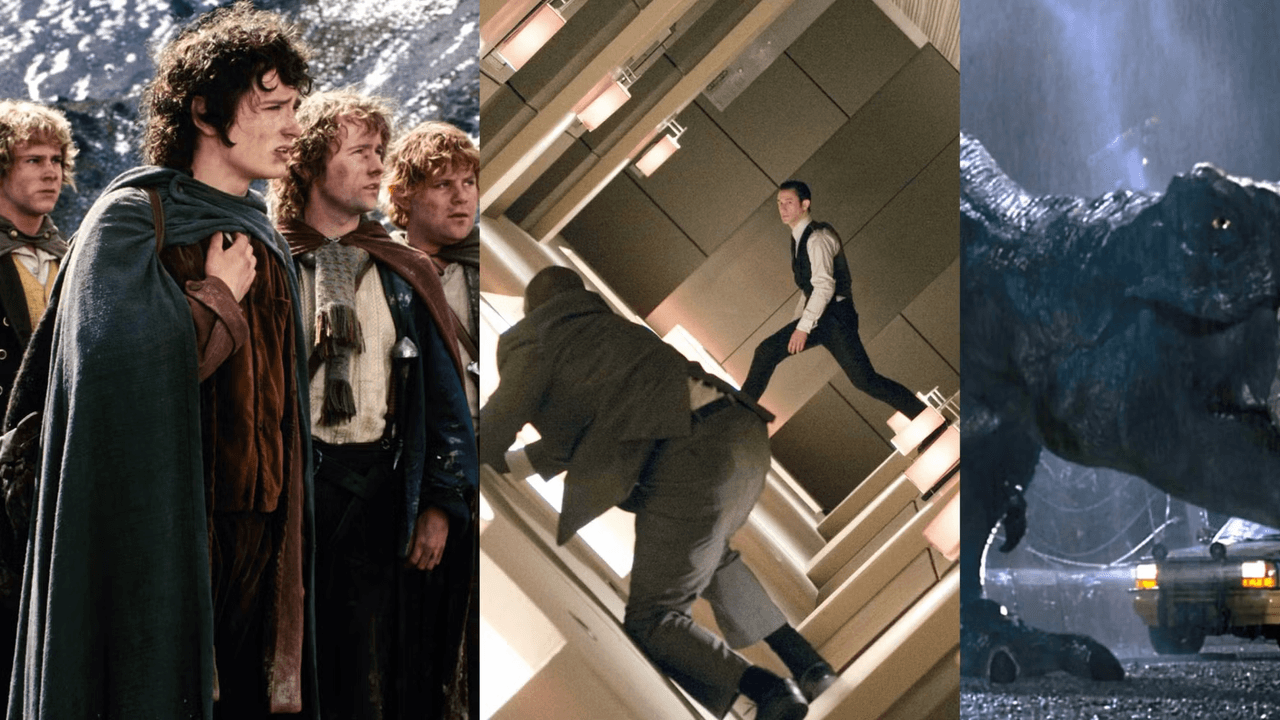
Image credit: Draft web reference from screenrant.com
Why practical magic still lands harder
The best practical effects in fantasy films do something digital spectacle often struggles to replicate: they convince your body before they convince your brain. A puppet twitches in your peripheral vision. A monster suit casts a shadow that changes the room. A painted miniature catches light in a way that suggests depth, age, and history. You may know you are watching an illusion, but it still feels like an object with mass has entered the frame.
That physicality matters because fantasy is not only about invention. It is about belief. When a spell, beast, or enchanted landscape has texture, imperfections, and resistance, the world feels lived-in rather than assembled. The viewer does not just observe magic; they sense its weight.
That is the secret strength of practical craft. It gives fantasy friction.
Practical effects in fantasy films create a world you can almost touch
Fantasy cinema asks a difficult question: how do you make the impossible feel immediate? Practical effects answer with materials. Foam latex. Animatronics. Stop-motion joints. Wires hidden in cloth. Miniature stone walls built by hand. A performer inside a costume learning how the creature should breathe, lurch, or glare.
Those choices give scenes a tactile logic. A creature’s fur moves because a real fan and a real body are there. A castle courtyard feels chilly because the model was lit like an actual structure. A witch’s face seems uncanny because the makeup sits on skin, not pixels.
The result is not simply nostalgia. It is a different visual contract. Practical effects ask the audience to notice craft, and that awareness can deepen the illusion instead of breaking it. The seams remind us that someone made this world, and that hand-built quality often makes the fantasy more believable.
Why puppets still feel alive
Puppetry remains one of the purest examples of illusion through limitation. A puppet cannot do everything, so it has to do the right thing. It blinks at the exact moment that sells thought. It hesitates before moving. It seems fragile, weird, and alive in a way that a fully unconstrained digital model sometimes does not.
That is because puppets retain a trace of performance. You can feel the operator’s timing behind the movement. The creature has intention, but also resistance. It occupies space in a way the camera can trust.
Some of the most memorable fantasy creatures have been puppets precisely because they do not try to outdo reality. They find a new emotional truth instead:
- eyes that seem to search for meaning
- mouths that move just enough to suggest speech
- small, imperfect gestures that read as personality
- a visible connection between actor and creature in the frame
When fantasy needs vulnerability, puppetry is often stronger than polish. It gives a creature a soul, or at least the illusion of one.
Makeup and prosthetics make transformation feel earned
Fantasy loves metamorphosis: cursed kings, aging sorcerers, masked warriors, goblins, queens, demons, saints, and shapeshifters. Makeup and prosthetics are ideal for that territory because they let transformation happen on the face and body, where viewers read emotion most instinctively.
A prosthetic brow ridge or elongated ear does more than alter appearance. It affects posture. It changes the way the actor turns toward light. It shapes how the audience reads anger, grief, or menace.
Polished digital alteration can be impressive, but makeup has a particular advantage: it is anchored in a human performance. The actor’s skin still pushes against the material. Sweat, wrinkles, and expression all become part of the design. That tension between actor and effect creates a presence no render can perfectly imitate.
This is why old-school fantasy villains and enchanted beings often linger in memory. They do not look finished in the sterile sense. They look occupied.
Miniatures make scale feel convincing
Fantasy lives on scale: giant doors, endless towers, impossible caverns, sprawling cities, dragon-sized disasters. Miniatures are still one of the best tools for selling that scale because they compress reality without flattening it.
A good miniature has evidence in its surfaces. Tiny weathering on a parapet. Uneven stones. Moss built up in corners. Marks that suggest time, not just design. When the camera moves across those details, the viewer’s eye does the rest, translating a small object into a monumental one.
Miniatures also create lighting that feels honest. Shadows fall with a logic that can be hard to fake. Flames reflect off surfaces in a way that makes destruction look grounded. Even a brief shot of a model fortress can give a film the sense that its world existed before the plot arrived.
That matters because fantasy worlds are only as persuasive as their geography. If the scale feels real, the stakes feel real too.
Creature suits and the pleasure of a body in space
Creature suits are often underrated because they can look awkward when they are bad and sublime when they are good. The difference is usually movement. A convincing suit is choreographed like a body, not merely worn like a costume.
When the performer inside the suit understands weight, balance, and threat, the creature becomes legible instantly. Shoulders roll. Arms hang too low. The head turns with predatory patience. The viewer reads those cues before any exposition arrives.
Creature suits work especially well in fantasy because they keep the monster tied to the physics of the set. The beast brushes against doorframes. It kicks dust into the air. It collides with the environment instead of floating above it. That collision is what sells danger.
Even when the audience can detect the artifice, the artifice is part of the pleasure. Fantasy is not documentary realism; it is a heightened reality where a little visible engineering can make the impossible more vivid.
Why digital spectacle sometimes feels lighter
This is not an argument against CGI. Digital tools have opened up fantasy in enormous ways, and modern films can do wonders with environments, crowds, and impossible creatures. But digital imagery can drift toward smoothness, especially when every surface is too clean, every motion too fluid, and every frame too controlled.
The problem is not realism in the abstract. It is tactile certainty.
Practical effects often preserve tiny irregularities that the eye trusts:
- shadows that look anchored
- textures that respond to light unpredictably
- physical contact between performers and props
- camera angles that reveal actual depth
- damage, wear, and grime that feel unfiltered
Those imperfections are not flaws. They are the signs of material existence. In fantasy, that can be the difference between a scene that looks impressive and a scene that feels inhabited.
The films that made fantasy feel lived in
The enduring appeal of practical craft is easiest to understand when you think about fantasy films that built their worlds with hands as much as imagination. Many of the most beloved examples are remembered not only for their stories but for their surfaces: the grain of a puppet’s skin, the elaborate prosthetics on a sorcerer, the miniature skyline of a cursed city, the physicality of an enchanted beast.
That tactile memory is powerful. Years later, viewers do not just remember plot beats. They remember how a creature moved under studio lights or how a model landscape made a kingdom seem far away and ancient. Practical effects linger because they create image memory, not just narrative memory.
They also invite rewatching. The more you look, the more you see the labor inside the illusion. And that labor becomes part of the film’s charm.
The real reason the spell lasts
At its best, fantasy is an argument that imagination deserves form. Practical effects answer that call with matter. A puppet, a mask, a miniature, a suit: each one insists that the unreal can be built, touched, and lit like a real object.
That is why these techniques endure. They do not merely recreate fantasy. They stage it as something present in the room.
A computer image can dazzle. A practical effect can haunt.
And when fantasy needs us to believe that a miracle has entered the frame, haunting often works better.
What are your favorite examples of practical craft in fantasy cinema? Share them in the comments — I’d love to hear which creatures, miniatures, or makeup effects still win you over.