
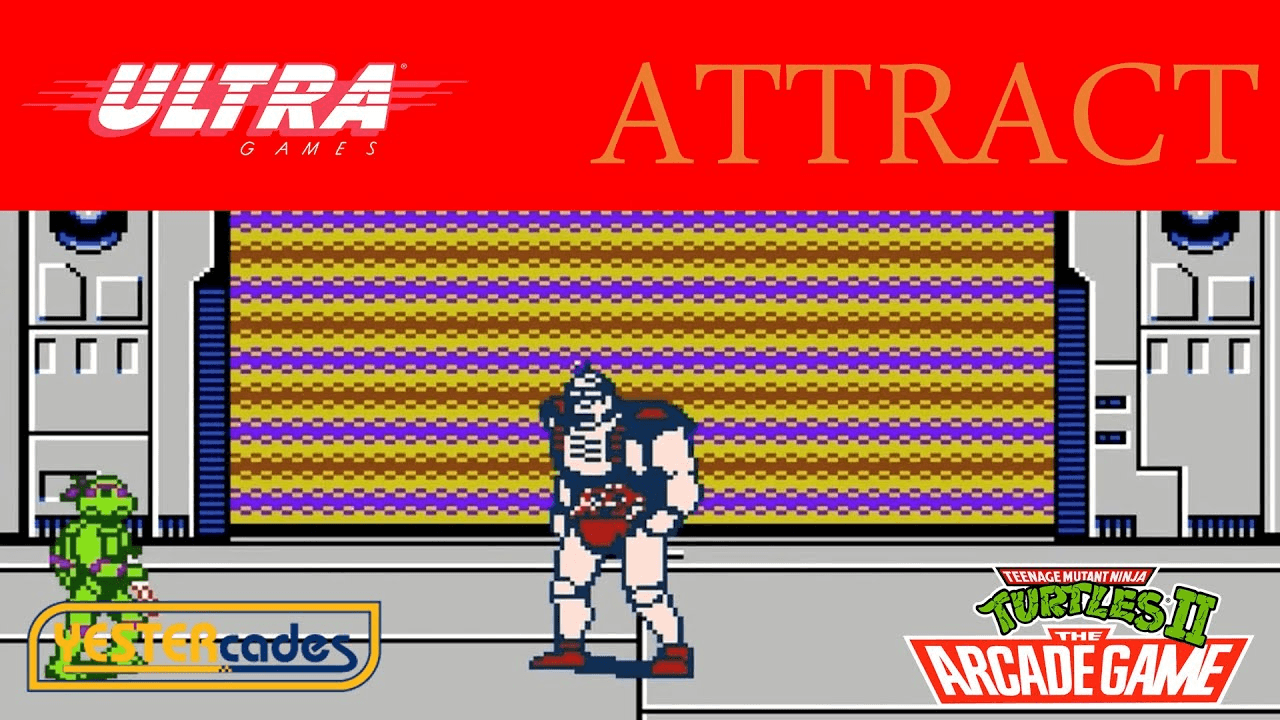
Image credit: Draft web reference from youtube.com
The moment a cabinet had to win you over
The arcade game attract mode was the shortest sales pitch in entertainment: no cashier, no clerk, no tutorial window, just a machine trying to persuade strangers to stop, watch, and spend. In the busiest arcades, that mattered as much as the game itself. A cabinet had to compete with noise, movement, and the human instinct to keep walking. Attract mode answered that problem with a carefully engineered mix of motion, sound, and clarity.
What looks like a simple idle screen now was once a miniature performance. It had to do several jobs at once. It had to announce the game across a crowded room, teach the basics without taking too long, show off the action without giving everything away, and leave one sharp thought in the player’s head: I could do that.
That is why attract mode was never just decorative. It was marketing, instruction, and social bait rolled into one.
Why attract mode had to be loud, readable, and fast
Arcade cabinets lived in hostile conditions. The audience was often standing, drifting, talking, and deciding whether to commit a quarter. Designers could not assume attention. They had to earn it in seconds.
So attract mode leaned on three principles:
- Motion to catch the eye from across the room
- Sound to cut through the ambient chaos of the arcade
- Clarity to make the game understandable before anyone touched a control panel
That balance mattered. Too little movement, and the cabinet disappeared into the background. Too much chaos, and the screen became noise. The best attract modes felt legible at a glance. A passerby could tell whether the game was a shooter, a maze chase, a sports title, or a fighter almost instantly.
That instant recognition was the first layer of persuasion. People were more likely to approach something they could categorize quickly. Attract mode reduced uncertainty.
Demo loops: the cabinet performing itself
The demo loop was the heart of the system. Most players never saw it as a separate feature, but the loop did extraordinary work. It demonstrated the game’s core action without requiring an expert player to be present. It also gave the cabinet a sense of life. Even when nobody was playing, the machine appeared to be doing something purposeful.
A good demo loop wasn’t just random footage. It was staged to highlight the most marketable parts of the game:
- the fastest movement
- the biggest explosions or scoring moments
- the clearest enemy patterns
- the most satisfying “win” states
In other words, the demo was a highlight reel before that phrase existed in the modern sense. It wasn’t trying to replicate a full play session. It was trying to sell an emotional promise. If the game was about speed, the demo emphasized velocity. If it was about precision, the loop showed crisp control. If it was about spectacle, the machine let sparks, color, and sound do the heavy lifting.
There was also a practical reason for demo loops: they taught by imitation. A newcomer could watch a few cycles and start understanding what mattered. Move here. Avoid that. Shoot this. Collect that. The best attract modes made first contact feel less intimidating.
Flashing text and the art of saying just enough
Attract mode also depended on text, but not the kind you read carefully. It used brief, high-contrast phrases that could be absorbed in a glance. Flashing instructions, score prompts, and “insert coin” messages helped convert confusion into action.
This was a subtle design problem. Arcade games had to do two contradictory things at once: explain themselves and remain enticing. If the instructions were too detailed, the cabinet felt like homework. If they were too sparse, the player had no idea how to begin.
The solution was often layered communication:
- A moving demo to show the action
- Short text to explain the basic goal
- Prominent prompts that reminded the viewer what to do next
The flashing text worked because it took advantage of peripheral attention. Even if a player was only half-watching, the repeated cue created urgency. The machine was not passive. It was asking for a decision.
That decision point was essential. Arcade game attract mode did not just entertain people standing nearby. It created a tiny funnel from curiosity to commitment.
Sound as persuasion
Sound made attract mode feel alive in a way static visuals could not. The arcade floor was noisy, so the machine had to make intentional noise to be noticed. That meant catchy loops, dramatic stingers, title jingles, and bursts of action sound that signaled danger or reward.
Audio did several jobs at once:
- It grabbed attention from off-screen.
- It made the game feel energetic even when idle.
- It reinforced the game’s tone before play began.
- It helped the cabinet stand out in a crowded row.
A machine with a memorable attract-mode sound had an advantage. You might hear it before you saw it, and by the time you noticed the screen, your brain had already decided the cabinet was worth a look. That was not accidental. The audio identity of the game was part of its market position.
The best examples used sound sparingly but strategically. A dramatic opening sting. A short burst of gameplay audio. A musical phrase that repeated just enough to lodge in memory. Those sounds weren’t there to be background ambiance. They were there to convert a passerby into an audience.
How attract mode taught first-time players
The most useful thing about attract mode is that it doubled as a tutorial for people who didn’t want to admit they needed one. Arcade games were intimidating at first glance. Controls varied. Rules were often invisible. Time was short. No one wanted to look slow in public.
Attract mode softened that embarrassment by teaching without calling itself a lesson.
A first-time player could infer a lot from a well-made loop:
- what the player character could do
- what counted as danger
- how scoring worked
- whether the game rewarded aggression, patience, or pattern learning
- what the goal probably was
This mattered because arcades were social spaces. People watched each other. They learned by observation. Attract mode made that observation efficient. It condensed a game’s logic into a sequence that could be absorbed while standing a few feet away.
In that sense, attract mode was both a welcome mat and a bridge. It turned a cabinet from an opaque box into something intelligible.
The high-score screen as a promise
Few devices in arcade design are as simple or as effective as the high-score prompt. It turned competition into advertising. The scoreboard told you the game had a memory, and that memory had room for your name.
High-score displays did more than validate skilled players. They drew in everyone else too. A stranger could see the target, imagine their initials on the list, and measure the machine against their own ego. That tiny fantasy is one reason arcade cabinets felt irresistible.
The attract mode often framed that fantasy with extra force. It would cycle through records, display the current champion, and remind you that a good run had public consequences. The message was clear: this was not just a game you could play. It was a game you could own, temporarily, by being better than the last person.
That social pressure made the cabinet feel alive. The score table was a public ledger, and the attract mode kept pointing at it.
Marketing and instruction were the same job
It is easy to split attract mode into two neat categories: advertisement and tutorial. In practice, those roles blended together.
Marketing needed the cabinet to look exciting.
Instruction needed the cabinet to look understandable.
A weak attract mode might do one and fail the other. It might look flashy but communicate nothing. Or it might explain rules clearly but fail to spark desire. The strongest cabinets managed both. They used clarity as part of the lure. If you understood the game quickly, you were more likely to spend.
That is why attract mode was such a smart piece of design. It recognized that the first obstacle was not mastery. It was approachability.
The machine had to answer, in effect:
- What is this?
- How does it move?
- Why should I care?
- What do I do next?
If a cabinet answered those questions well, it had already won half the battle.
What modern game design still borrows from attract mode
Even though the arcade floor is no longer the center of game culture, the logic of attract mode never disappeared. Modern trailers, demo reels, title screens, storefront clips, and autoplay previews all use the same basic idea: show the most compelling version of a game quickly enough to stop the scroll.
The difference is that old arcade cabinets had to do it in a physical space where human bodies kept moving past. That pressure forced unusually elegant design. Everything had to be compressed. Every frame had to justify itself. Every sound had to earn attention.
That is why arcade game attract mode still feels so smart when you watch it now. It was built for a world where a machine had to compete for attention without any helper text, influencer, or algorithm. It had one chance to make strangers curious.
And it usually had only a few seconds to do it.
Why it still matters
Attract mode is one of the clearest examples of game design serving business goals without losing its creative edge. It made cabinets feel alive, made rules easier to understand, and made the act of watching part of the sales pitch. It did not merely decorate idle time. It converted idle time into momentum.
That is the real genius of the system. A machine standing quietly in the corner could still be working harder than everything around it. Motion, sound, and clarity turned a blank pause into an argument for play.
If you remember a cabinet that always seemed impossible to ignore, or a demo loop that convinced you to drop in a coin, share it in the comments—I’d love to hear your favorite examples and why they stuck with you.