
Image credit: Jon_Callow_Images via Openverse / Flickr · CC BY 2.0 · License
Arcade Scoreboards and the Social Life of the High Score
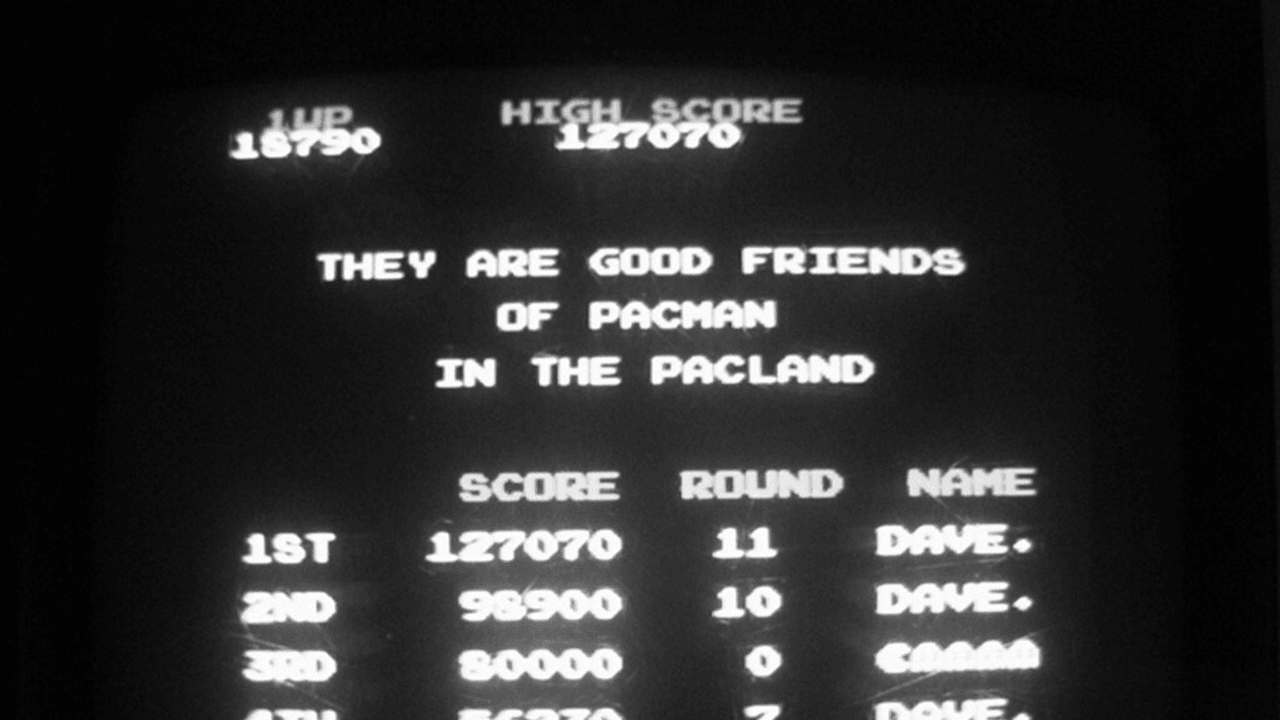
Arcade scoreboards were never just a technical afterthought. They were a public record, a dare, and a kind of neighborhood currency. A machine could be packed with strangers, but the names at the top turned every session into a contest with witnesses. In the age of arcade scoreboards, a great run did not stay private for long; it became evidence.
That mattered because the arcade was one of the few places where skill could be displayed in real time, in public, for a visible reward. You did not just beat the machine. You beat the person before you, the regular who thought the throne was theirs, and sometimes the entire room.
Why arcade scoreboards meant more than points
The scoreboard made an invisible thing visible. It took a run that lasted a few tense minutes and converted it into a lasting social fact: someone had done better, and everyone could see by how much.
That simple shift changed the mood of play.
- A score became proof, not just memory.
- A name on top became a local reputation.
- A near miss became a challenge instead of a loss.
- A high score turned the cabinet into a running conversation.
In a home living room, you might brag about a good game and hope people believed you. In an arcade, the machine itself kept the record. The scoreboard did the talking.
Public status in a room full of rivals
Arcades created a rare kind of social theater. People played in sequence, shoulder to shoulder, with every outcome immediately visible. That made arcade scoreboards feel more like a town noticeboard than a simple game feature.
If your initials appeared near the top, you got something bigger than a winning run: you got standing. Other players recognized you. Friends pointed you out. Casual visitors remembered the name attached to the cabinet. In some neighborhoods, local fame could revolve around one machine, one game, and one person who seemed impossible to dislodge.
That kind of recognition was powerful because it was both public and fragile. A top score could be challenged at any time. Your status was earned, but it was never fully safe. That instability kept the whole room alert.
How arcade scoreboards fed repeat play
The scoreboard did more than reward winners. It also kept almost-winners coming back.
A close second place is emotionally sticky. If you were just short of the top score, the machine didn’t feel finished; it felt unfinished for you. The scoreboard created a visible gap, and that gap invited one more credit.
This is where arcade design and psychology met in a very practical way. The player could see the distance between current effort and desired status. The cabinet gave immediate feedback, but the scoreboard gave long-term motivation. It said: you were close, and close is not the same as done.
That is why players often remember a specific machine as the one that ate their quarters. It wasn’t only about difficulty. It was about possibility. The scoreboard made improvement feel measurable, and measurable progress is hard to walk away from.
The unfinished business effect
A scoreboard could create three powerful reasons to keep playing:
- You nearly had it.
- Someone else had it, which made it real.
- The next run might finally put your initials up there.
That combination is brutal in the best arcade sense. It turns failure into fuel.
Neighborhood rivalries and arcade fame
The social life of arcade scoreboards was local before it was legendary. Before online rankings, before global leaderboards, the important audience was often the people who showed up in the same room every week.
That locality gave the competition texture. You weren’t chasing an abstract number; you were chasing that person who always stood near the cabinet, that friend who discovered a trick on the third stage, or that regular whose initials seemed welded to the top slot.
This is why scoreboards could feel surprisingly democratic. Age, style, and even social circle mattered less than the performance in front of the machine. A younger player could beat older regulars. A quieter player could suddenly dominate a cabinet. A newcomer could become the name everyone had to learn.
In a few minutes, the room could reorganize itself around a score.
The operator’s stake in the scoreboard
Arcade owners and operators were not passive observers. They understood that scoreboards made cabinets sticky. A game with a lively leaderboard could pull in extra play from everyone who wanted to test themselves against the current standard.
That mattered for business. If a cabinet had a visible hierarchy, it could keep earning without needing constant novelty. The next player wasn’t just paying to experience the game; they were paying to join an ongoing public challenge.
Operators also had reasons to pay attention to who dominated a machine. In some locations, a thriving scoreboard helped anchor a game as a destination. People would come back to see whether the top score had changed, whether a friend had finally overtaken it, or whether the reigning champ would appear again.
The best cabinets didn’t just consume quarters. They built rituals.
Why one more credit felt reasonable
Few arcade experiences are as psychologically efficient as the scoreboard-driven “one more try.” That phrase works because the machine makes the next attempt feel plausible.
A player could tell themselves:
- I learned the pattern.
- I lasted longer this time.
- I’m just a little better than before.
- I can beat that score if I get one cleaner run.
The scoreboard turns hope into a calculation. It gives players a target that seems close enough to matter, but far enough away to keep them engaged. That tension is the heart of repeat play.
It also explains why high-score chasing can feel so personal. You’re not only against the game. You’re against your previous run, your local peers, and your own memory of what almost happened.
Arcade scoreboards and the culture of initials
Initials were part of the magic. They compressed identity into a tiny, repeatable signature. Three letters could carry an outsized amount of pride.
That small space made the scoreboard feel intimate even when the audience was public. It was not a full biography; it was a badge. And because the space was limited, being there at all felt like an achievement. Your initials were not just recorded. They were displayed.
The brevity also made the leaderboard feel competitive in a very human way. Everyone could fit their ego into the same narrow slot, but only the best could keep it there. That made each top entry feel more like a trophy than a statistic.
From machine feature to shared memory
What’s easy to miss now is how social arcade scoreboards really were. Today, leaderboards are everywhere, from phone games to fitness apps. But the arcade version had a different texture because it lived in a physical space with witnesses, sound, and interruption.
The cabinet was a stage.
The score was the script.
The room was the audience.
That combination made every ranking feel earned in a public way. A good score could dominate a small local scene for weeks. A surprising upset could become an anecdote repeated across visits. Even a failed attempt could become part of the group memory if it was dramatic enough.
This is why scoreboards are so closely tied to arcade nostalgia. They weren’t merely decorative. They made competition communal.
What scoreboards taught players about value
Arcade scoreboards taught a simple lesson that still shapes game culture: value is often social before it is numerical.
A score mattered because other people saw it. A run mattered because someone could lose to it. A machine mattered because it held the record for a while. The scoreboard transformed solitary skill into a public event, and that public dimension gave the arcade much of its energy.
It also helped define the identity of a venue. Some arcades were known for brutal cabinets, some for generous ones, and some for the names that seemed to live on top of every leaderboard. In each case, the scoreboard helped the room remember itself.
If you want to understand why people kept feeding quarters into the same machine, the answer is not only addiction or novelty. It is recognition. It is status. It is the thrill of seeing your name where everyone can see it.
Arcade scoreboards made every good run feel like a claim on the room.
If you’ve got a favorite scoreboard memory, a local rivalry, or the cabinet that kept you coming back for one more credit, share it in the comments.