
Every Era Is Asking the Same Emotional Question
When people talk about advertising history, they usually focus on format: print became radio, radio became TV, TV became social, social became everything. But the deeper story is emotional, not technical. Across every decade, audiences ask one question: *Can I trust you enough to let this message into my life?*
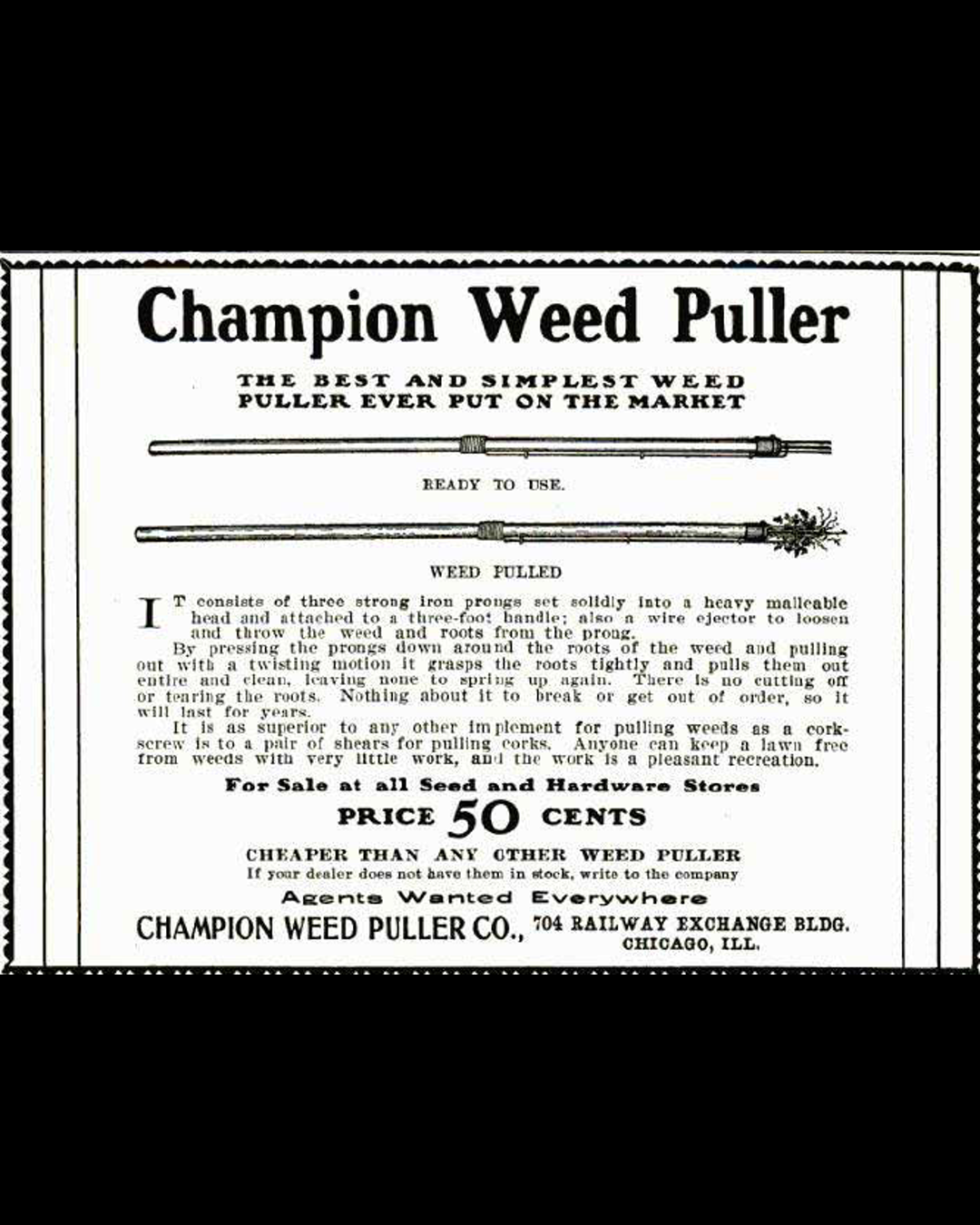
The answer has required the same ingredients—clarity, confidence, social meaning, and self-recognition—just mixed in different proportions. A 1905 Weed Puller print ad and a 2001 Audiovox commercial look worlds apart. One is dense and practical, the other is fast and image-forward. Yet both are trying to reduce uncertainty and offer a better version of daily life.
From Survival Logic to Identity Logic
In early print advertising, urgency was often practical because life itself was more materially constrained. The Weed Puller ad sits in that world. It speaks to labor, time, bodily effort, and usefulness. It doesn’t ask to be loved. It asks to be believed.
That kind of message architecture respects the buyer’s reality: *work is hard, energy is finite, and tools should earn their place*. Even now, brands that perform best under pressure are usually the ones that can explain value without hiding behind style.
As media evolved, persuasion expanded from survival logic (“this helps you do life”) into identity logic (“this helps you be someone”). By the late 80s and early 90s, campaigns increasingly framed products as social signals and role amplifiers. The 1989 FCI WCW Wrestling energy, for example, is less about explanation and more about emotional enlistment. It says: *this is a world; pick a side; belong here.*
Then in assets like the 1990 Baseball Simulator 2 Pager, we see another emotional layer: agency fantasy. The appeal isn’t simply that the product exists; it’s that the user gets to be strategic, capable, in control. You are not consuming passively. You are stepping into a role.
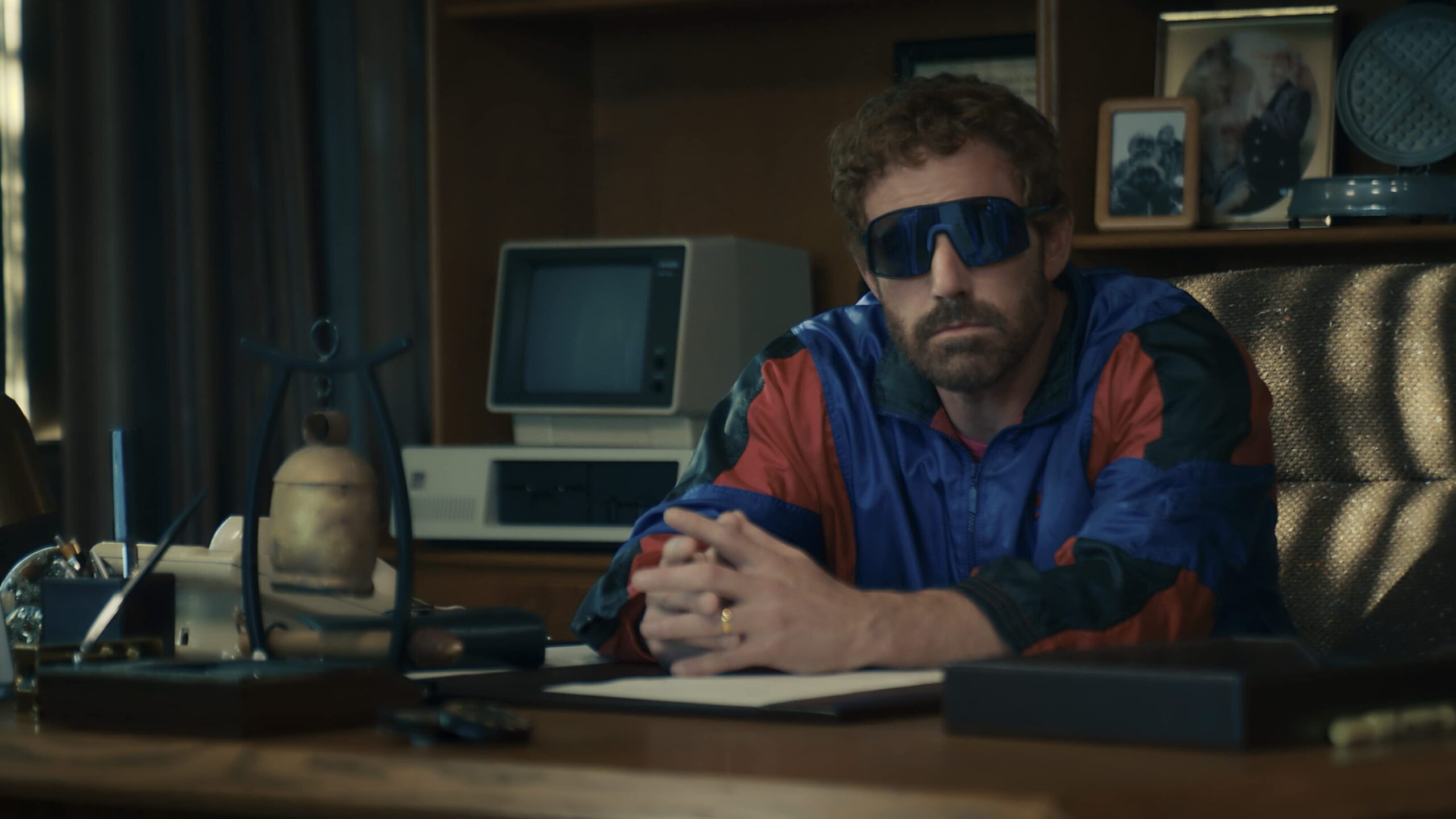
By 2001, in campaigns like Audiovox and Natural American Spirit, identity cues become even more compressed. Atmosphere, styling, pacing, and visual tone do much of the persuasion work. The message becomes less “here is what this does” and more “here is what this says about you.”
Four Timeless Emotional Jobs of Great Advertising
Across these shifts, strong advertising consistently performs four emotional jobs.
1) It reduces friction and anxiety
The Weed Puller print ad does this through practical certainty: clear problem, clear mechanism, clear payoff. The emotional effect is relief. Even when the copy is plain, relief is persuasive.
2) It offers social orientation
WCW-style promotion creates a map of status and belonging. It tells people where energy is and who is “in.” The emotional effect is social confidence. In today’s terms, this is why community-centered launches outperform isolated messaging.
3) It gives the audience a stronger role
Baseball Simulator-era messaging turns features into personal capability. The emotional effect is empowerment. Modern audiences still respond when the product gives them command, not just information.
4) It mirrors values and identity
Audiovox and Natural American Spirit-style campaigns package worldview through tone and aesthetics. The emotional effect is self-recognition: *this feels like me*. That recognition drives both preference and memory.
Why Character Campaigns Still Matter
Some of the clearest cross-era lessons come from character-led advertising. Mr. T Cereal didn’t just promote breakfast; it transferred personality into the product moment. Smokey the Bear and Woodsy Owl didn’t just deliver reminders; they turned civic behavior into moral identity through recurring symbolic voices.
The 1983 SpaghettiOs kid ad and 1987 Ghostbusters toy commercial show a related truth: memory is strongest when a product is embedded in ritual and play. In both cases, the ad extends beyond viewing into reenactment. Kids repeat lines, mimic scenes, and fold the product into social routines. That repetition is emotional glue.
For modern teams, the takeaway is simple: people remember what they can *perform*, not just what they can *recall*. A message that invites action lives longer than a message that asks for passive admiration.
The Real Shift Wasn’t Rational to Emotional—It Was Layered to Layered
A common myth says old advertising was rational while modern advertising is emotional. The archive suggests the opposite: strong ads were always emotionally engineered. Early campaigns just expressed emotion through certainty and utility rather than cinematic mood.
What changed over time is layering speed. In print, you often had to build belief step by step. In TV and digital, you can deliver social signal, identity cue, and mood in seconds. That makes contemporary creative look “more emotional,” but the fundamental job is unchanged: establish meaning quickly enough to survive distraction.
So the strategic question for a modern team is not “emotional or rational,” but “which emotional layer are we missing right now?” The fix might be clearer utility (Weed Puller), stronger social charge (WCW or Mr. T), sharper user agency (Baseball Simulator), or tighter identity cues (Audiovox/Natural American Spirit).
What This Means for Creative Decisions This Week
When a team is stuck, novelty is usually the wrong goal. Function is the goal.
Before your next sprint, pressure-test every concept with four questions: what anxiety are we reducing, what identity are we reflecting, what role are we offering, and what behavior will make the message repeatable?
Those prompts keep execution honest across channels. If the emotional structure is strong, the idea should still work as a static post, a short video, a landing page opener, and an email lead.
Persuasion Is Memory Engineering With Human Respect
From the Weed Puller ad to Audiovox-era spots, the most durable work is never just clever. It respects attention, acknowledges real life, and gives people a meaningful next step in their own story.
That is why retro analysis matters now. Not because the past is charming, but because it is honest about constraints. Every era had to earn belief with the tools available. That discipline is what modern teams need in oversaturated feeds.
If your current output feels disposable, the fix may not be “more content.” It may be better emotional architecture.
Engagement + Soft Bridge CTA
Which persuasion layer do you think your brand underuses right now—clarity, belonging, agency, or identity? Drop your answer in the comments and share one campaign (old or new) that nails it.
If you want to keep exploring this thread, a great next read is our breakdown on why mascot trust, cultural muscle, and memory loops still drive modern creative performance.




Leave a Reply