

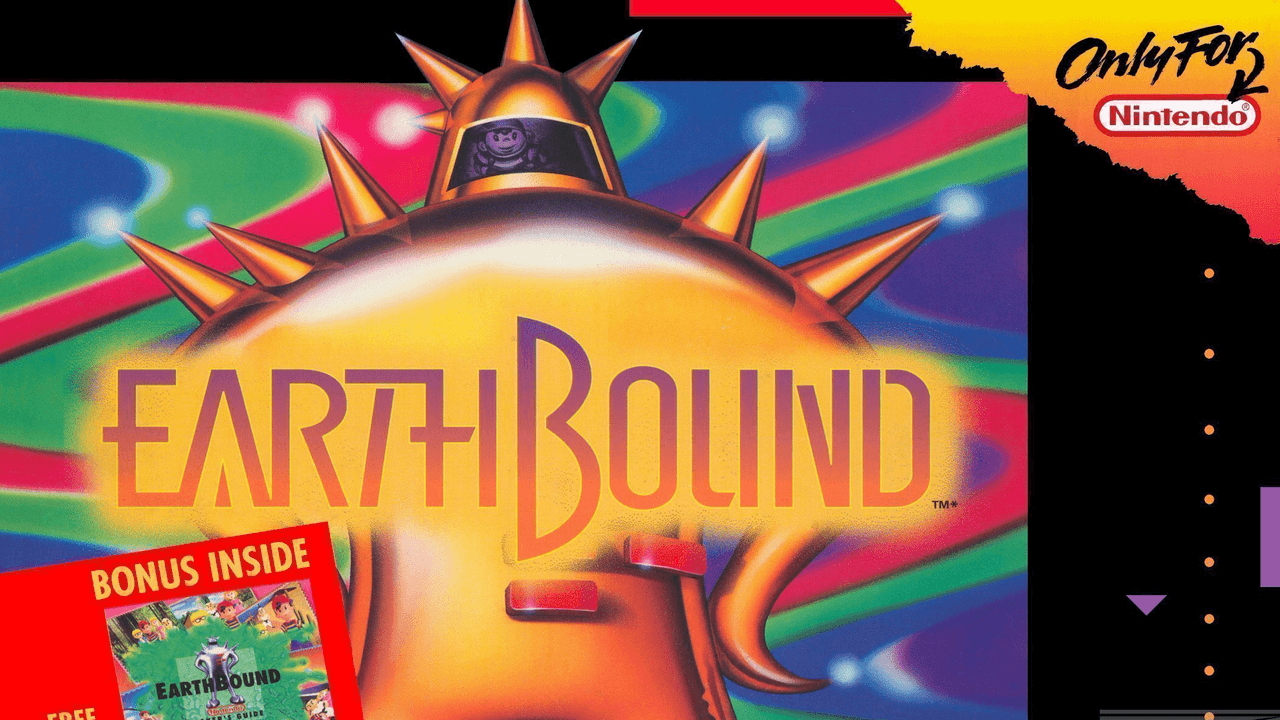
Image credit: Draft web reference from retromania.gg
EarthBound on Super Nintendo and the art of being weird on purpose
A first-time encounter with EarthBound on Super Nintendo can feel disorienting in the best possible way. It looks like a standard turn-based role-playing game at first glance, but it keeps sidestepping the expectations that most players bring to the genre. Instead of castles and chosen-one prophecy, it gives you cracked sidewalks, suburban bedrooms, department stores, runaway cops, and enemies that look like they wandered in from a joke notebook.
That contrast is still the game’s sharpest trick. EarthBound does not just place a strange story inside an ordinary world; it makes the ordinary world the point. The result is a game that feels both familiar and off-kilter, even now. For a first-time player today, that weirdness is not a novelty layer on top of the mechanics. It shapes the way the battles feel, how the towns move, and why the pacing sticks in your head long after you stop playing.
Why the battle pacing still feels unusual
The combat in EarthBound on Super Nintendo is turn-based, but it rarely settles into the kind of sleepy rhythm people associate with older JRPGs. On paper, the system sounds straightforward: choose an action, wait for the result, repeat. In practice, the game keeps applying pressure in small, clever ways.
One of the biggest differences is tempo. Battles are short enough to avoid becoming chores, but they are not empty. The rolling HP meter matters here; damage does not always land as a single emotional hit, which gives you a tiny window to react before a character is fully downed. That design softens some defeats and also keeps victories feeling active. You are not just watching numbers tick down. You are reading the flow of a fight.
EarthBound also keeps enemy encounters visually playful, which changes how a first-time player experiences repetition. Many games rely on dramatic monster design to signal danger. EarthBound uses the absurd instead. You may fight things that look like office supplies, local thugs, or bizarre living hazards that feel like they belong in a half-remembered dream. That makes each battle feel less like a stock menu event and more like a punchline with consequences.
A few pacing traits stand out immediately:
- Battles usually move quickly enough to prevent long fatigue stretches.
- Enemy groups and locations create variety without needing elaborate combat systems.
- The game often rewards you for staying alert rather than grinding endlessly.
- The rolling health mechanic gives the action a strange, urgent pulse.
For a first-time player, that means EarthBound feels accessible without becoming bland. It is slower than an action game, obviously, but it does not waste your time the way many older turn-based games can if you are underleveled or wandering in circles.
The humor is not decoration; it is the game’s tone engine
What makes EarthBound memorable is not simply that it is funny. Plenty of retro games have jokes. What sets it apart is the consistency of its deadpan tone. The writing treats absurdity as a normal part of life, and that makes every punchline land harder.
A first-time player today will probably notice how often the game refuses to underline its own weirdness. It does not stop to applaud itself after a joke. A bizarre enemy appears, a minor NPC says something strangely sincere, or an item description turns practical information into a punchline. Then the game moves on.
That restraint matters. The humor works because it is embedded in the texture of the world. You are not being fed a comedy sketch between “serious” RPG scenes. The whole world is the sketch, including the towns, stores, and conversations that should feel mundane. That gives the game a tone that still feels fresh compared with fantasy RPGs built on grand statements and solemn lore dumps.
The dialogue also does something subtle: it makes the world feel populated by people instead of quest dispensers. Store clerks, neighbors, and random passersby often sound like they have lived in this place for years. Some lines are silly, some are oddly specific, and some are just plain rude in a way that feels human. That mixture gives EarthBound a suburban social texture that most retro games never attempt.
Suburban weirdness is the real setting, not a gimmick
The modern-life setting in EarthBound on Super Nintendo is often described as charming, but that undersells how strange it actually is. The game’s suburban spaces are not just a palette swap for a fantasy map. They are the game’s identity.
You start in places that feel recognizably ordinary: a home, a neighborhood, a local shop, a town with traffic and practical errands. But EarthBound keeps layering unease into those settings. The homes are normal until they are not. The streets are friendly until they become uncanny. Even the bright color palette carries a slightly unstable feeling, as if the world is being described by memory rather than realism.
That suburban weirdness changes how exploration feels. In many RPGs, the pleasure of moving from town to town comes from discovering bigger stakes or rarer scenery. Here, the pleasure comes from seeing how the game mutates the familiar. A shopping district becomes a stage for absurdity. A peaceful neighborhood becomes a source of tension. Everyday infrastructure—phones, hotels, department stores, buses—turns into part of the adventure’s surreal logic.
For a first-time player, this is one of the most appealing qualities of the game. It never asks you to memorize a dense fantasy cosmology before you can enjoy it. Instead, it weaponizes familiarity. You already understand what a home, a store, or a road should be, so the game can twist those spaces into something memorable with very little setup.
Shops, money, and the practical rhythm of play
EarthBound’s shop structure is another reason the game still feels unusually clean. It understands that friction is not always the same thing as depth. A lot of older RPGs make simple errands feel like paperwork. EarthBound usually keeps the process moving.
Shopping feels grounded in the world. You buy gear from places that seem like real businesses, not abstract item menus floating in a void. That makes upgrades easier to understand and more satisfying to pick up. Armor, food, and useful items all fit the game’s everyday tone, which means progression feels tied to living in the world rather than conquering it.
The economy also shapes how a first-time player makes decisions. Because the game often presents practical needs in straightforward terms, you start paying attention to small choices: Do you spend money on better defense now, or save it for healing items and convenience? Do you keep moving, or return to town for a reset? The answer is rarely complicated, but the decision-making still matters.
What stands out is how little ceremonial clutter the game adds around these choices. EarthBound lets you be a kid in a strange world while still dealing with very ordinary constraints: money, supplies, travel, and whether you remembered to stock up before leaving town. That blend of whimsy and practicality gives the game a pace that feels surprisingly modern.
Enemy design keeps the world from going stale
If the humor is the game’s voice, then the enemy design is its accent. It keeps reminding you that this world is not built out of familiar fantasy logic. A good enemy in EarthBound is not just a threat. It is a weird idea given shape.
That matters because the game has to carry a long adventure without leaning on standard monsters to do the heavy lifting. Instead, it relies on visual absurdity, local flavor, and just enough menace to keep things interesting. Some enemies are funny on sight. Others are more unsettling because they look almost harmless until combat begins. That range keeps the game from collapsing into a single gag.
For a first-time player, enemy design also affects pacing in a practical way. Encounters are easier to tolerate when they are distinctive. If every fight looked the same, the turn-based structure would start to drag. But EarthBound keeps reintroducing novelty through presentation, which makes even routine battles feel like they belong to a strange little ecosystem.
It is also worth noting that the game rarely feels cruel for the sake of cruelty. Some enemies are annoying, sure, but the game’s overall attitude is closer to mischievous than hostile. That keeps tension from hardening into exhaustion.
Why a first-time player can still bounce off it—and why that matters
EarthBound is not universally smooth. A first-time player today may still hit a few rough spots. Some pacing choices are intentionally loose. Navigation can feel ambiguous. Certain stretches ask you to tolerate a bit of backtracking or uncertainty. And because the game’s comedy is dry rather than flamboyant, not every joke will land for everyone.
But those frictions are part of the game’s personality, not accidental leftovers. EarthBound does not behave like a contemporary “tightened-up” RPG because it is after something different: a mood, a cadence, a specific kind of comic unease. If you come to it expecting streamlined efficiency, you may miss how carefully the game balances comfort and strangeness.
That balance is why it still gets talked about. It has a personality that survives familiarity. A new player in 2026 is not just encountering a historical curiosity or a nostalgic favorite. They are meeting a game that still knows how to make common things feel slightly wrong in a way that keeps you curious.
The lasting appeal of EarthBound on Super Nintendo
What makes EarthBound on Super Nintendo endure is not one isolated feature. It is the way its battle pacing, text tone, shop structure, and enemy design all point toward the same goal: turning everyday life into an adventure that feels both comic and unsettling.
That is why the game still reads as distinctive from the opening hours onward. The suburbs are not a backdrop. The jokes are not garnish. The combat is not just mechanical housekeeping. Every part of the experience reinforces the same strange, charming worldview.
For a first-time player, that worldview can feel like a revelation. EarthBound does not ask you to admire how grand it is. It asks you to notice how odd the ordinary can become when a game commits to it fully. And that commitment is exactly why it still works.
If you played EarthBound for the first time recently, or if you remember how it felt back then, share your take in the comments—I’d love to hear which part of its weird little world stuck with you most.