
Image credit: Draft web reference from nintendo.com
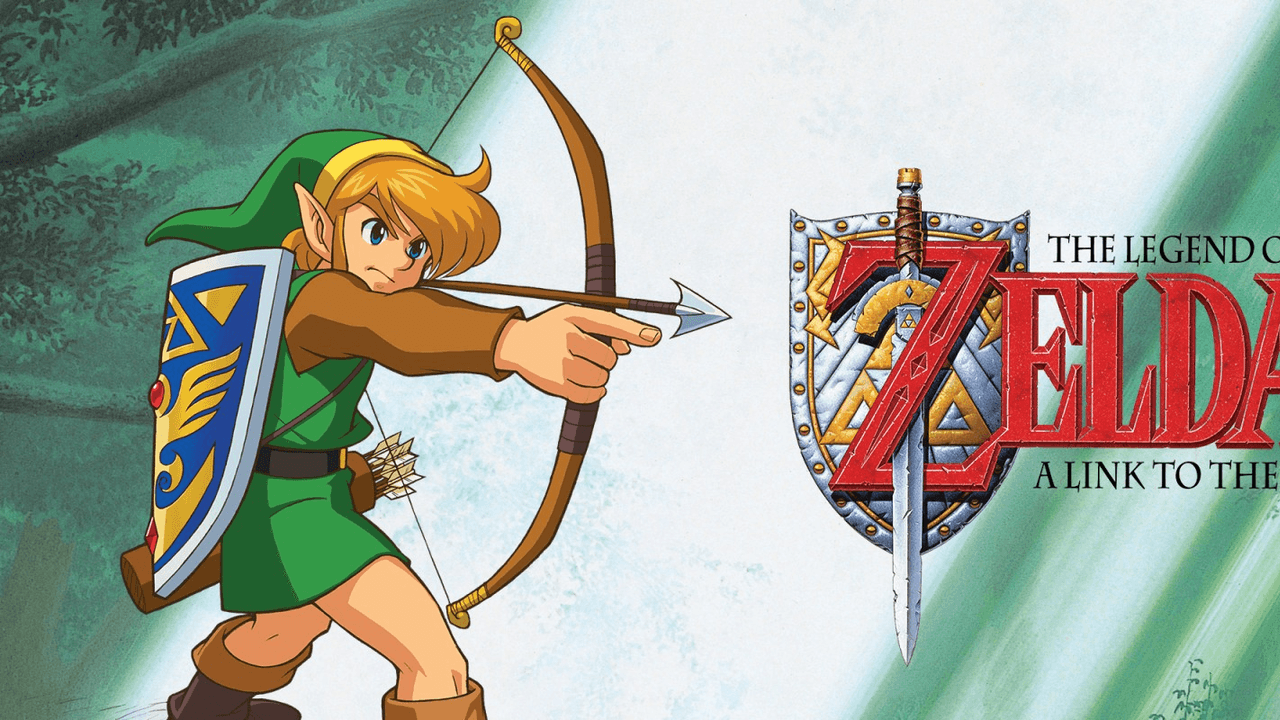
The Legend of Zelda: A Link to the Past on Super Nintendo and the art of being guided
The first thing The Legend of Zelda: A Link to the Past on Super Nintendo understands is that players do not need to be told everything to be led somewhere. It trusts sightlines, spatial rhythm, and the quiet pull of locked doors to do the heavy lifting. You enter a space, read the shape of it, and start building a mental map long before the game ever explains what the map is for.
That is why the game still feels so elegant. Its dungeons do not behave like isolated puzzle boxes dropped into the world. They are extensions of the same design language as the overworld: a language of blocked routes, visible prizes, and just enough ambiguity to make curiosity feel self-directed.
The result is a game that teaches exploration by making exploration feel like common sense.
The overworld is not a menu, it is a lesson
A lot of adventure games advertise freedom and then quietly funnel you along a single safe route. A Link to the Past does something subtler. Its overworld is open enough to suggest possibility, but structured enough that each new direction feels like a meaningful decision rather than a guess.
The world constantly points you toward the next idea without flattening the experience into a checklist.
What the overworld teaches before the first major dungeon
- Important landmarks are visible early, even when they are not yet reachable.
- Barriers are readable at a glance, so players learn to file locations away mentally.
- Small detours often reward curiosity with items, heart pieces, or shortcuts.
- Backtracking does not feel like punishment because the world is compact and legible.
That compactness matters. The game never overwhelms you with scale just to fake depth. Instead, it makes you feel clever for noticing how the pieces connect. A cave entrance, a bridge, a suspicious grove, a dead-end with a clue in plain sight: each one trains the player to think like an explorer rather than a tourist.
Dungeon logic makes you smarter without making you wait
The dungeon structure is where The Legend of Zelda: A Link to the Past on Super Nintendo turns that gentle overworld education into something precise. Every dungeon has a logic you can feel before you can fully articulate it.
You are not simply hunting keys. You are learning how the space wants to be understood.
A good A Link to the Past dungeon usually does three things at once:
- Establishes a spatial pattern.
- Introduces one new wrinkle to that pattern.
- Repeats the pattern in a changed state so you can see what you missed.
That repeated recontextualization is the game’s secret weapon. A locked door is not just a gate; it is a nudge to re-evaluate the room you just crossed. A switch is not a one-off puzzle piece; it changes how you think about verticality, timing, and what the dungeon considers “reachable.”
The game rarely pauses to lecture. It lets the room itself serve as the explanation.
Why the dungeons feel fair
The fairness comes from consistency. If a cracked wall looks breakable, it probably is. If a route seems suspiciously empty, the emptiness is likely a clue rather than a trick. If a new item appears, the surrounding spaces usually begin to reveal why it mattered.
That means the game can create surprise without creating confusion. You may not know the answer yet, but you usually know the question.
Item progression is teaching, not gating
One reason the game’s progression feels so satisfying is that items are rarely just permission slips. They change the way you read the entire map.
The hookshot does more than cross gaps. It changes your relationship to distance.
The hammer does more than smash obstacles. It makes the environment feel more physical, more resistant, more tactile.
The boots, flippers, rods, gloves, and other tools all work this way. Each one expands movement and perception at the same time. Once you get an item, earlier areas stop being static terrain and become places with hidden syntax.
That is elegant design because it avoids two common problems:
- It does not treat progress as a simple checklist of permissions.
- It does not drown the player in tutorials about what the item “does.”
Instead, the game lets function reveal itself through use. You try the tool, watch the world answer back, and internalize the lesson. That memory is stronger than an instruction box would ever be.
The game respects the player’s attention
A Link to the Past has a rare confidence. It knows that if it gives you a readable space, a clear goal, and a few interesting obstacles, you will do the rest.
That confidence shows up in its dungeon pacing. Rooms often begin with a simple problem and then layer complication only after you understand the basic terms. Combat does not exist separately from navigation; enemies shape movement, movement shapes observation, and observation leads to the next key or switch.
Nothing is there just to stall you.
Even the moments of apparent frustration often serve the larger design. A dead end teaches you to look more carefully. A return trip reveals a new passage you ignored. A dungeon’s centerpiece item changes the meaning of paths you already walked. The game is always asking the player to compare what they thought they knew with what the space is now telling them.
That is a much stronger form of guidance than arrow signs or objective markers.
Why discovery still feels natural here
Modern games often struggle with a false choice: either overexplain every objective, or hide so much that players feel lost rather than curious. A Link to the Past avoids both extremes because it organizes discovery around rhythm.
The rhythm usually looks like this:
- see something interesting,
- cannot reach it yet,
- remember it,
- gain a new tool,
- return with a new perspective,
- feel smart for connecting the dots.
That loop never gets old because the game keeps the dots meaningful. It does not flood the player with meaningless collectibles or empty side paths. When it asks you to remember a place, there is usually a reason.
This is also why the game’s world feels bigger than its actual size. Good spatial memory makes a small map feel dense. A Link to the Past is full of those moments where a place you walked through casually becomes important later, and the emotional effect is disproportionate to the physical footprint. Familiarity becomes progress.
The dungeons are memorable because they solve themselves in public
One of the smartest things the game does is make dungeon logic visible while you are still inside it. You are not asked to solve a mystery in the abstract. You are asked to notice how the room changes when you push, strike, lift, or unlock something.
That visibility matters because it turns each success into a lesson the player can carry forward.
By the time you reach later dungeons, you are not only reacting to the room in front of you. You are anticipating how the room might be lying to you, what the obvious route might be hiding, and which piece of the environment is probably more important than it first appears.
That is the real achievement here: the game teaches pattern recognition without making itself feel mechanical.
A lesson in restraint
The strongest thing about The Legend of Zelda: A Link to the Past on Super Nintendo may be what it refuses to do. It refuses to over-clarify. It refuses to interrupt every discovery with a speech bubble. It refuses to turn exploration into compliance.
That restraint is not absence. It is confidence in structure.
The overworld invites memory. The dungeons reward reading. The items reshape your understanding. Together, they create a design loop where the player feels increasingly capable without ever feeling patted on the head.
That is why the game still works. Not because it is nostalgic, and not because it was merely influential, but because its basic lesson remains so clean: show the player enough to want to look, then let the world explain itself.
Why it still matters now
A lot of adventure design has become more explicit over time, which is not automatically a flaw. But clarity and discovery are not the same thing. A Link to the Past understands that the best guidance is often environmental, not verbal.
It teaches players to notice architecture, remember routes, and trust their own curiosity. It makes exploration feel like a skill rather than a prompt. And because of that, every dungeon feels earned twice: once when you enter it, and again when you finally understand how it was teaching you all along.
That is elegant design in its purest form.
If you remember a favorite dungeon, an item that changed how you saw the map, or a moment when the game surprised you without confusing you, share it in the comments.