
Boss run pacing in retro games was part of the fight
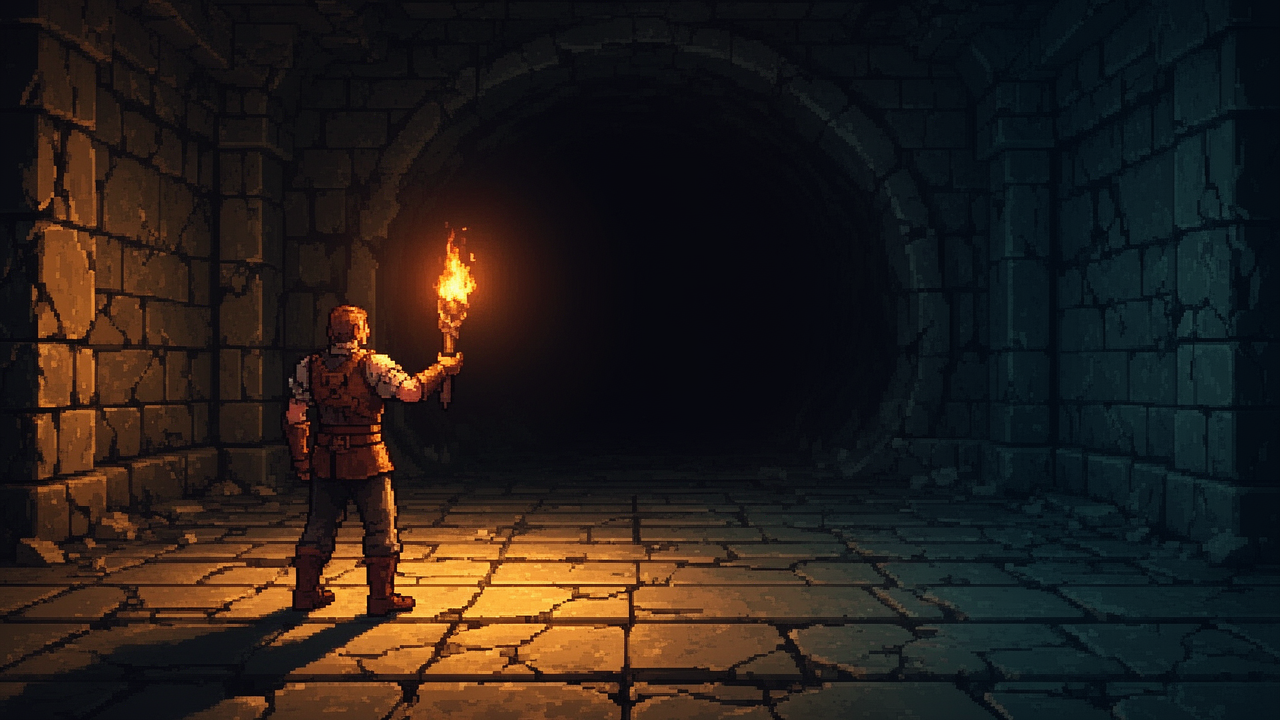
Boss run pacing in retro games is one of those design ideas you feel before you can neatly explain it. Older games rarely treated the approach to a boss as empty hallway time. The route to the fight was often the real pressure test: a stretch of enemies, traps, locked doors, narrow safe zones, and the slow realization that every mistake cost something you could not instantly replace.
That is why so many classic boss runs still linger in memory. Not because they were convenient, but because they were charged. You were not just walking toward a boss. You were spending resources, managing nerves, and trying to preserve enough health, magic, lives, or momentum to make the final room matter.
Modern games often separate the climb from the climax more cleanly. Retro games blurred the line. The level before the boss was usually designed to make you feel the weight of the encounter long before the boss sprite appeared.
Route tension made the approach feel alive
The strongest retro boss runs were built like small endurance puzzles. Instead of a straight path to the door, you got a route with timing checks and decision points. Do you use a potion now or save it for the boss? Do you take the safer path and lose time, or the faster path and risk a hit? Do you fight every enemy, or try to slip past and conserve your last healing item?
That kind of route tension gave the space between save point and boss room real personality.
Common ingredients of a tense boss approach
- Enemies placed to punish autopilot movement
- Narrow corridors that made dodging awkward
- Hazards that forced pattern recognition under fatigue
- Branching paths that offered risk-versus-reward choices
- Shortcuts that rewarded mastery after repeated failure
- Mini-bosses or elite enemies that drained resources before the main event
When a game gets this right, the player starts reading the route the same way they read the boss itself. The hallway becomes a sequence of tells. The room with two enemies becomes a micro-challenge. The corridor trap becomes part of the rhythm. By the time you reach the boss, your hands have already learned the pace of the level.
Resource pressure was the hidden clock
Older games understood that scarce resources create stronger drama than scripted urgency. If you can refill everything at will, the run to a boss becomes logistics. If healing is limited, ammo is precious, and checkpoints are sparse, then every encounter becomes a strategic debit.
This is one of the key reasons boss run pacing in retro games feels different from modern checkpoint-heavy design. The player’s inventory is part of the level structure.
A boss run might ask you to:
- Save MP for a key spell
- Hold onto a healing item in case the boss opens with burst damage
- Conserve ammo for flying enemies or ranged pressure later
- Decide whether to grind a little longer or push on with low reserves
- Accept that getting to the boss hurt is sometimes the intended state
That last point matters. In many retro games, you were supposed to enter the fight imperfect. The run itself was a filter. It separated the prepared from the careless, the patient from the greedy, the player who memorized the route from the player still trying to brute-force it.
This is also why attrition feels so central to older design. A boss was rarely just a test of pattern execution. It was the last decision in a chain of decisions.
Checkpoints shaped emotional pacing, not just convenience
Checkpoint placement is one of the most underrated tools in retro game design. A generous checkpoint can turn a boss into a repeatable learning loop. A distant checkpoint turns the whole route into part of the lesson.
Neither approach is inherently better. But older games often used distance to create emotional escalation.
When a checkpoint sat far from the boss door, the player felt the run in their body:
- A first attempt burned through resources
- The second attempt felt tighter and more focused
- The third attempt carried the memory of every failure on the route
- The eventual victory felt earned, not merely executed
That structure makes even small wins feel huge. Reaching the boss with one potion left can feel like surviving a siege. Getting there clean after several failed runs can feel like a mastery milestone.
In that sense, checkpoints did more than manage frustration. They controlled the story of the player’s effort.
Why older games trusted attrition so much
Retro hardware limits played a role, but the bigger reason was philosophical. Many classic designers believed the game should be felt as a sequence of commitments. Movement, combat, inventory, and map knowledge all fed the same pressure system.
Instead of isolating a boss fight as a pure mechanics exam, they made the lead-up part of the exam too.
That approach accomplished a few things at once:
1. It made levels memorable
A boss room can be memorable. A boss route gives the room context. The terrain around the fight becomes part of the memory because it caused the tension that made the win meaningful.
2. It rewarded mastery beyond reflexes
Memorizing enemy placements, learning safe healing windows, and discovering a shortcut all mattered. The player was not only getting good at combat. They were getting good at the whole run.
3. It gave failure shape
When you died near a boss after a long approach, the loss stung in a very specific way. You did not just fail the fight. You failed the route, the route planning, and the resource management that got you there.
4. It created natural escalation
The closer you got to the boss, the more careful you became. That pressure curve is powerful because it comes from the level itself, not from a cutscene telling you to care.
Boss run pacing in retro games across genres
This design logic shows up differently depending on genre.
In action games
The route often emphasizes execution under fatigue. You may have to thread through enemy waves, platforming hazards, and limited health pickups. The boss is dangerous, but the approach tests whether you can keep your movement clean after repeated pressure.
In JRPGs
The boss run often lives inside dungeon design. Random encounters, navigation, save point placement, and MP management all create a tense approach. A long dungeon with no safe recovery point turns every decision into part of the buildup.
In survival horror
The route becomes a question of whether you can afford to engage at all. Ammunition, healing items, and enemy avoidance all affect whether you arrive at the boss with enough certainty to survive.
In platformers
The run may be short but punishing. A boss door after a precise gauntlet means the real challenge is maintaining consistency. One lost life or one sloppy jump can collapse the whole attempt.
What ties these genres together is the same core principle: the approach carries stakes because the game makes the route cost something.
The best boss runs teach before they punish
The most satisfying retro boss approaches rarely feel arbitrary. They teach through repetition. A player might fail once because they took the wrong route, used the wrong item, or underestimated one enemy group. On the next attempt, the level begins to reveal its logic.
That is where retro design gets especially elegant. The player slowly learns:
- which fights are worth taking
- where recovery is safe
- how much damage the route tends to inflict
- what resources to reserve for the boss itself
- when the game is asking for patience instead of aggression
This is why a good boss run can feel like a condensed version of the whole game. It asks you to apply everything you have learned so far in a tightly controlled space.
Why the journey often mattered more than the cutscene
Modern games are often better at spectacle. They use cinematics, camera work, voice acting, and dramatic staging to make boss encounters feel huge. Retro games had to earn that sense of weight through structure.
The journey mattered because it created anticipation without narration. The game did not need to tell you the boss was important if the path to reach it had already made you spend your last resources and concentration.
That is the real strength of boss run pacing in retro games: it turns level layout into emotional language.
A long route says, this matters. A scarce healing path says, be careful. A distant checkpoint says, prove it again. A shortcut says, you have learned something.
The boss then becomes the release valve for all that accumulated pressure.
Why this design still feels good today
Even now, players respond strongly to old-school routes because they generate a kind of personal drama that checkpoints alone cannot replicate. The tension comes from what you carry into the fight, not just from what the boss can do.
That is why these runs still stand out when we revisit them:
- They create suspense through route knowledge
- They make resource management emotionally legible
- They turn repeated failure into pattern recognition
- They let level structure do the storytelling
- They make victory feel like survival, not just completion
A boss with a flashy intro can be memorable. A boss behind a hard route can become iconic, because the player remembers the whole ordeal that led there.
The real lesson of retro boss design
The old games were not merely making things harder. They were building pressure with intent. By using route tension, resource pressure, and checkpoint spacing, they made the journey to the boss an essential part of the encounter’s meaning.
That is the part modern players still remember: not just the final hit, but the exhausted walk into the chamber, the last item used at the exact right time, the shortcut finally mastered, the checkpoint finally earned.
That is boss run pacing in retro games at its best. The route is the story, and the boss is the payoff.
If you have a favorite retro boss run that lives rent-free in your head, drop it in the comments and tell us why it stuck.