
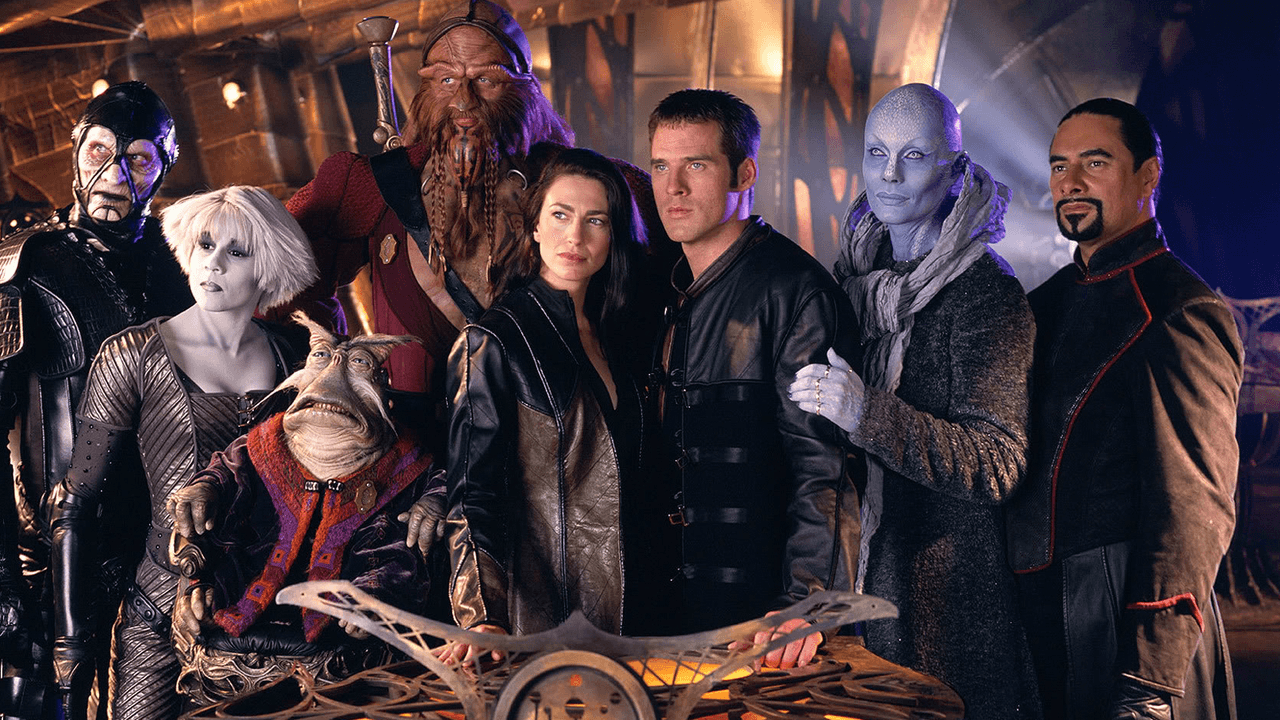
Image credit: Draft web reference from screenrant.com
Why Cancelled Science Fiction Shows Still Feel Bigger Than Their Runs
Some series end so abruptly that they seem to expand in memory. That is part of the strange power of cancelled science fiction shows: they do not just stop, they leave behind blueprints. A few episodes may be all we get, but those episodes can suggest politics, species histories, lost technologies, and cosmic rules that feel far larger than the actual run time.
That is why the most mourned short-lived sci-fi series are not just “good for a cancelled show.” They are shows with systems. They build economies, faiths, colonization conflicts, artificial languages, and messy future histories, then end before the machinery can fully turn. The result is a kind of permanent anticipation. Fans do not only remember the characters; they remember the shape of the world that never got to finish opening.
What makes cancelled science fiction shows linger?
A cancelled show can fade quickly when its appeal depends mostly on plot twists or star power. Sci-fi is different. When the world is the hook, the loss feels architectural. You are not just missing an ending; you are missing the rest of the building.
The most enduring examples usually share a few traits:
- A fully imagined setting that hints at history far beyond the frame
- Rules with consequences, so the universe feels governed rather than random
- Serialized arcs that promise payoffs later
- Fan investment strong enough to keep the conversation alive after the final episode
- A distinctive tone, whether bleak, funny, mystical, or militarized
In other words, the cancellation becomes part of the appeal because it freezes the series at the moment of maximum possibility.
Firefly: a lived-in frontier that ended before the map was done
If one show became the modern shorthand for premature cancellation, it is Firefly. Its future felt inhabited from the start. The mixture of space travel, frontier grit, Chinese-inflected cultural texture, and worn-out machinery created a universe that seemed to have already been running for generations before the audience arrived.
What made it sting was not just the charisma of the crew. It was the suggestion that every port, outpost, and political dispute belonged to a much larger story. The Alliance loomed. The Independents carried the scars of defeat. River’s mystery hinted at experiments and conspiracies the series had barely begun to unpack.
Fans responded to that density. The show’s cancellation in 2002 did not erase it; it sharpened its legend. The theatrical sequel Serenity gave some closure, but the deeper appeal remains the unfinished frontier, the sense that the show had only just started to reveal what its galaxy could contain.
Terra Nova: dinosaurs, colonists, and a future that never settled in
Terra Nova arrived with a simple but potent premise: humanity gets a second chance by colonizing a prehistoric world. That premise alone is enough to generate endless questions. Who controls access? What do settlers bring with them? How does a fragile colony become a society? And what happens when a second Earth still has teeth?
The series invested heavily in production scale and survival tension, but its biggest asset was the promise of an unfolding civilization. The colony was not just a backdrop; it was the beginning of a new social order. There were family conflicts, resource pressures, ecological dangers, and the creeping sense that the project behind the colony might be morally compromised.
That is the kind of setup cancellation hits hardest. The first season was doing the messy work of origin story-building, not payoff. Viewers were left with a world that felt poised to become something stranger and more politically interesting than the show had time to show.
Odyssey 5: the end of Earth as a starting point
Odyssey 5 deserves more attention in conversations about cancelled science fiction shows because it tried to turn a disaster premise into a long-form metaphysical puzzle. The series begins after Earth is destroyed, with a small crew sent back in time to prevent the catastrophe. That setup alone creates urgency, but the show’s real draw was its blend of existential dread and escalating conspiracy.
The premise invites huge worldbuilding questions. What destroyed Earth? Who benefits from the time-travel loop? Are the crew members changing history or merely repeating it? The series repeatedly suggested that the apparent mission was only the surface of something much larger and more unnerving.
When a show is built around a mystery of civilization-level stakes, cancellation feels especially cruel. The audience is not merely wondering what happens to the characters; they are wondering what happened to reality itself.
Caprica: a prequel that turned history into prophecy
Caprica is one of the best examples of a cancellation that deepened the aura around a series rather than simply ending it. As a prequel, it had the burden of inevitability: viewers already knew where the broad historical road led. The challenge was to make the road feel tragic, intimate, and morally complicated.
It did that by focusing on identity, technology, religion, and the birth of systems that would later define a much larger fictional universe. The show was less about a single plot engine than about the moment when a society begins building the tools for its own ruin. That is ambitious television, and it often played like slow-burn speculative history.
The cancellation left behind unresolved experiments, family tensions, and ideological shifts that seemed designed to matter more and more over time. In hindsight, that incompletion is part of why the show still fascinates. It feels like a thesis statement without the final chapter.
The OA: a genre shapeshifter with cosmic momentum
Not every series in this conversation is pure space-opera or hard sci-fi. The OA blurred the line between science fiction, metaphysics, and emotional folklore, which is exactly why its cancellation struck such a nerve. It asked viewers to accept that reality might be layered, portable, and possibly navigable through pattern, memory, and belief.
That kind of premise lives or dies on accumulation. Every new detail matters because it could reveal the rules of the whole structure. The show’s fan response reflected that: intense theorizing, close reading, and a willingness to treat ambiguity as invitation rather than frustration.
When the series stopped, it left behind one of the most memorable unfinished arcs in recent TV memory. The unanswered questions were not just plot points. They were part of a larger architecture about identity and alternate realities, and that made the absence feel active, not empty.
Surface: a deep-sea mystery that only got more interesting
Surface may not be the first title people mention in this category, but it belongs here because it understood the value of an unfolding mystery box before that phrase became overused. Strange creatures, submerged secrets, and the possibility of hidden evolutionary history gave the show a hook that reached far beyond standard monster-of-the-week storytelling.
The appeal was not just the creature design or suspense. It was the idea that the planet itself might contain an alternate civilization or an untapped branch of life with its own logic. That kind of premise suggests science fiction at its most expansive: not just new gadgets, but new categories of existence.
Cancellation prevented the show from paying off the full scale of its concept. Yet the unfinished feeling is exactly why it remains memorable to genre fans. It promised a submerged epic and then vanished beneath the surface.
Why unfinished sci-fi can become more mythic than completed sci-fi
This is the paradox at the heart of cancelled science fiction shows: completion can clarify, but incompletion can intensify. A finished series gives shape to its world. A cancelled one leaves behind negative space, and audiences often fill that space with imagination.
That can make the show feel bigger than it was. Fans mentally continue the political history, sketch the next season, or build the missing mythology from hints and fragments. In that sense, cancellation does not only end a story. It hands some of the storytelling power to the audience.
That is also why these shows often develop lasting cultural afterlives:
- Rewatching becomes detective work. Every line may conceal a larger intended arc.
- Fan communities keep the universe active. Speculation becomes a form of preservation.
- The premise remains pure. Without later seasons to dilute it, the original concept stays potent.
- The loss becomes part of the identity. The show is remembered as much for what it promised as for what it delivered.
The cancellation is not the whole story
It is tempting to treat these series as cautionary tales, but that misses their peculiar emotional strength. A short run does not automatically mean a thin one. In many cases, the brevity protected the shows’ most alluring qualities: the sense that anything could still happen, the feeling that the universe was only half revealed.
That is why people still talk about them years later. Not because they were neatly finished, but because they were unfinished in the most frustrating and fertile way possible. They gave viewers a map, then burned the far edge of it.
If a show can make its absence feel like a story choice, it has done something rare.
A last thought for the sci-fi shelves
The best cancelled series are the ones that leave you staring at the ceiling, mentally writing the next season yourself. They turn loss into speculation and speculation into devotion. That is a very sci-fi kind of miracle.
If you have a favorite example of a cancelled science fiction show that deserved more time, share it in the comments—I’d love to hear which unfinished worlds still live rent-free in your head.