
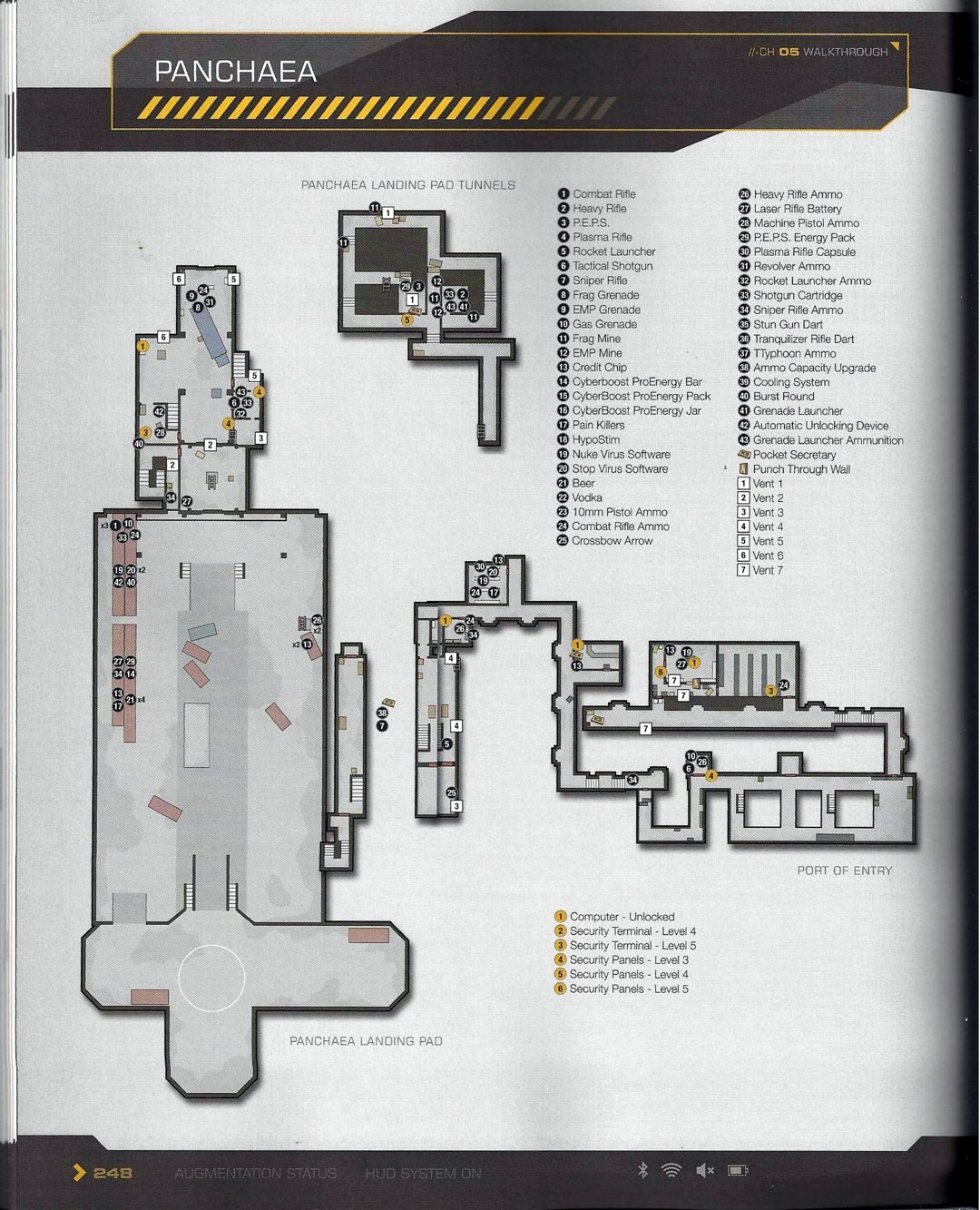
Human Revolution hubs are small by modern standards, but that is exactly why they work. They are tight, layered, and packed with navigational intent. Every street, rooftop, and interior shortcut contributes to player agency.
Instead of sprawling for scale, the game prioritizes meaningful density. Side objectives feel physically connected to main progression, which keeps exploration rewarding without turning into open-world drift.
This is also where atmosphere does heavy lifting. Lighting, ambient audio, and faction presence make spaces feel politically charged, not just decorative. You can sense power structures through layout alone.
For retro analysis, this is a great design lesson: better hubs are not bigger hubs. They are clearer, moodier, and more reactive to player intent. Human Revolution proves you can make compact spaces feel huge if they support meaningful choice.
If your readers care about why some games “stick,” hub design is one of the biggest answers.
Hub design also supports roleplay in subtle ways. Vertical options, side entrances, and social chokepoints let different player types express themselves without the game loudly announcing “you chose path A or B.” That quiet flexibility makes environments feel more believable and less mechanical.
Another overlooked strength is travel scale. Distances are short enough to encourage experimentation, which means players are more willing to test alternate entries and side paths. That increases discovery and lowers fatigue — two things giant maps often fail to balance.
For nostalgia audiences, this is a valuable lesson: compact does not mean shallow. In Human Revolution, compact often means concentrated design value.
If modern developers borrowed this philosophy more often, we would probably get fewer bloated worlds and more replayable ones.
That alone makes this game worth revisiting in long-form retro coverage.
For anyone replaying with limited time, keep a tiny session log after each mission: what decision paid off, what created friction, and what you will try next time. That two-minute habit compounds quickly and makes every return session sharper. It also turns replay content into a living reference instead of a one-time read, which is exactly what high-quality nostalgia coverage should do.
For anyone replaying with limited time, keep a tiny session log after each mission: what decision paid off, what created friction, and what you will try next time. That two-minute habit compounds quickly and makes every return session sharper. It also turns replay content into a living reference instead of a one-time read, which is exactly what high-quality nostalgia coverage should do.


