
Found Footage Horror Movies: Why the Subgenre Still Works
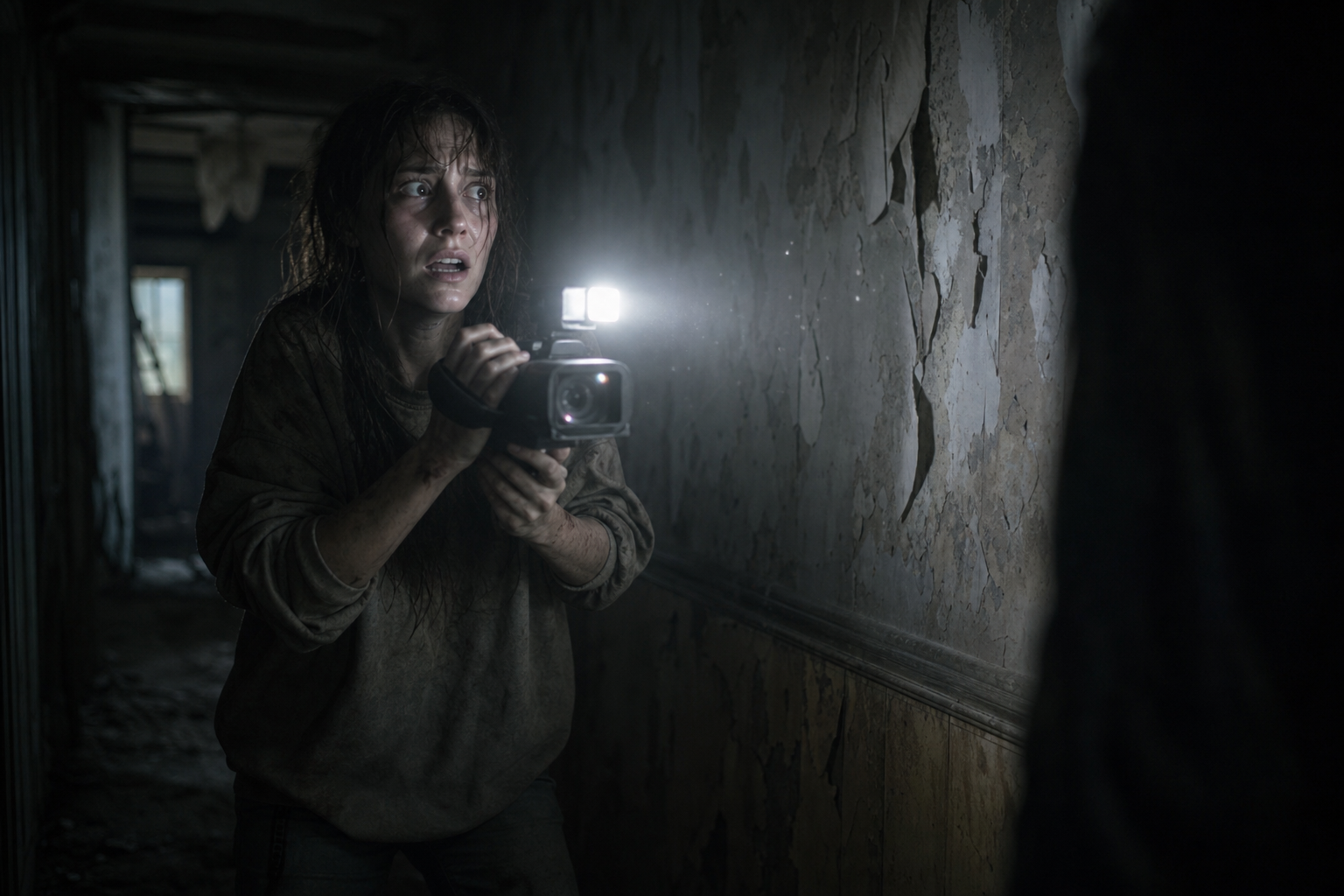
Found footage horror movies are one of the easiest horror subgenres to explain and one of the hardest to kill. The setup is simple: the story is presented as if someone actually found the camera tape, hard drive, police archive, livestream, or recovered evidence after something terrible happened. That tiny shift in perspective changes everything. The monster feels closer. The bad decisions feel more forgivable. The fear feels messier, less polished, and weirdly more plausible.
That plausibility is the whole trick. Found footage horror movies do not need pristine cinematography or elaborate mythology to get under your skin. They weaponize the sense that you are watching something you were never supposed to see. When the format works, it feels less like a movie and more like a disturbing record.
Why found footage horror movies still scare people
The subgenre has lasted because it taps into a few primal fears at once. First, it makes the viewer feel like an accidental witness. Instead of being safely guided through a story by a traditional camera, you are stuck with whoever is holding the lens. If they panic, you panic. If they miss something in the dark, you miss it too.
Second, found footage horror movies lean hard on uncertainty. The shakier the image, the less your brain can fully process, and the more it fills in the gaps with dread. A perfect monster reveal is memorable, but a half-seen movement at the far edge of a frame can linger much longer.
Third, the format makes fear feel bureaucratic and real. A tape found in a forest, a recording recovered from an apartment, a file uploaded by a missing person — these framing devices give horror a paper trail. Even if the premise is absurd, the delivery convinces us to lean in.
And finally, the style is cheap in the best possible way. Found footage horror movies often feel intimate because they are intimate: fewer locations, smaller casts, more improvisation, more noise, less polish. That DIY roughness can create a stronger bond between viewer and victim than a bigger-budget creature feature ever could.
The documentary illusion: why it feels believable
At its best, found footage horror movies mimic the visual language of real life. Phones wobble. Night vision blooms into static. Audio clips and cuts feel abrupt. Faces disappear in darkness. These are not just stylistic quirks; they are evidence that the movie is pretending to be a document rather than a performance.
That documentary illusion matters because horror thrives on recognition. We know what a real home video looks like. We know how grainy a body cam can get after a sprint. We know how awkward people sound when they are genuinely frightened. The more a film borrows from those textures, the more our defenses lower.
This is also why the most effective films in the subgenre usually resist overexplaining themselves. Once a movie turns into a lore dump, the illusion starts to crack. The best found footage horror movies let the evidence speak, even when the evidence is incomplete.
The core ingredients of a great found footage horror movie
Not every shaky-cam horror film earns the title. The ones that stick tend to share a few traits:
- A strong reason to keep filming — curiosity, desperation, journalism, obsession, or simple denial.
- A confined space or limited viewpoint — a house, forest, apartment block, tunnel, road trip, or livestream.
- A believable escalation — things start mundane, then get stranger, then impossible.
- Sound design that does real work — because when the image fails, the audio has to carry dread.
- Characters who feel human under stress — not perfect, not clever on command, just convincingly frightened.
When those pieces click, the format does not feel gimmicky. It feels inevitable.
Essential found footage horror movies to start with
If you want to understand why the subgenre matters, start with the films that built its reputation.
The Blair Witch Project (1999)
This is the movie that made found footage horror movies feel like a cultural event. Its genius was not just the forest setting or the missing campers setup. It was how completely it sold the idea that something unseen was circling its characters. The absence of a monster became the monster.
What still works today is the emotional collapse. The performances get harsher, the arguments more desperate, the geography less stable. By the end, the movie has trapped you in the same confusion as its characters.
Rec (2007)
If you want a version of the format that moves like a sprint, Rec is essential. It starts with a documentary angle and then detonates into pure panic inside an apartment building. The genius of the film is how quickly the camera becomes a liability. Every hallway feels too narrow, every door too thin, every noise too close.
It is one of the clearest examples of how found footage horror movies can turn a simple setting into a pressure cooker.
Paranormal Activity (2007)
This is the domestic version of found footage dread. Instead of survival in the woods or chaos in a building, Paranormal Activity uses the ordinary terror of a bedroom at 2 a.m. The camera is stationary, which makes the format even more unnerving: you are forced to watch the empty parts of the frame and wait for something to be wrong.
It proved that found footage horror movies did not need motion to be effective. Sometimes stillness is worse.
Lake Mungo (2008)
More melancholy than chaotic, Lake Mungo expands the subgenre into grief and memory. It uses interviews, home video, and documentary textures to build a ghost story that feels deeply human. The horror here is not just the possibility of haunting, but the emotional damage left behind by loss.
For viewers who think found footage horror movies are only about jump scares and cheap shocks, this is the correction.
Cloverfield (2008)
Cloverfield brought giant-monster spectacle into the found footage model and made it feel urgent. The moving camera, urban destruction, and fragmented perspective give the film a sense of scale that many smaller entries never attempt. It is proof that the format can handle blockbuster chaos without losing its sense of immediacy.
Quarantine (2008)
A remake that earns its place because it understands confinement. Quarantine traps its characters in a building where every floor feels infected, every stairwell feels temporary, and every hallway narrows the options. It is not subtle, but it is relentless, and that relentlessness is part of the appeal.
Modern found footage horror movies worth your time
The format did not stop being useful after its first big wave. Modern filmmakers have just gotten smarter about where to put the camera and why the footage exists.
Host (2020)
Host is the pandemic-era model of found footage efficiency. It uses a video call premise and wrings tension from exactly what people already fear about digital life: unstable connections, awkward silences, and the feeling that a screen cannot protect you. It is compact, clever, and brutally aware of how modern fear now lives online.
Gonjiam: Haunted Asylum (2018)
This one understands internet-era curiosity better than almost anything else in the subgenre. A crew enters an infamous abandoned asylum to chase clicks, and the movie slowly turns the audience’s own appetite for urban-legend horror against them. The result is one of the most effective scare machines in recent found footage horror movies.
The Visit (2015)
M. Night Shyamalan uses the format to slip from comedy into something much stranger and meaner. The handheld style gives the movie a casual, almost harmless feel at first, which makes the eventual reveal land harder. It works because the camera feels like it belongs to kids, not a polished production.
The Taking of Deborah Logan (2014)
This film starts as a documentary about dementia care and becomes something far more alarming. It is effective because it blends real-world vulnerability with supernatural escalation. That grounding gives the horror weight. You are not just watching a possession story; you are watching a family lose its footing in real time.
Deadstream (2022)
Deadstream updates found footage horror movies for the creator economy. The protagonist is a disgraced livestream personality trying to stage a comeback in a haunted house, and the movie uses streaming culture as both joke and trap. It is funny, frantic, and surprisingly knowledgeable about how online performance can become self-sabotage.
Creep (2014)
Creep is quieter than many of its peers, which makes it more disturbing. Two-person tension is the whole engine here, and the movie turns awkward social behavior into a slow-motion threat. If you like your found footage horror movies uncomfortable before they are horrifying, this is the one.
Why the subgenre keeps reinventing itself
The best found footage horror movies survive because the format is flexible. It can be a police archive, a friend’s tape, a livestream, a GoPro, a documentary, or a recovered phone file. That adaptability lets the subgenre keep pace with how people actually record life now.
It also helps that our relationship with cameras has changed. We film everything. Vacations, arguments, concerts, meals, accidents, storms. There is a strange comfort in the idea that horror could hide inside the same device we use to document normal life. The subgenre exploits that overlap brilliantly.
There is another reason it keeps coming back: found footage makes the audience complicit. Traditional horror can show you a monster from a safe distance. Found footage horror movies make you feel like you found the evidence after the fact. That after-the-fact feeling is what lingers.
Which found footage horror movies should you watch first?
If you are new to the subgenre, a good entry point is to mix a few essentials with one or two modern picks. A strong starter lineup would be:
- The Blair Witch Project
- Paranormal Activity
- Rec
- Lake Mungo
- Host
- Gonjiam: Haunted Asylum
- Creep
- Deadstream
That list gives you the range: wilderness paranoia, domestic dread, frantic containment, grief-driven haunting, digital-era fear, internet obsession, and social discomfort. Together, they show why found footage horror movies remain such a durable form.
The final verdict on found footage
Found footage horror movies still work because they understand a basic truth: fear gets stronger when it feels local, unfinished, and only partly recorded. The format does not need perfection. It needs enough realism to make the audience lean in and enough chaos to make them regret it.
That is why the subgenre keeps resurfacing. As long as people keep filming their lives, horror will keep finding ways to break into the frame.
If you have a favorite found footage horror movie, or one modern entry you think deserves more attention, drop your picks and opinions in the comments.