
Image credit: Draft web reference from youtube.com
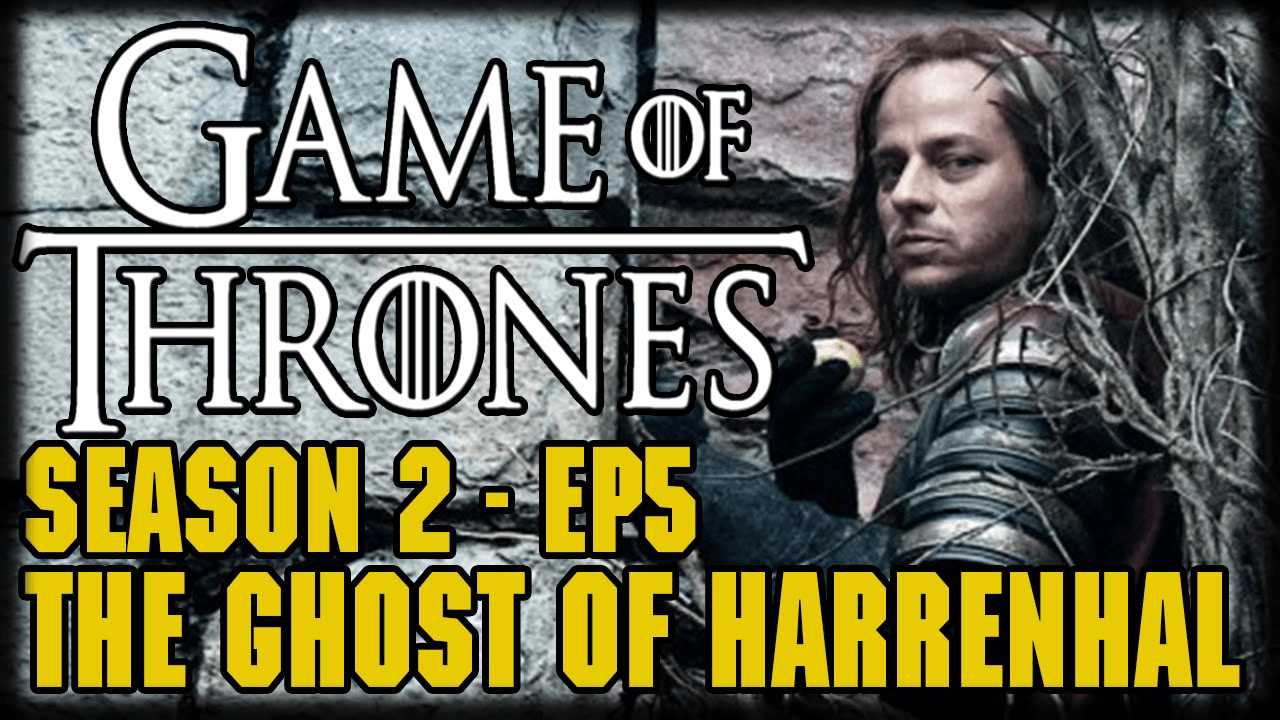
Game of Thrones S2E5 “The Ghost of Harrenhal” episode guide
If Season 2 has been quietly tightening every screw, Game of Thrones S2E5 “The Ghost of Harrenhal” episode guide is where the pressure starts to show. The episode is less about battlefield spectacle than about leverage: who holds power, who pretends to, and who learns how to survive when the room belongs to someone else. Harrenhal becomes the episode’s center of gravity, but the real story is how the show keeps moving pieces into place for much bigger payoffs.
This is the kind of episode that rewards close watching. Arya’s captivity sharpens into something stranger and more dangerous. Tyrion begins to understand how little control he actually has at court. Daenerys faces the cost of authority outside Westeros. And across the narrow political map of the series, alliances start to feel temporary in a way that will matter for a long time.
Quick recap of “The Ghost of Harrenhal”
The episode opens with the aftermath of war and politics pressing in from all sides. The Northern campaign is stalled, the capital is suspicious, and every major player is trying to outlast the others rather than win outright.
At Harrenhal, Arya Stark remains trapped in the orbit of danger, but the episode gives her a strange new kind of protection when Jaqen H’ghar reveals more of what he is capable of. He is not merely another prisoner or assassin; he is a force moving under his own rules. Arya begins to realize that the man she has been watching may be useful in ways she does not yet understand.
In King’s Landing, Tyrion keeps pushing against Cersei’s grip on power while trying to hold the city together with politicking, flattery, and threats. He learns, as usual, that governing is mostly about balancing one disaster against the next.
Across the Narrow Sea, Daenerys’ storyline continues to harden. She is no longer just a claimant with dragons in the abstract. She is a ruler in practice, and rulers have to make decisions that can cost lives. The episode keeps asking whether mercy and strength can coexist, and whether a leader can remain humane once power becomes real.
Elsewhere, Robb Stark’s war effort remains caught between strategy and emotion, with the Stark cause increasingly shaped by choices made far from the battlefield. The episode keeps threading these stories together until the pattern becomes obvious: everyone is losing control of the board, even when they look like they are winning.
The Harrenhal storyline: fear, leverage, and Jaqen H’ghar
Harrenhal is more than a setting here. It is the episode’s mood. The castle feels ruined, oversized, and morally emptied out, a place where power has outlived its purpose. That makes it the perfect stage for Arya’s scenes.
Arya’s role in the castle is still one of concealment and survival, but this episode gives her a more active edge. She is not just trying not to be noticed; she is beginning to understand the hidden systems around her. Jaqen’s presence deepens that understanding. He speaks like a man who has already stepped outside ordinary consequences, and that makes him both terrifying and useful.
The important thing about this plotline is not simply that Jaqen is mysterious. It is that Arya starts learning how power works when it is not official. A sword, a title, and an army matter, but so do secrets, favors, and people willing to kill without banners. Harrenhal teaches Arya that the world is full of invisible hierarchies.
Why Jaqen matters in this episode
Jaqen’s value to the larger series is bigger than one memorable scene. He represents a completely different branch of the Game of Thrones universe: the idea that identity itself can be fluid, and that death can be treated as currency.
In this episode, the audience sees the first real shape of that idea in Arya’s story. She is still a child in many ways, but the show keeps nudging her toward the understanding that names, faces, and allegiances can all be tools. That lesson will echo much later.
King’s Landing politics: Tyrion vs. Cersei
If Harrenhal is about hidden power, King’s Landing is about power that is too visible to trust. Tyrion’s scenes in this episode are classic early-series Tyrion: sharp, defensive, and forced to govern in a hostile environment where nearly every conversation is a trap.
Cersei remains a constant obstacle. She is not just resisting Tyrion; she is resisting the idea that her influence can be contained. The tension between them is one of the episode’s most important long-term engines because it shows that the Lannister court is not stable from within. Even before the larger wars reach their peak, the family is already splitting into competing instincts.
What Tyrion learns in this episode is that ruling from the inside does not mean commanding the room. Information is uneven, loyalties are conditional, and the people closest to the throne are often the least reliable. That lesson becomes essential later, when the costs of misjudging court politics become far greater.
Key political fallout from the capital
- Tyrion is still trying to govern with limited trust and even less goodwill.
- Cersei continues to assert that she will not be managed easily.
- The small council atmosphere remains brittle, with every exchange carrying hidden strategy.
- The episode reinforces that the capital’s real enemy is internal decay, not just outside siege.
Daenerys and the cost of rule
Daenerys’ story in “The Ghost of Harrenhal” matters because it keeps separating the fantasy of conquest from the reality of leadership. She is no longer only a symbol of return or destiny. She is making choices that affect living people, and the show does not let her remain emotionally untouched by that fact.
Her scenes help build one of the series’ most important ideas: power can be morally clarifying and morally corrupting at the same time. The more authority Daenerys gains, the more she has to decide what kind of queen she intends to be. That tension is already visible here.
For viewers tracking the larger arc, this episode is one of those early markers that Daenerys’ storyline is not headed toward simple triumph. The path forward is about compromise, sacrifice, and the danger of believing a crown can be worn without consequence.
Robb Stark, the war, and the slow drift toward compromise
Robb’s material in this phase of the season keeps underlining a painful truth: military success does not solve political weakness. Even when the Stark side looks formidable on paper, their position is unstable because the war is not only being fought with armies. It is being fought through marriages, promises, hostages, and mistakes made in private.
This episode continues to show Robb as a capable commander whose personal life and strategic decisions are starting to collide. The show does not rush that collision, which is exactly why it works. Every small compromise now feels like a future disaster taking shape.
That broader instability matters for the entire series because it keeps the Stark storyline from becoming a clean revenge arc. The North may inspire loyalty, but loyalty alone does not win the game.
Lore connections and what the episode adds to Westeros
The title “The Ghost of Harrenhal” is fitting because the episode is about the persistence of the past. Harrenhal itself is a symbol of ancient ruin, but the episode also reminds us that old power structures never really disappear. They just change form.
A few lore threads stand out:
- Harrenhal as a cursed monument: The castle’s history of destruction makes it feel haunted by more than rumor. Even without literal ghosts, the place carries the weight of dynasties that failed.
- Assassins and hidden orders: Jaqen hints at a wider underworld of power operating beneath noble warfare.
- The illusion of control: Whether in the capital or in exile, the episode reinforces that banners and titles do not guarantee authority.
- The narrowing of choices: Characters keep finding that every move limits the next one, which is one of the show’s most persistent themes.
For compendium readers, this episode is valuable because it deepens the logic of the world without stopping to explain itself too much. It trusts the audience to notice how castles, customs, and alliances shape behavior.
Standout scenes worth remembering
A strong episode guide should flag the scenes that do the most heavy lifting, and this one has several.
Arya and Jaqen’s growing connection
This is the episode’s signature relationship beat. The dynamic is still uneasy, but the show makes it clear that Arya is learning from someone who understands power in an entirely different register.
Tyrion navigating court hostility
Tyrion’s scenes remain some of the sharpest writing in the series because they turn political management into an endurance test. He has to think faster than everyone around him and trust almost no one.
Daenerys confronting rule as responsibility
Her storyline keeps emphasizing that conquest is the easy part. The harder part is deciding what to do after the banners are raised.
The castle itself as a character
Harrenhal is filmed like a memory of violence. The episode uses the setting well enough that the location feels like an argument: empires rot, and the rot stays visible.
Ending and immediate significance
By the end of “The Ghost of Harrenhal,” no one has solved their problem, but several characters have gained a better understanding of the game they are trapped in. That is what makes the episode important.
Arya has moved one step closer to understanding the usefulness of Jaqen and the value of patience. Tyrion remains boxed in, but his awareness of the court’s fragility is sharper. Daenerys continues to mature into a ruler whose choices will matter far beyond her immediate circle. And the Stark war effort remains balanced on shaky ground.
The ending works because it does not pretend to be a climax. Instead, it leaves the audience with the sense that the board has subtly changed. In Game of Thrones, that is often the most dangerous kind of ending.
Why this episode matters to the larger series
“The Ghost of Harrenhal” matters because it helps define what the show really is under the surface armor, dragons, and bloodshed. It is not just a story about claiming a throne. It is a story about how people learn to survive systems they cannot fully control.
This episode matters for four reasons:
- It deepens Arya’s education in power.
Her relationship with Jaqen opens a path that becomes essential to her identity later. - It sharpens the Tyrion-Cersei conflict.
Their political hostility is no longer background noise; it is an active source of instability. - It keeps Daenerys grounded in consequence.
Her rise is framed as difficult, costly, and morally complicated. - It turns Harrenhal into a symbol.
The castle is not just a location but a reminder that Westeros is built on ruins, and every new power inherits old damage.
For anyone building a full Game of Thrones episode compendium, this is the kind of chapter that may not look explosive at first glance but turns out to be structurally important. It is a hinge episode: not the loudest, but one of the most consequential.
What new viewers should remember next
If you are moving straight into the next episode, keep these points in mind:
- Arya is beginning to understand that Jaqen H’ghar is much more dangerous than he first appeared.
- Tyrion’s position in King’s Landing remains precarious, and Cersei is not backing down.
- Daenerys is increasingly being written as a ruler, not just a claimant.
- Robb’s war is being weakened by pressures beyond the battlefield.
- Harrenhal’s role in the series is getting bigger, not smaller.
That combination makes this episode a quiet turning point. It does not scream for attention, but it leaves fingerprints all over what comes next.
If you’re tracking the season episode by episode, this is one worth revisiting with the bigger arc in mind. And if you have a favorite Harrenhal moment or a different read on the episode’s ending, share your thoughts in the comments.