

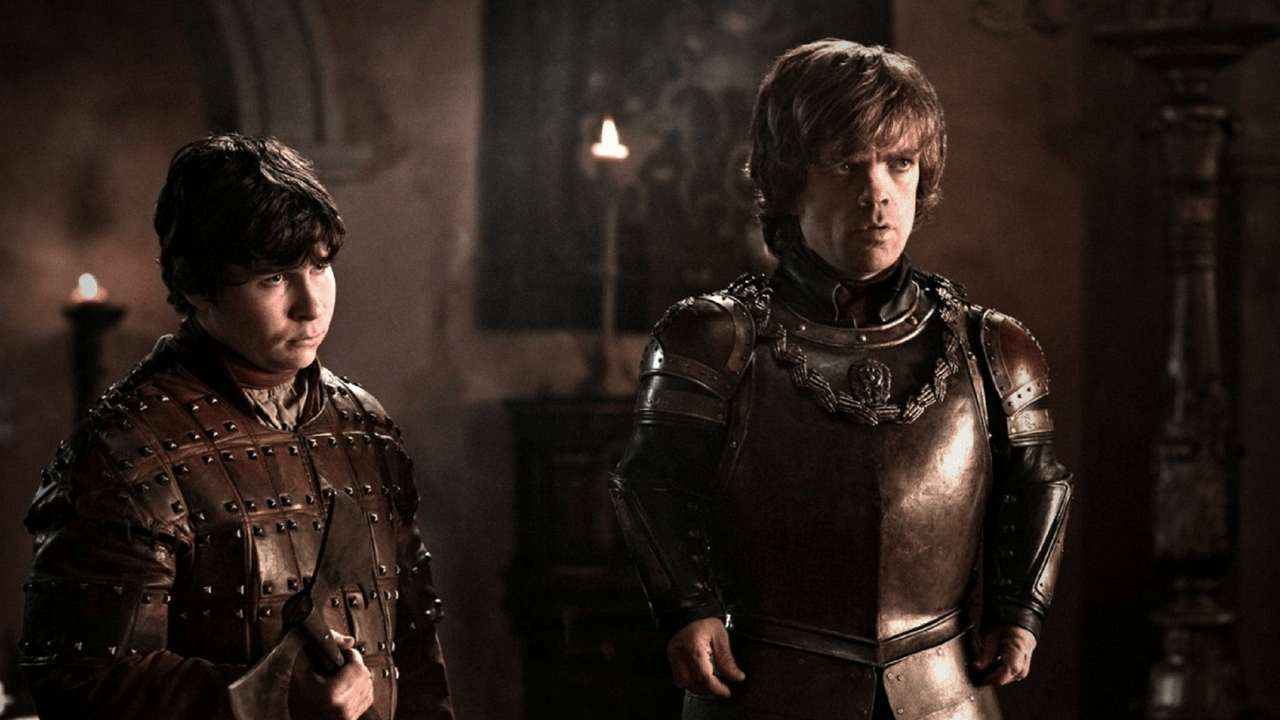
Image credit: Draft web reference from pinterest.com
A City on the Brink: Game of Thrones S2E9 “Blackwater” Episode Guide
Game of Thrones S2E9 “Blackwater” episode guide territory is where the show stops hinting at disaster and commits to it. This is the siege episode — the one where King’s Landing braces for Stannis Baratheon’s assault, Tyrion Lannister takes command in a city that barely trusts him, and wildfire turns a conventional battle into something far more terrifying.
If you’re building a full Game of Thrones compendium, this is one of the essential episodes to understand. “Blackwater” is not just a big action hour. It is a turning point for the war of the five kings, a test of the capital’s fragile loyalties, and a reminder that in Westeros, ingenuity can be as deadly as steel.
What happens in “Blackwater”
The episode is built around one central event: Stannis’s fleet and army launch their attack on King’s Landing. The city is underprepared, under-defended, and politically unstable. What should be a straightforward siege becomes a desperate struggle for survival.
Tyrion, acting as Hand of the King in all but name, coordinates the defense because no one else in the capital seems able or willing to do it. He understands the city’s weaknesses better than most of the courtiers who sneer at him, and he’s willing to gamble on a weapon that can level an invading fleet in seconds.
The battle begins on the Blackwater Rush, where Stannis’s ships approach in confidence and are met by a firestorm. The green wildfire hidden beneath the riverfront detonates with devastating force, destroying ships, crews, and momentum in a single strike. For a moment, it looks like the war is over before it properly begins.
But Stannis doesn’t retreat easily. His forces regroup, and the battle shifts from the river to the city walls. Ladders go up, gates are battered, and the defenders are pushed to their limit. The episode keeps the pressure tight: every beat feels like a collapse waiting to happen.
Tyrion’s strategy defines the episode
The heart of the Game of Thrones S2E9 “Blackwater” episode guide is Tyrion’s desperate improvisation. He is not the largest man on the battlefield, but he is one of the few who actually understands the stakes. He trusts fear, timing, and secrecy more than traditional military pageantry.
His most important decision is to use wildfire as a trap. That choice reveals several things at once:
- Tyrion knows the capital cannot win a fair fight.
- He understands that surprise matters more than prestige.
- He is willing to risk moral outrage for survival.
- He can see through the court’s bluster to the city’s actual vulnerabilities.
That strategy makes the battle memorable, but it also deepens Tyrion’s character. He is still cynical, still wounded, and still disrespected. Yet in this episode, he becomes the man who keeps the city standing when everyone else is already thinking about escape.
Cersei, Sansa, and the human cost inside the Red Keep
While the battle rages outside, the Red Keep becomes its own pressure chamber. Cersei Lannister waits for news, and her fear slowly strips away the usual mask of control. She begins as someone determined to project authority, but as the siege closes in, her panic turns raw and visible.
Sansa Stark’s scenes give the episode a colder, more intimate dread. She is trapped in the capital, forced to understand that politics can become personal in the worst possible way. The danger is not abstract. If the city falls, the consequences will be immediate, brutal, and likely irreversible.
Cersei’s greatest fear is not just death. It is capture, humiliation, and the collapse of the story she has built around herself and her son. That fear is one of the episode’s sharpest tools. “Blackwater” is a battle episode, but it is also a study in what war does to people who believed walls would protect them.
Stannis Baratheon’s attack and what goes wrong
Stannis enters the episode as the man trying to claim what he believes is rightfully his. He is disciplined, severe, and convinced that legitimacy alone will carry the day. But legitimacy does not stop wildfire.
His forces make the wrong assumptions at the wrong time. They expect the city to break quickly under pressure. Instead, they run into a defense built around deception, panic, and brutal efficiency.
That matters because it defines Stannis as a commander for the rest of the series. He is not foolish, but he is rigid. “Blackwater” shows the limit of his certainty. His cause is real, but his judgment is not invincible.
Standout scenes that make “Blackwater” unforgettable
A few sequences carry the episode’s reputation almost on their own.
The wildfire trap
This is the signature image of the episode: a vast burning explosion on the river, green flames consuming ships and men. It is one of the series’ most striking uses of spectacle because the visual shock also serves a tactical purpose.
Tyrion leading from the front
Tyrion is forced into command under impossible conditions, and the episode makes his courage feel earned rather than sentimental. He is not fearless, but he refuses to hide while others die.
Cersei and Sansa in the keep
These scenes slow the episode down in the right way. The battle gets louder, but the emotional stakes get tighter. The women inside the castle are not watching history from a safe distance. They are waiting to see whether history will kill them.
The collapse of order
Once the fight reaches the walls, the episode strips away any illusion that a medieval city can stay controlled during siege. Soldiers panic, officers disappear, and survival becomes local and immediate.
Lore implications: wildfire, siegecraft, and the political meaning of the battle
“Blackwater” adds more than one memorable battle to the series. It expands the logic of the world.
Wildfire matters because it reminds viewers that the Targaryen legacy is not only about dragons. Westeros still contains dangerous remnants of older powers, and those remnants can shape modern politics in unexpected ways. The substance itself is unstable, feared, and devastating — exactly the kind of thing a kingdom pretends it can control until it cannot.
The episode also reinforces how important urban warfare is in this universe. A siege is not a clean contest of heroes. It is logistics, intimidation, timing, and the willingness to burn what cannot be defended.
Politically, the episode proves that King’s Landing is not secure just because it sits behind walls. The city is protected by alliances that can fail, loyalties that can split, and individuals who may matter more than banners.
The ending and its immediate fallout
By the end of “Blackwater,” the assault has failed. Stannis’s attack does not deliver the quick victory he needs, and the city survives because Tyrion’s plan buys time at the exact moment time matters most.
But survival comes at a cost. Tyrion is badly wounded, the city is shaken, and no one in King’s Landing walks away unchanged. The battle does not solve the war. It only redraws its terms.
The immediate aftermath also reorders power inside the capital. Characters who looked weak before the battle can suddenly claim legitimacy, while others are exposed as cowards, opportunists, or liabilities. In Game of Thrones, that kind of shift is often the real prize.
Why “Blackwater” matters to the larger series
This episode matters because it changes the scale of the story without losing the personal stakes.
Before “Blackwater,” the war of the five kings is a set of competing claims. After it, the conflict feels larger and more dangerous because the show proves it can turn a political dispute into a full-scale catastrophe in one hour.
It also sharpens several long-running themes:
- Power is fragile when it depends on appearances.
- Intelligence can matter more than noble birth.
- Victory in Westeros often looks ugly up close.
- The capital survives not through virtue, but through desperation and cunning.
For new viewers, this is a key episode to remember because it explains why Tyrion becomes such a central figure in the series’ political machine. It also clarifies why Stannis remains a threat even after failure: a defeat does not end a claim, and a failed siege can still reshape the war.
What new viewers should remember next
If you are following the series episode by episode, keep these takeaways from Game of Thrones S2E9 “Blackwater” episode guide territory in mind:
- King’s Landing survives by a razor-thin margin.
- Tyrion earns respect through action, not title.
- Cersei’s control of the capital is weaker than it looks.
- Stannis remains dangerous even after losing the battle.
- Wildfire is now a major force in the series’ political and military landscape.
Those points carry forward immediately into the next stretch of the story. The battle is over, but the consequences keep moving.
Final takeaway
“Blackwater” works because it is both spectacle and consequence. The episode gives the series its most famous siege by turning strategy, fear, and betrayal into one brutal night on the river. It is a reminder that in Westeros, the most dangerous weapons are often the ones nobody sees coming.
If you’ve got a favorite moment from “Blackwater” or a different read on Tyrion’s choices, drop it in the comments and share your take.