
Image credit: Draft web reference from theringer.com
The season opener that changes the map
The Game of Thrones S3E1 “Valar Dohaeris” episode guide starts where season 2 left everyone frayed, exposed, and one bad decision away from collapse. “Valar Dohaeris” is a reset, but not a soft one. It widens the story, introduces fresh power players, and makes it clear that victory in Westeros is still a matter of who can survive the next hour.
The title means “all men must serve,” and that idea echoes through the episode. Some characters are forced into service, some choose it, and some discover they have no choice at all. The result is an opener that is quieter than a battle episode but arguably more consequential.
What happens in “Valar Dohaeris”
The episode splits its attention between the Wall, King’s Landing, the Riverlands, and Daenerys’s growing campaign across the sea. Each storyline advances in a way that changes the status quo.
At the Wall: Jon Snow meets a new kind of authority
The most urgent material belongs to Jon Snow. He is brought before Mance Rayder, the King-beyond-the-Wall, who immediately understands how to test a man’s loyalty. Jon must keep up the cover he built among the wildlings, and the scene works because Mance is dangerous without needing to raise his voice.
This sequence does more than keep Jon alive. It establishes the wildlings as a real political and military force, not just a northern threat whispered about by the Night’s Watch. Mance’s command is loose in style but disciplined in purpose, which makes him one of the show’s most effective counterpoints to the rigid institutions of the south.
Back at Castle Black, the fallout from the aftermath of the battle at the Wall is still being processed. The Night’s Watch is depleted, uneasy, and forced to confront what leadership looks like when most of your veterans are dead or missing. Sam and the surviving brothers are left to hold together a broken order.
In King’s Landing: Littlefinger reads the room as usual
King’s Landing is full of the kind of quiet panic that defines the city when no one has a stable plan. Tyrion is still recovering from the damage of the Battle of Blackwater, and his position is more precarious than his title suggests. He has saved the city, but survival in the capital does not guarantee gratitude.
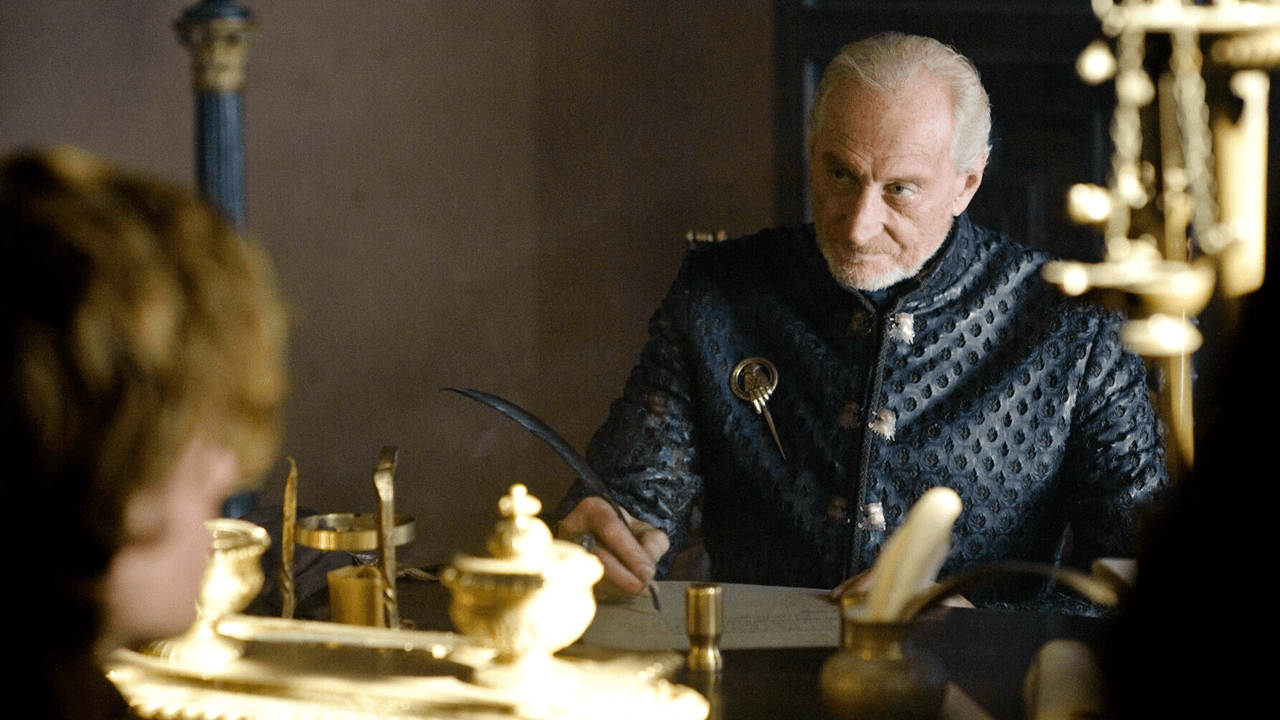
One of the episode’s smartest moves is how it shows that winning a battle is not the same as winning power. Tyrion remains valuable, but he is also isolated. Tywin returns as the dominant political force, and the Lannister family’s internal logic becomes clearer: competence matters only when it serves family control.
Littlefinger, as always, moves through the city like he already knows the ending. His interactions with Sansa underline one of the show’s bleakest truths: in King’s Landing, protection often comes packaged as manipulation.
Across the sea: Daenerys enters Slaver’s Bay
Daenerys Targaryen’s plotline in this episode is one of the most important in Season 3. She arrives in the orbit of Slaver’s Bay and is immediately greeted by the scale of the place’s cruelty. The city, the people, and the slave economy are presented with a colder, more mechanical evil than the feudal games of Westeros.
This is where the series begins expanding Daenerys from claimant to liberator. She is no longer just a queen in exile with dragons. She is now confronting systems of power that require strategy, patience, and a willingness to play the long game.
The Unsullied are introduced as a terrifyingly disciplined fighting force, and the episode makes their conditioning impossible to ignore. They are not just soldiers; they are what a brutal empire produces when it turns people into property.
Beyond the Riverlands: Arya, the Hound, and survival by proximity
Arya’s story continues to be one of endurance rather than progress. She is still trapped in the machinery of war, with danger changing shape every time she thinks she has found a route out. The Hound remains a brutal but strangely legible companion: he is violent, self-interested, and still more straightforward than many of the nobles who call themselves honorable.
That tension matters because Arya is learning the difference between laws written by lords and the rules people actually live by. Season 3 keeps sharpening that lesson.
Key character moves that matter later
“Valar Dohaeris” is full of movement that looks small on first watch but pays off across the season.
- Jon Snow survives his first direct test among the wildlings, proving he can improvise under pressure.
- Mance Rayder is established as a charismatic military leader, not a rumor.
- Tyrion Lannister returns to a weakened political position despite helping save the city.
- Tywin Lannister reasserts control in King’s Landing and begins reshaping the post-battle order.
- Daenerys Targaryen steps into the Slaver’s Bay storyline, which becomes one of the season’s central arcs.
- The Unsullied are introduced as a symbol of institutional cruelty and military precision.
- Arya Stark remains on a path defined by displacement, fear, and hardening instincts.
These are not isolated beats. They are the pieces the rest of Season 3 is built on.
What the episode reveals about power
The best episode guides don’t just summarize what happened; they identify what the episode believes. “Valar Dohaeris” argues that power comes from systems, not slogans.
That’s visible in three places:
1. Service replaces honor as the season’s real currency
The title is not just poetic flavor. Everyone in the episode is serving someone, some cause, or some survival instinct. Jon serves his cover story. Tyrion serves a family that resents him. Daenerys is building an army out of people denied agency. Even the wildlings serve Mance because he offers them a future the Watch cannot.
2. Battles end, but the political war keeps going
Blackwater changed the board, but not the rules. The Lannisters still face rivals, the capital still breeds betrayal, and the winners still have to manage their losses. The episode wisely slows down enough to show that warfare in this world is cumulative.
3. Moral certainty keeps failing
Characters who believe they are in control are usually the ones about to be surprised. That is one of the series’ defining habits, and this episode leans into it with restraint rather than spectacle.
Standout scenes worth remembering
A strong Game of Thrones S3E1 “Valar Dohaeris” episode guide should flag the scenes most likely to stick with viewers later.
Jon and Mance’s first real face-to-face
This is the episode’s essential northern scene. It’s tense, compact, and loaded with unspoken danger. Mance is immediately convincing as a leader who can bend people without needing to break them in public.
Daenerys seeing the reality of Slaver’s Bay
Her arrival marks a tonal shift. The world outside Westeros is not a fantasy of endless possibility; it is a place with its own entrenched cruelty and hierarchy. That makes her arc feel larger and harder than before.
Tyrion being reminded that gratitude is temporary
Tyrion’s situation is not resolved by the battle. Instead, it becomes clearer that his enemies and allies alike are calculating his usefulness. That is a grim but crucial turning point.
The ending: a promise of bigger wars ahead
The ending of “Valar Dohaeris” works because it does not try to tie anything up. Instead, it expands the horizon.
Jon’s position among the wildlings is still fragile. Daenerys is entering a new theater of power. King’s Landing is quietly reorganizing itself under Tywin’s logic. The season opener closes with the sense that the story has moved out of the narrow crisis mode of Season 2 and into something broader, harsher, and more political.
That’s why the episode matters: it doesn’t just resume the story. It redefines the battlefield.
Why “Valar Dohaeris” matters to the larger series
If you are building a full series compendium, this episode is essential because it marks the start of several major trajectories at once.
- It deepens the Wall storyline by introducing the wildlings as an organized force.
- It pushes Daenerys into the Slaver’s Bay arc that will define her middle seasons.
- It shows that Tywin, not Joffrey, is the real center of Lannister power.
- It keeps Arya’s journey grounded in survival rather than immediate revenge.
- It reinforces one of the show’s core themes: power is unstable unless it can be enforced.
In other words, “Valar Dohaeris” is not a flashy premiere built on spectacle. It is a structural episode, the kind that makes later payoffs land harder because the foundation was laid carefully.
Final takeaway
The best way to watch this episode is as a map update. Alliances shift, threats multiply, and the series opens up in every direction at once. If Season 2 ended with a defense, Season 3 begins with an occupation: of space, of authority, and of the future.
That is what makes the Game of Thrones S3E1 “Valar Dohaeris” episode guide so useful. It captures the moment the story stops reacting and starts expanding.
If you’re revisiting the season opener, what scene or character turn stands out most to you? Share your thoughts in the comments.