
Image credit: Draft web reference from streamfind.com
Chains, pressure, and consequences
The Game of Thrones S3E3 “Walk of Punishment” episode guide is all about the ugly mechanics of power. This episode does not just move pieces around the board; it shows what those pieces cost. In the North, in the Riverlands, at King’s Landing, and across the narrow sea, characters are pushed into choices that feel smaller than war but matter just as much.
What makes this episode stand out is how carefully it links punishment to politics. Men are worked to death, queens test the loyalty of armies, prisoners bargain for survival, and children begin to understand that dreams can be dangerous. By the end, the hour feels like a tightening noose: not explosive, but decisive.
What happens in “Walk of Punishment”
The episode opens with hardship and never really lets up. Tyrion continues to live under the shadow of his new position as Hand of the King, while King’s Landing remains a place where power is announced more than it is secured. Elsewhere, the story widens into the consequences of victory and defeat: Daenerys closes in on the question of how to take a city without becoming the kind of ruler she hates, Jaime is marched deeper into humiliation and vulnerability, and Bran’s path grows stranger as his gifts become harder to ignore.
At Harrenhal, the title earns its meaning. Prisoners are forced into brutal labor, and the episode uses that suffering to underline the ugliness of occupation. The Riverlands are not just a strategic prize; they are a wound that keeps reopening.
Meanwhile, the episode keeps threading together separate theaters of the war. Robb’s campaign, the Lannister court, the Brotherhood’s resistance, and the northern journey all feel like parts of the same machine grinding forward.
The slave labor at Harrenhal is the episode’s moral center
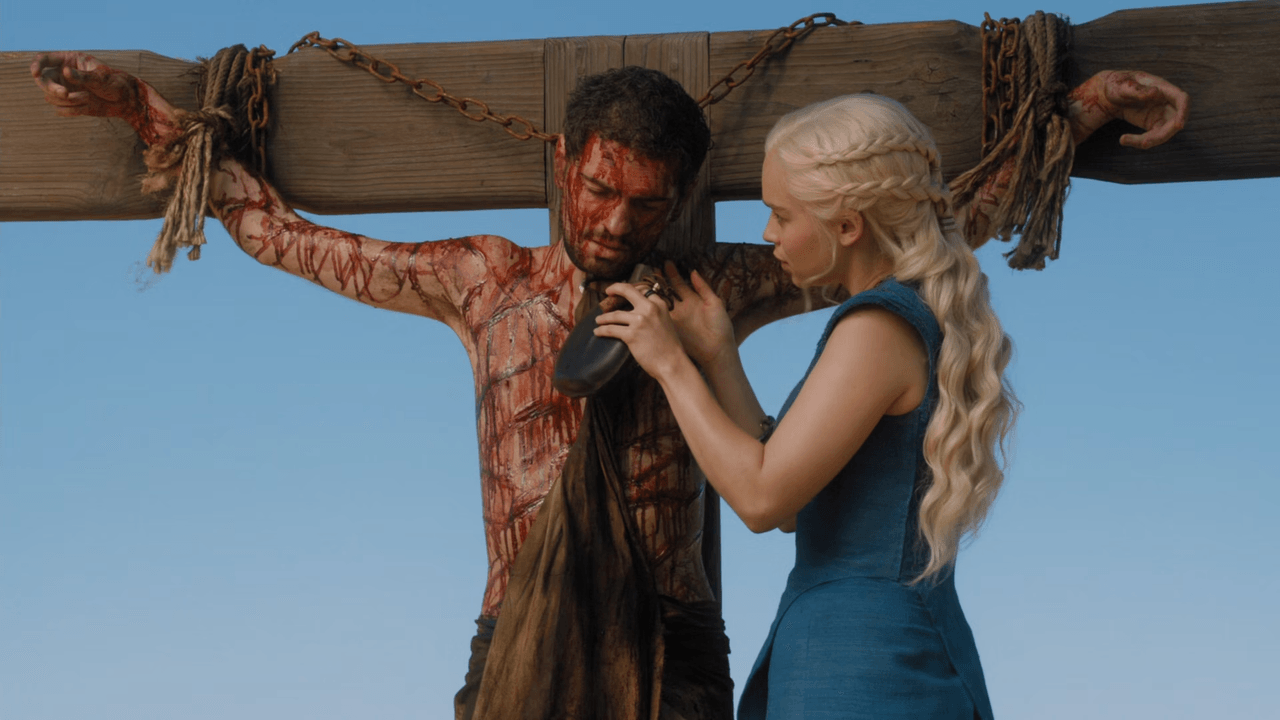
If this episode has one defining image, it is the punishment itself: labor used as a weapon. Harrenhal has always been a place of fear, but here it becomes a system. Prisoners are broken down through exhaustion, threat, and public cruelty. That matters because the show is not treating abuse as background texture. It is showing how power reproduces itself when no one is held accountable.
This sequence also sharpens the episode’s political language. Conquest is not abstract in Westeros. It is men with whips, exhausted bodies in mud, and a castle that functions like a machine for making people obedient. The point lands because the series has already trained viewers to expect noble banners and grand claims. Here, the reality is work, pain, and silence.
Why the title matters
“Walk of Punishment” echoes the show’s habit of turning ritual into warning. In this episode, punishment is not confined to one person or one kingdom. It radiates outward:
- prisoners pay for the ambitions of lords
- armies pay for the choices of commanders
- children pay for the secrets of their bloodlines
- rulers pay for every weak assumption they make about loyalty
That pattern is what gives the episode its lasting value in a full-series compendium.
Key character moves worth remembering
Tyrion keeps surviving by reading the room
Tyrion’s scenes are never just comic relief or court banter. In this episode, he shows the instinct that makes him one of the show’s most durable political players: he watches first, speaks second, and tries to understand the shape of danger before it reaches him. That matters in King’s Landing, where information is often more valuable than a sword.
His position remains precarious, but the episode reinforces a key truth about Tyrion: he is best when he is underestimated. That becomes essential later in the season and beyond.
Jaime’s captivity becomes psychologically sharper
Jaime’s storyline has already stripped him of status, but this episode pushes him into a different kind of humiliation. He is still a Lannister, still proud, still dangerous in small ways, yet the world around him insists on reducing him to a prisoner. What changes here is not only his physical situation but his sense of what he can still control.
That shift matters because Jaime’s arc depends on slow corrosion. He does not become interesting when he is strongest. He becomes interesting when strength stops working.
Daenerys starts weighing liberation against force
Across the sea, Daenerys continues moving toward a defining question: is she a liberator, a conqueror, or both? This episode is important because it does not give her an easy moral lane. She is gathering strength, but every gain has a shadow attached to it.
That tension is one of the episode’s most important long-term contributions. It helps explain why her rise is never just a victory march. Even in triumph, the series keeps asking what kind of ruler she is becoming.
Bran’s gifts are no longer just dreams
Bran’s storyline keeps expanding the world’s magical dimension. The episode does not treat his abilities like a side note; it treats them like a burden of knowledge. He is seeing more, but seeing more does not mean understanding more. If anything, it makes the world feel stranger and less controllable.
For new viewers, this is one of the key reminders: Bran’s path is not simply about travel north of Winterfell. It is about perception, memory, and the ancient forces that still operate beneath the politics.
Political fallout: no one gets to stay innocent
One reason this episode matters is that it shows how every major faction is implicated in the same moral mess. The Lannisters want order, but their methods depend on coercion. The Starks want justice, but justice in wartime becomes expensive and uneven. Daenerys wants freedom, but freedom often begins with new chains. Even the smallest act of loyalty can create collateral damage.
That’s the real political fallout of the episode:
- Harrenhal exposes the cost of occupation
- King’s Landing proves that status alone does not equal control
- the Riverlands keep suffering because no one can fully win there
- the North and the far reaches of the map remain tied to decisions made far away
The episode also quietly reinforces one of the series’ central truths: the war is not only fought in battles. It is fought in the treatment of prisoners, the use of labor, the handling of information, and the ability to make people fear tomorrow.
Lore connections and world-building details
For readers building a Game of Thrones compendium, this is the kind of episode that rewards close tracking. It does not introduce a giant new mythic event, but it deepens several essential parts of the world.
Harrenhal as a symbol
Harrenhal has long been one of the series’ most loaded locations. It is too large, too broken, and too cursed-feeling to ever be just another castle. This episode uses it as a practical site of oppression, but its history hangs over every scene. The ruin of old power is still visible in its walls.
The series’ approach to punishment
The show repeatedly returns to the idea that punishment is public, theatrical, and political. This episode fits that pattern perfectly. It is not enough to punish a person privately; the punishment must be seen, remembered, and used.
Magic remains present, but unstable
Bran’s storyline reminds viewers that the fantasy world is not just armies and thrones. The supernatural is still active, but it rarely arrives in clean, explanatory form. That uncertainty is part of the series’ texture. Magic does not simplify the story; it complicates it.
Standout scenes that define the hour
A few sequences do especially heavy lifting:
- the brutal Harrenhal labor scenes, which give the episode its title and moral weight
- Tyrion navigating court politics with enough wit to stay alive
- Jaime’s humiliating march deeper into captivity, which keeps his arc painful and human
- Daenerys’ continued consolidation of power, which shows how ambition changes shape once victory feels possible
- Bran’s eerie, half-understood experience, which keeps the mystical side of the story active
What these scenes share is a refusal to feel neat. Nothing resolves cleanly. Every scene leaves a stain.
The ending: pressure without relief
By the end of “Walk of Punishment,” the episode has done something subtle but important: it has made the world feel more closed in. Characters are still moving, but every route seems narrowed by consequences they did not fully choose.
That ending matters because it resets expectations for the rest of Season 3. This is not a stretch of the story where anyone can afford to assume momentum equals safety. The episode’s final effect is to tell the audience that punishment, debt, and ambition are now inseparable.
For viewers following the larger series, that is the takeaway to hold onto. The episode does not just show cruelty. It shows the infrastructure that makes cruelty sustainable.
Why “Walk of Punishment” matters to the larger series
This episode earns its place in the series because it sharpens the themes Game of Thrones returns to again and again:
- Power is never clean. Every victory has labor, violence, and collateral damage behind it.
- Identity is tested under pressure. Tyrion, Jaime, Daenerys, and Bran all face versions of that pressure here.
- The world is bigger than the throne room. The consequences of rulership reach into mines, camps, castles, and dreams.
- Magic and politics are inseparable. Even the eerie moments feed the same story of control and survival.
If you are building a full rewatch guide, this is an episode to flag as a hinge point. It is not the loudest hour of the season, but it is one of the clearest statements about what this series cares about: what power does to people, and what people are willing to do to keep it.
Quick recap for new viewers
If you only remember a few things from this episode, remember these:
- Harrenhal is shown as a site of brutal forced labor and punishment
- Tyrion continues adapting to the dangers of court politics
- Jaime’s captivity deepens his arc and strips away more of his armor
- Daenerys continues building power while facing the moral cost of conquest
- Bran’s storyline keeps the supernatural side of the series in play
- the episode strengthens the season’s central theme: survival always has a price
Final thoughts
“Walk of Punishment” is one of those episodes that does not ask to be admired for spectacle. It asks to be remembered for structure. It shows how the series links cruelty, governance, and survival into the same chain, and it quietly prepares several major arcs for sharper turns ahead.
If you are working through the series in order, this is a key chapter to keep in mind.
What did you think of the episode’s darkest turns, and which scene stood out most to you? Share your thoughts in the comments.