

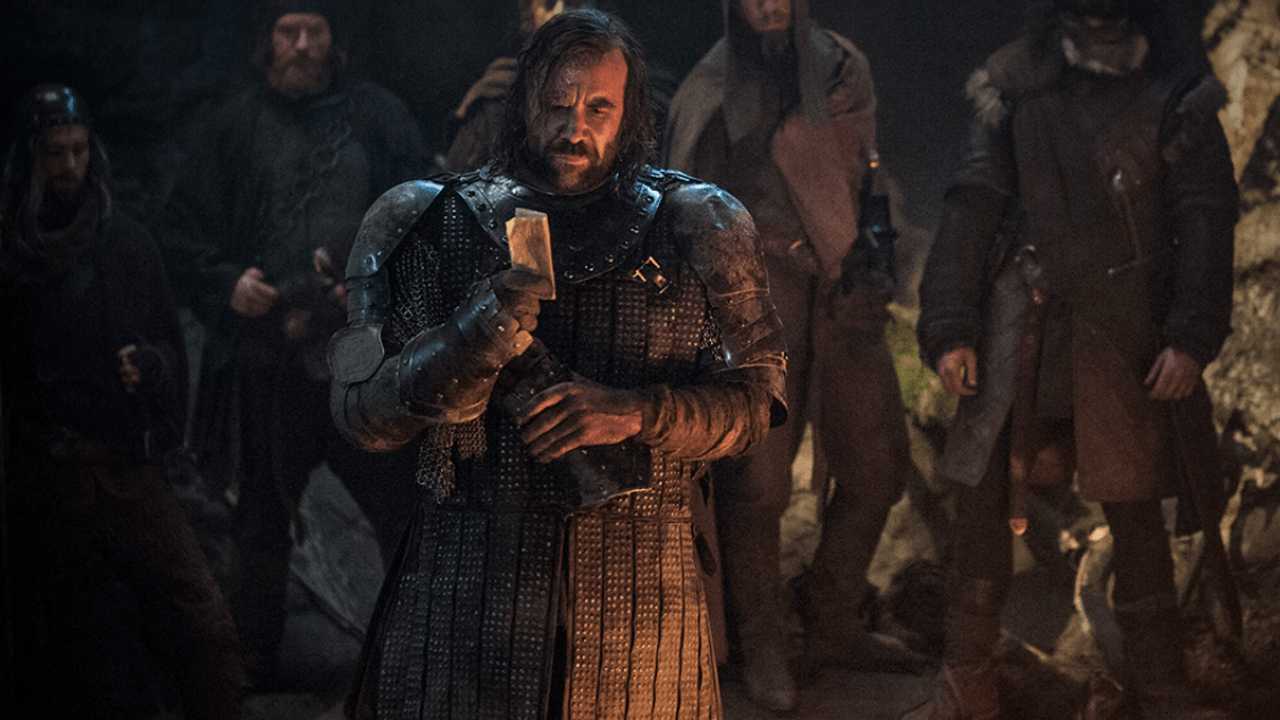
Image credit: Draft web reference from theringer.com
Game of Thrones S3E5 “Kissed by Fire” episode guide
“Game of Thrones S3E5 “Kissed by Fire” episode guide” covers one of Season 3’s sharpest pivot points: an episode built around vows, violence, and the cost of being seen clearly. By the end, the show has moved several major pieces at once — some through force, some through confession, and some through the simple fact that a person finally refuses to lie about what they are.
This is the kind of episode that looks self-contained on first watch, then starts paying dividends for the rest of the series. It gives you a memorable duel, a landmark conversation about identity, a deep cut into the history of the Iron Islands, and an ending that resets the political weather around Winterfell.
What happens in “Kissed by Fire”
The episode is split between two main arenas: the north and the riverlands. In both, the same theme repeats in different forms — people are forced to prove themselves, and the world is not especially interested in fairness.
At the Wall, Jon Snow is still embedded among the wildlings and trying to survive the suspicion that comes with being an outsider. His mission is not just physical infiltration; it is moral endurance. He has to keep remembering who he is while acting like someone else.
In the riverlands, Jaime Lannister is brought before Robb Stark’s camp, and the episode gives him one of his most important scenes in the series. He is finally asked to explain what kind of man he is, and he answers with a mixture of arrogance, grievance, and hidden truth. The exchange matters because it strips away the simple label of “Kingslayer” and shows the political logic underneath the insult.
Meanwhile, in the Iron Islands, the show returns to the family that has never learned how to love without testing the wound first. Balon Greyjoy’s household is in motion, and the episode keeps asking whether the Ironborn are pursuing freedom or just repeating old forms of violence in a different key.
The key character moves
Jon Snow stays alive by thinking like a spy
Jon’s storyline is less flashy than the episode’s duel, but it is essential. He is deepening his cover among the wildlings, which means every conversation is a test. He can’t afford to look too noble, too soft, or too eager to prove himself. The episode makes clear that survival beyond the Wall is as much about restraint as courage.
The big value of Jon’s material here is how much it relies on observation. He’s not winning anyone over by charisma. He’s learning the hierarchy, the customs, and the emotional fault lines of a society the Night’s Watch has spent years reducing to a threat.
Jaime Lannister turns reputation into a weapon
Jaime’s scenes are among the episode’s most important because they show his ability to control the room even while imprisoned. He knows the legends told about him, and he knows how to twist them. That is not the same as repentance, but it is part of his development: he no longer behaves like a man who believes the world will misread him and lose the privilege.
His conversation with Brienne of Tarth is the heart of the episode. When Jaime tells the story behind his infamous act, the show lets him reclaim narrative authority for the first time in a long while. Brienne does not excuse him, and the audience should not either, but the scene changes the texture of the relationship between them. It becomes one of the series’ most consequential odd-couple alliances.
Brienne refuses the easy version of honor
Brienne’s role in the episode is easy to underestimate if you only watch for plot events. She is one of the few characters in the series who takes honor seriously without turning it into vanity. In this episode, that makes her the perfect counterweight to Jaime.
She does not need him to be innocent. She needs him to be accountable. That distinction matters. The show often uses Brienne as a moral stress test: characters either rise to her standard or expose themselves by failing it.
Theon’s absence still haunts the Iron Islands
The Ironborn storyline in this episode works partly because of what is not said. Theon’s earlier choices continue to shape how everyone behaves around power, blood, and inheritance. The Greyjoys are still trapped in a worldview where every grievance must be answered with one more hard act, and the result is a family that can only speak in challenges.
The duel at the heart of the episode
The duel in this episode is the kind of set piece that Game of Thrones does best when it wants to say more than “who wins.” It’s about legitimacy, spectacle, and the way social systems force people to fight for rights they should not have to defend with steel.
The combat itself is memorable because it is personal. It is not a faceless battle, but a clash between two people whose values define their every move. One fighter is a warrior of strict principle and duty; the other is a man whose greatest strength is refusing to perform weakness for anyone’s comfort.
What makes the duel matter is not only the outcome, but the fact that the whole conflict exposes who gets to define justice. Game of Thrones keeps returning to that problem, and this episode makes it painfully plain.
Political fallout: what changes after the episode
By the end of the hour, several things have shifted:
- Jaime’s image is no longer as simple as everyone thinks. The show gives him depth without absolution.
- Brienne gains narrative weight. She becomes more than a sword arm; she becomes a moral anchor.
- Jon’s position among the wildlings becomes more precarious and more useful.
- The Iron Islands remain locked in a cycle of pride and retaliation.
- The episode reinforces that leadership in this world often depends on who can frame a story first.
That last point is crucial. Game of Thrones is not only about armies and lineages. It is about interpretation. Who gets called a traitor? Who gets remembered as a monster? Who gets to tell the version of events that survives?
Lore connections and world-building
“Kissed by Fire” is rich in lore without turning into a lecture. The episode touches several of the series’ larger ideas:
The Stark and Lannister feud
Jaime’s history with the Starks remains one of the show’s defining political fractures. Every conversation around him is shadowed by the sack of King’s Landing, the murder of a king, and the way families inherit not just land but vendettas.
The Iron Islands’ code of strength
The Ironborn have always been written as a culture that mistakes hardness for freedom. This episode reinforces that tension. Their myths celebrate reaving and resistance, but the practical result is often self-destruction. The show keeps asking whether the islands can ever produce a future that is not built on grievance.
The wildling perspective
Jon’s storyline continues the series’ long project of complicating the “enemy beyond the Wall.” The wildlings are not a single-minded horde; they are people with customs, rivalries, and survival strategies. That matters later, because the Wall is only as secure as the stories told about what lies north of it.
Why the ending matters
The ending lands because it is both intimate and political. On the surface, it resolves one confrontation and opens another. Underneath, it changes the way several characters understand each other.
Jaime and Brienne are the most obvious example. By the end of the episode, their relationship is no longer built on pure hostility or prisoner dynamics. A grudging respect has entered the room, and in a show like this, respect is often the first step toward loyalty.
The episode also leaves the audience with the sense that the season is tightening. The north, the wall, and the riverlands are all under pressure, and the people moving through them are starting to reveal who they really are under strain. That makes “Kissed by Fire” feel like a hinge episode: not the loudest hour of the season, but one that quietly reroutes it.
Why “Kissed by Fire” matters to the larger series
If you are building a full Game of Thrones compendium, this episode belongs near the top of the “must-not-skip” list for one reason: it reshapes relationships that matter for years.
- It deepens Jaime beyond his original reputation.
- It cements Brienne as one of the saga’s most principled figures.
- It keeps Jon’s undercover arc credible and tense.
- It widens the show’s moral map beyond simple loyalty tests.
- It reminds viewers that in Westeros, honor is often less about purity than about what you are willing to admit.
That is why the episode lasts. It doesn’t just deliver a strong scene or two; it alters the way the series understands its own people.
What new viewers should remember next
If you are watching the series for the first time, keep these points in mind after this episode:
- Jaime is changing, but not being redeemed overnight. The show likes long, uncomfortable transformations.
- Brienne is one of the few characters who can challenge both nobility and brute force at once.
- Jon’s wildling arc is about infiltration, not conversion.
- The Iron Islands are still a powder keg.
- The series often uses duels and private confessions to trigger public consequences.
That combination is what makes the episode feel so durable. It gives you action, but it also gives you the emotional and political machinery behind the action.
The short version
“Kissed by Fire” is a turning-point episode disguised as a character hour. It gives Game of Thrones one of its most revealing conversations, a brutal test of honor, and a reminder that the series’ biggest shocks are often the ones that start with two people talking.
If you want the episode guide in one sentence: this is the hour where a condemned man tells the truth, a steadfast woman refuses to look away, and the season quietly locks into its next shape.
What did you make of this episode’s big reveal and its fallout? Share your thoughts, favorite moments, or strongest theories in the comments.