
Image credit: Draft web reference from youtube.com
A wedding that becomes a massacre
If you need a Game of Thrones S3E9 “The Rains of Castamere” episode guide, this is the hour that demands context, not just recap. The episode is remembered for its brutal ending, but its real power comes from how carefully it dismantles the rules of the series. Alliances that seemed temporary turn fatal. Hospitality becomes a weapon. And the idea that victory belongs to the honorable is torn apart in one of the most infamous scenes in modern fantasy television.
Season 3 has spent its time moving armies, marriages, and rival houses around the board. This episode cashes in those moves with terrifying force. It is not only a shock episode; it is a political execution, a lore-heavy reminder of how this world works, and a turning point for nearly every major player in Westeros.
Game of Thrones S3E9 “The Rains of Castamere” episode guide: what happens in the episode
The episode opens on several fronts, but its center of gravity is the North. Robb Stark arrives at the Twins with Catelyn Stark and a small entourage to attend the wedding of Edmure Tully and Roslin Frey. The marriage is supposed to repair the fracture between House Stark and House Frey after Robb broke his earlier promise. On paper, it is a peace summit with banners.
Instead, it is a trap.
Before the feast, there are warning signs. The mood is stiff, the smiles don’t reach anyone’s eyes, and Walder Frey’s household feels like a room full of knives with handles hidden. Robb’s camp is already weakened by past losses and political mistakes. He no longer has the numbers, and he no longer has the trust he once commanded. The episode lets that tension build slowly, which is why the ending lands so hard.
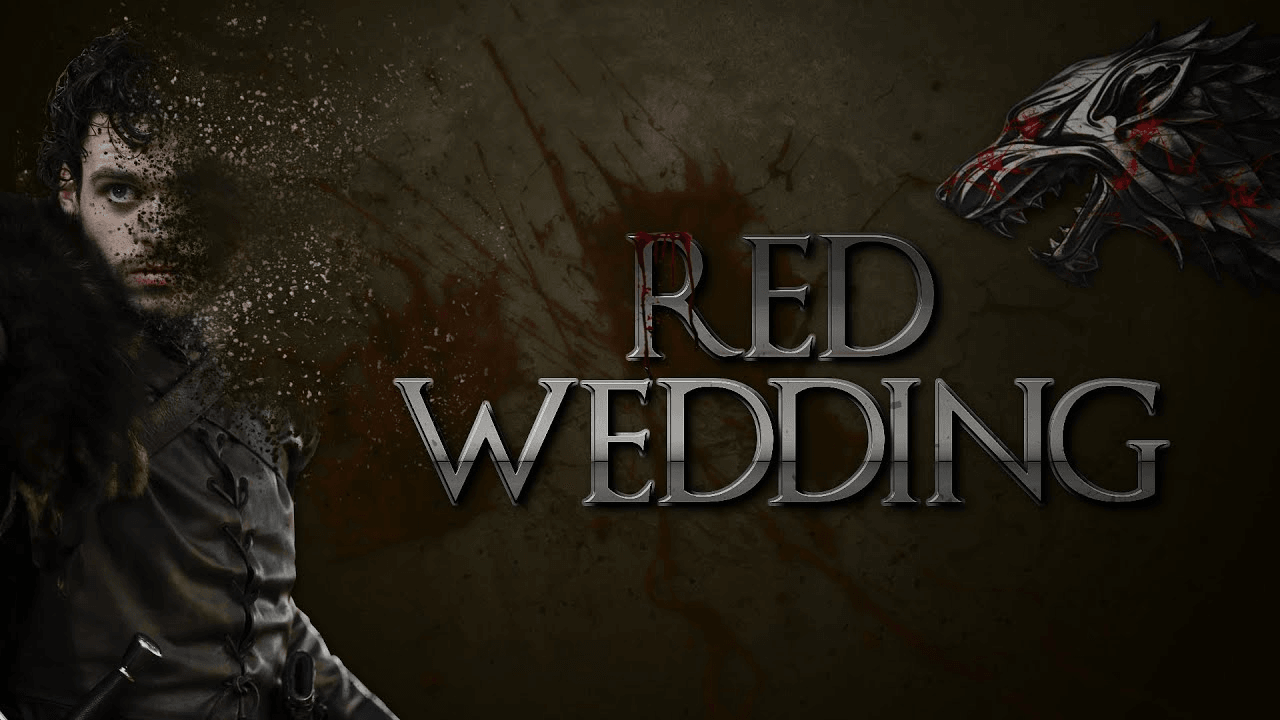
The wedding proceeds awkwardly, then shifts into violence. The doors are locked. Crossbows emerge. Northern soldiers are cut down in the hall. Robb is trapped. Catelyn realizes too late what is happening and pleads for mercy, but the Freys and their allies have committed to the betrayal. The massacre is swift, horrifying, and total.
In parallel, the episode shows other key developments across Westeros:
- Jon Snow remains captive beyond the Wall, caught between duty and survival.
- Daenerys continues to build power across the Narrow Sea, increasingly behaving like a ruler rather than a wanderer.
- Jaime Lannister’s position remains unstable as the fallout of his journey and captivity continues to shape him.
- Arya Stark’s path remains brutally separate from her family’s, underlining how far the Stark children have been scattered.
But all of it is secondary to the wedding. This is the hour where the series makes clear that no amount of narrative comfort will protect its characters.
Why the Red Wedding works as a story turn
The Red Wedding is not shocking only because people die. Game of Thrones had already made death feel real. What makes this episode exceptional is the combination of setup, cultural code, and betrayal.
Hospitality is supposed to mean safety
In Westeros, guest right matters. A host gives shelter, and a guest accepts protection. That custom is treated as more than a courtesy; it is one of the oldest social rules in the setting. The wedding uses that expectation against the audience. Once the hall becomes a killing field, the world feels less stable than it ever did before.
Robb Stark’s mistakes finally catch up to him
Robb’s downfall has been approaching for several episodes. He broke his agreement with House Frey by marrying Talisa instead of making the planned alliance. He also lost momentum in the larger war and alienated important houses. The episode does not frame his death as random cruelty. It frames it as the result of political failure, even if the punishment is grotesquely disproportionate.
The show is willing to erase a central arc
By this point, many viewers still believed the Stark cause would eventually recover through narrative momentum alone. This episode refuses that assumption. It proves the series is not interested in preserving a traditional heroic structure. Winners are not guaranteed. Bloodlines are not protected. The board can be overturned in one night.
Key character moves and what they mean
The episode’s violence matters because of what it does to the surviving characters and the future of the war.
Robb Stark: the end of a king in the field
Robb has spent two seasons building himself as a military leader with real strategic instincts. His death is not just the loss of a person; it is the collapse of the North’s central political resistance. The Stark banner is left without its most visible war commander, and the Northern campaign is effectively broken.
Catelyn Stark: a devastating final choice
Catelyn’s horror is the emotional core of the scene. She understands the danger before Robb does, and that recognition arrives too late to save anyone. Her final moments are among the most painful in the series because they combine maternal love, political desperation, and the awful knowledge that she helped bring her family to this table.
Walder Frey and Roose Bolton: opportunism over loyalty
The Freys and Boltons represent a different kind of power: patient, resentful, and transactional. They do not fight for honor. They fight for advantage. This episode places them on the winning side of the moment, and that decision reshapes the North’s future in ways that will echo for seasons.
Daenerys Targaryen: power with structure
Away from the wedding, Daenerys continues the long grind from exile to authority. Her arc in this episode reinforces a recurring series theme: conquest is not just about dragons or armies, but about institutions, discipline, and the ability to make other people believe you should rule them.
Political fallout: what changes after the episode
For readers using this as a compendium entry, the most important thing to remember is that the episode does not simply kill major characters. It transforms the power map.
The Stark cause loses its center
With Robb and Catelyn gone, House Stark’s war effort loses command structure and legitimacy at the same time. The surviving Stark children are scattered, vulnerable, and disconnected from one another.
The Lannisters gain breathing room
The massacre weakens the northern rebellion more effectively than a battlefield victory would have. The Lannisters no longer need to fear a large, coherent Stark-led push in the same way. Their political position improves without Jaime or Tywin needing to fight a decisive war themselves.
The Freys become useful and hated
House Frey is rewarded for betrayal, but the reward comes at a cost. They gain influence, yet they also become one of the most despised houses in the series. That matters because power in Game of Thrones is never just material. Reputation is also a weapon, and this house has permanently branded itself.
The North becomes a place of occupation and revenge
The episode plants the seeds for later Northern resistance by making the betrayal unforgettable. Even when the immediate war is over, the emotional and political memory of this night survives. That memory fuels later retaliation and reshapes how other houses calculate loyalty.
Lore implications: guest right, the North, and the cost of breaking custom
One reason this episode matters so much in a Game of Thrones S3E9 “The Rains of Castamere” episode guide is that it teaches the audience how lore can be used as plot machinery.
Guest right is not decorative worldbuilding. It is a social law with moral force. The wedding massacre violates that law in the most brutal way possible. The show does not linger on legal consequences, but it expects viewers to understand that the act is monstrous beyond ordinary treachery.
The episode also deepens the lore of the North by showing how fragile allegiance can be when it is tied to marriages, inheritances, and ancient resentments. The North has a long memory, and so does House Frey. The result is a chain reaction of old grievances finally reaching a breaking point.
Standout scenes that define the hour
A few moments make this episode unforgettable even apart from the headline tragedy.
The song before the slaughter
The title itself points to the Lannister-linked song about the fate of House Reyne of Castamere, a warning wrapped in music. In the episode, that cultural reference becomes a death sentence, and the effect is chilling because the audience understands what is being signaled before the characters do.
The locked doors
The moment the doors close is the point of no return. It is a simple visual choice, but it turns the feast from celebration into containment. Nobody is leaving safely.
Catelyn’s final plea
The emotional center of the massacre is not battle choreography. It is Catelyn trying to bargain with a man who has already decided that blood matters more than mercy. That scene crystallizes the episode’s theme: power without honor is still power.
Why this episode matters to the larger series
This is one of the rare episodes that permanently changes how the audience watches everything that follows. After this, the show is no longer about whether the heroes can win in the end. It is about whether anyone can survive long enough to matter.
The episode matters because it:
- ends Robb Stark’s campaign and the northern war as viewers knew it
- breaks the emotional center of House Stark
- elevates betrayal as one of the series’ defining political tools
- deepens the show’s treatment of custom, oath-breaking, and the cost of misreading enemies
- resets the balance of power across Westeros in favor of the Lannisters and their allies
It is also a tonal boundary. Before this hour, Game of Thrones could still be read by some viewers as a ruthless fantasy drama with clear heroes. After it, the series becomes something harsher and more unpredictable. The world is not fair, and the story does not care whether the audience is ready for that truth.
What new viewers should remember next
If you are building a full episode compendium, this is the short version of what carries forward:
- The Stark family is catastrophically weakened.
- The North’s political future shifts away from Robb’s war.
- The Freys and Boltons gain power through betrayal.
- Guest right becomes one of the most important moral touchstones in the series.
- The Red Wedding becomes a reference point for everything that follows.
This is the kind of episode that does not fade into the background. It becomes a lens. Every later alliance, wedding, truce, and oath in the series feels more suspicious because of what happens here.
Final takeaway
The Rains of Castamere is the episode where Game of Thrones stops pretending that momentum, sympathy, or noble intent can protect anyone from politics. It is a masterclass in setup and pay-off, but also a brutal lesson in how power really works in Westeros: promises are fragile, customs can be weaponized, and the people who smile the widest may be the ones holding the knives.
If you’re using this as part of a larger series guide, remember this hour as the moment the game changed shape for good.
What did you think of this episode’s turning point, and which scene hit you hardest? Share your thoughts in the comments.