
Image credit: Draft web reference from youtube.com
The wedding everyone should have feared
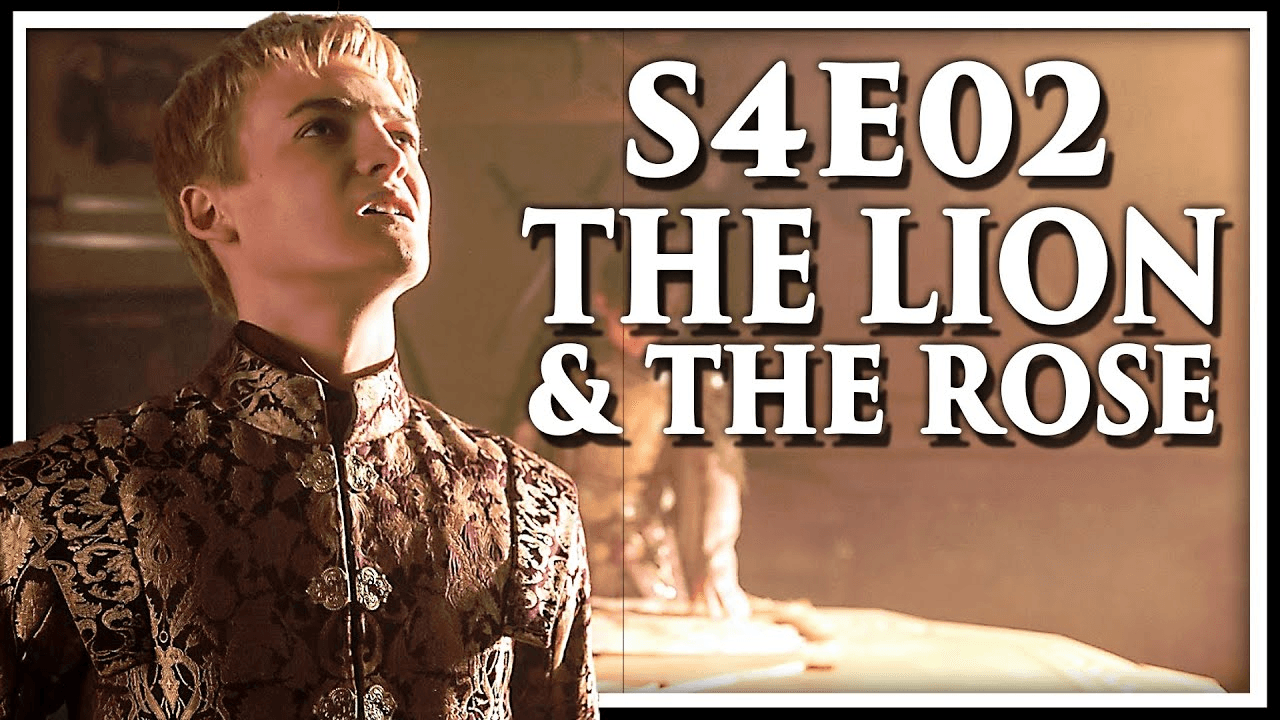
The Game of Thrones S4E2 “The Lion and the Rose” episode guide begins where Westeros always seems most dangerous: at a feast. This episode looks, at first glance, like a celebration of power. Joffrey Baratheon is finally married to Margaery Tyrell, the court is dressed in silk and silver, and the Lannisters appear to have outmaneuvered nearly everyone in King’s Landing.
But the hour is built on pressure, not triumph. Nearly every scene sharpens the same question: who is actually in control? By the end, the answer is no longer a matter of debate. The king is dead, the court is in chaos, and the series has crossed into a new political phase.
This episode matters because it does more than kill a major character. It exposes the fault lines beneath the Lannister regime, places suspicion on several key players, and resets the board for the rest of the season.
What happens in “The Lion and the Rose”
The episode is structured around parallel power moves, but the wedding at King’s Landing dominates everything.
Joffrey and Margaery’s wedding feast
The court gathers for the royal wedding between Joffrey and Margaery. The spectacle is ostentatious even by Westerosi standards: singers, dancers, dwarf entertainment, and the kind of ceremonial excess that always feels a little too polished in this world. Joffrey makes sure everyone knows this is his day. He humiliates Tyrion, toys with the guests, and performs cruelty as if it were statecraft.
That attitude is important. Joffrey is not merely unpleasant here; he is reckless. He treats the throne as if it makes him untouchable. The episode quietly argues the opposite. His arrogance is what makes him vulnerable.
The poisoned drink and Joffrey’s death
The center of the episode is the wedding feast’s brutal turn. Joffrey is baited and irritated, then sickened after drinking from his cup. What follows is one of the series’ most infamous deaths: a public collapse, a frantic scramble for help, and a cruel spectacle as he gasps and clutches at the world around him.
The scene is unforgettable because it is both grotesque and strangely fitting. Joffrey dies surrounded by the people who have spent years tolerating, fearing, or despising him. The episode does not frame his death as clean justice. It frames it as the kind of chaos Westeros breeds when power is concentrated in the hands of the cruel.
Tyrion becomes the obvious suspect
Once Joffrey dies, the court reacts instantly, and Tyrion is the easiest man to blame. The king has been openly humiliating him all evening, and the family tensions are already visible to everyone in the room. Tyrion’s immediate problem is not just grief or shock; it is survival.
That suspicion matters for the larger story because it shows how fragile truth is in King’s Landing. In a place run by reputation, the wrong person can become guilty before anyone examines the facts.
Cersei’s grief hardens into fury
Cersei’s response is not subtle, and it should not be. Joffrey is her son, her symbol, and one of the last people she can still claim as an extension of her power. His death strips away the illusion of control she has tried to preserve.
Her grief quickly becomes blame. She turns toward Tyrion with ferocity, and the episode makes clear that the family fracture is no longer just emotional. It has become institutional.
The key character moves underneath the spectacle
The strength of this episode lies in how many important moves happen before and after the death.
Tyrion Lannister: forced into the worst possible position
Tyrion spends the episode trying to endure the insults of a king who enjoys reducing him in public. That endurance becomes the setup for his nightmare. By the end, he is not just a failed father figure or a resentful royal uncle; he is the prime suspect in a regicide.
For viewers tracking the series closely, this is the moment Tyrion’s relationship to the Iron Throne becomes almost fully tragic. He has served the realm, protected the city, and tried to survive his own family’s contempt. None of that matters once the accusation begins.
Cersei Lannister: grief weaponized
Cersei has always understood that court politics reward fear. Here, she shows how quickly fear can become vendetta. Joffrey’s death removes the child king she has used as leverage, but it also gives her a new target.
Her fury is not just maternal. It is strategic. If Tyrion can be blamed, then the court can preserve a narrative in which the Lannisters remain victims rather than architects of their own instability.
Margaery Tyrell: composure as political armor
Margaery’s presence in the episode is crucial because she remains poised even as the room unravels. She understands pageantry better than almost anyone around her. Where Joffrey uses ceremony to dominate, Margaery uses it to read the room.
Her reaction to the king’s death is controlled, and that control is part of her power. In a court full of people trying to survive the next five minutes, composure becomes its own form of authority.
Olenna Tyrell: the episode’s hidden engineer
Olenna remains one of the sharpest political forces in the series, and this episode gives her another chance to prove it. She is the kind of player who understands that the obvious threat is often not the real one.
Without over-explaining the mechanics of the death, the episode invites viewers to look closely at who had motive, access, and the nerve to act during the wedding. Olenna stands out because she has all three in abundance.
Why the ending changes the season
The ending is not just shocking. It is structurally important.
Joffrey’s death accomplishes several things at once:
- It removes one of the most volatile rulers in the series.
- It throws King’s Landing into immediate suspicion and disorder.
- It turns Tyrion’s future into a legal and political crisis.
- It puts the Tyrell and Lannister alliance on shakier ground than it appeared.
- It reminds viewers that the throne is still vulnerable to manipulation from inside the court.
In other words, the murder is not just a dramatic twist. It is a pivot point. The show is no longer asking whether Joffrey can be controlled. It is asking who gets to shape the aftermath.
Lore connections and what the episode tells us about Westeros
Episodes like this one matter because they reveal how power actually works in Westeros. Not through titles alone, but through social choreography, family leverage, and the threat of sudden violence.
The small council era of politics
By this point in the series, the old idea of noble legitimacy has been hollowed out. The king’s own wedding becomes the place where alliances are tested and manipulated. That tells us something essential about the world of Game of Thrones: institutions exist, but they are only as stable as the people exploiting them.
Poison as a classic Game of Thrones weapon
The series has always treated poison as a weapon of precision. Unlike a sword or siege engine, it leaves room for doubt, rumor, and denial. That ambiguity is part of its power.
In this episode, the poison functions as both plot device and political commentary. It allows the show to punish a monster while ensuring that the consequences remain messy enough to fuel future conflict.
The wedding as a political trap
A royal wedding should symbolize continuity. In this episode, it does the opposite. The feast becomes a trap, and that reversal tells you everything about the series’ approach to ceremony. In Westeros, the more elaborate the celebration, the more likely something terrible is waiting underneath it.
Standout scenes to remember
A few moments make this episode especially important for anyone building a Game of Thrones compendium.
Joffrey’s public cruelty
His taunting at the wedding is not filler. It is character work that explains why his death lands so hard and why almost everyone in the room is implicated by silence, fear, or relief.
The collapse at the high table
The visual of a king choking and clawing at the air while his court panics is one of the series’ defining images. It is intimate, humiliating, and political all at once.
Tyrion’s immediate arrest-by-assumption
The speed at which suspicion closes around Tyrion is the episode’s most important procedural beat. It shows how quickly King’s Landing transforms tragedy into prosecution.
What new viewers should remember next
If you are moving through the series episode by episode, here is the simplest way to carry this one forward:
- Joffrey is dead, and the court is destabilized.
- Tyrion is in serious danger because blame falls on him fast.
- Cersei’s grief will shape the next phase of Lannister politics.
- The Tyrells have not lost influence, but their position is now more complicated.
- The show has entered a stretch where courtroom intrigue matters as much as battles.
That last point is the real lesson. The episode proves that Game of Thrones does not need a war scene to change the entire balance of power. A wedding feast is enough.
Why “The Lion and the Rose” matters to the larger series
The episode works as a hinge between two versions of the story. Before it, Joffrey’s cruelty defines King’s Landing. After it, the court must adapt to a vacancy that no one is emotionally or politically ready to handle.
For the series as a whole, that means three things:
- The Lannister hold on the capital becomes more fragile.
- Tyrion’s arc shifts from humiliation to catastrophe.
- The show reinforces its central rule: the most dangerous moments often arrive when everyone is pretending to celebrate.
That is why this episode remains essential. It is not simply a famous death scene. It is a turning point that changes who can act, who can accuse, and who can survive.
If you’re tracking the season chronologically, this is one of the episodes you cannot skip or skim. It sets the tone for the rest of the fallout and redefines the stakes in King’s Landing.
What did you think of the episode’s big turn, and which scene still stands out most to you? Share your thoughts in the comments.