

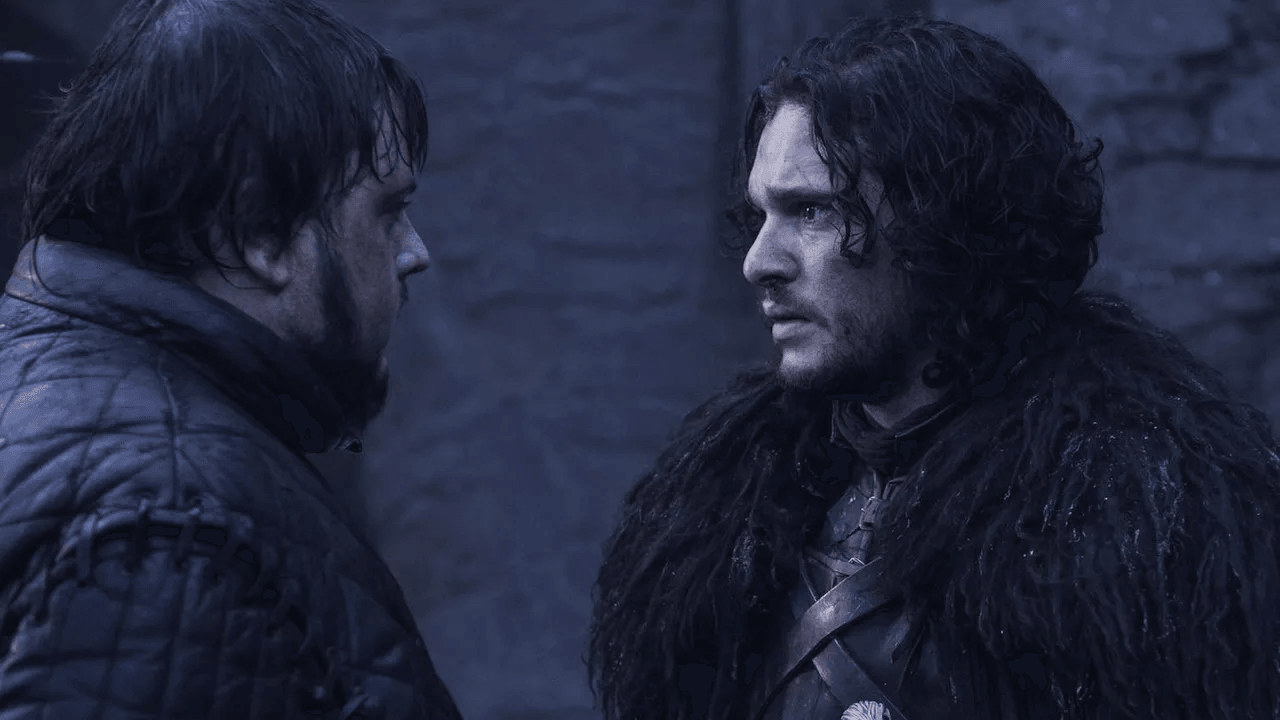
Image credit: Draft web reference from vanityfair.com
Inside Game of Thrones S4E9 “The Watchers on the Wall”: Episode Guide
Game of Thrones S4E9 “The Watchers on the Wall” episode guide readers usually want one thing: a clear map through the battle at the Wall, without losing the character beats that make it more than a spectacle. This episode is all pressure, weather, and timing. It is a siege story, but it is also a story about duty, panic, sacrifice, and the thin line between holding the line and watching it break.
At this point in the season, the board is already crowded with shifting alliances and looming consequences. “The Watchers on the Wall” pulls the action back to the North, where the Night’s Watch faces the wildling host in an all-out assault. The result is one of the series’ most focused episodes: a military crisis with real emotional stakes, a handful of defining character moments, and a reminder that the Wall is never just scenery. It is a border, a warning, and a political failure waiting to happen.
What this episode is really doing
On the surface, the episode is simple: the wildlings attack Castle Black, and the Night’s Watch tries to survive. But the structure is doing more than staging a battle. The episode turns the Wall into a pressure cooker for nearly every major idea Game of Thrones has been building toward in the North.
- The Night’s Watch is under-manned, under-resourced, and split by fear.
- The wildlings are no longer a rumor or a raiding party; they are a migrating army.
- Jon Snow is forced to act like a commander, not just a ranger.
- The old language of “civilized” versus “barbaric” starts to collapse under the reality of survival.
That is why the episode hits. It is not just who wins the fight. It is what the fight reveals about the world.
The Wall comes under siege
The episode opens with the Night’s Watch bracing for the attack they know is coming. That knowledge matters. This is not a sudden ambush; it is the dread of watching a disaster draw closer while still being too small to stop it.
The wildling forces arrive in force, led by Tormund Giantsbane and Mance Rayder’s broader coalition. Their numbers are overwhelming, and the attack quickly becomes a layered assault: archers, climbers, giants, mammoths, and wave after wave of pressure on the gates and battlements.
The battle is staged like a series of escalating failures. One line holds, then another. A defense works until it doesn’t. The wall itself is high, but the episode keeps finding ways to make it feel vulnerable anyway. That is the trick of the hour: the Wall is gigantic, yet every scene makes it seem one mistake away from collapse.
Key character moves in the battle
Jon Snow steps into command
Jon’s biggest movement in the episode is not physical. It is political and strategic. He spends much of the episode doing what true commanders do in this universe: making terrible choices with limited time and incomplete information.
He reads the battlefield well enough to matter, but not well enough to prevent every loss. He sends men where they are needed, improvises under fire, and keeps returning to the same core responsibility: if the Watch breaks, everyone at Castle Black dies.
This is an important shift for Jon. He is no longer the thoughtful outsider hoping to prove himself. He is behaving like the one man in the room who understands the scale of the threat.
Samwell Tarly proves courage is not one thing
Sam’s role is crucial because the episode refuses to define bravery as only swordplay. He is frightened, overwhelmed, and in over his head—but he keeps moving.
That matters in Game of Thrones, which often rewards competence more than heroism. Sam’s scenes remind viewers that survival can be its own kind of valor. He is not the man on the front line. He is the man still standing when panic would be easier.
Ygritte’s story bends toward tragedy
Ygritte’s movements in the episode are among the most emotionally loaded. She is not just another attacker; she is tied to Jon through love, betrayal, and incompatible loyalties. That makes every appearance count.
The episode does not treat her as a symbol. It treats her as a person caught in a conflict too large for private feeling to escape. By the end, her arc becomes one of the episode’s most memorable emotional payoffs, because the battle at the Wall is also the battle between what Jon owes the Watch and what he once promised himself he wanted.
The Watch is split by fear, ego, and duty
Not every Night’s Watch brother behaves with equal clarity. Some men are heroic by instinct, others by necessity, and some are exposed as weak when the test arrives.
That split is essential. The episode shows that the Watch is not a single body but a collection of frightened men holding a fragile institution together. In other words, the battle is won and lost through people, not walls.
Standout scenes that define the episode
There are plenty of large-scale moments here, but a few scenes carry the episode’s identity.
The mammoth charge
The arrival of the mammoths is one of the episode’s most striking visual beats. It is not just spectacle. It is a statement that the wildlings have moved beyond the old image of scattered tribes. They have siege capability, coordination, and the sheer force to threaten even the Wall.
That changes the scale of the conflict immediately.
The climbing assault
The wall-climbing sequences are nerve-shredding because they dramatize the impossible. Soldiers are not only defending a fortress; they are fighting gravity, exhaustion, and mass coordination at the same time. It is one thing to defend a gate. It is another to stop enemies from coming over the top.
These scenes also emphasize the Night’s Watch’s weakness: the defenders do not have the manpower to cover every angle, and the attackers know it.
The giant at the gate
The giant attack is one of those moments that turns fantasy into physical danger. It is not abstract lore anymore. It is a massive body, a living battering ram, and a reminder that the North is home to forces that conventional warfare struggles to answer.
The final emotional turn
The episode’s ending lands because it balances battlefield chaos with personal grief. It refuses to let the siege remain just an action sequence. The cost is intimate, and that intimacy is what makes the episode stick.
Lore implications: what the episode says about the North
For viewers following the broader world-building, “The Watchers on the Wall” adds several important pieces to the lore puzzle.
The wildlings are a civilization under pressure
The episode makes it clear that the wildlings are not simply raiders from beyond civilization. They are a people responding to existential threat. Their migration south is shaped by the dangers in the far North, and the scale of their movement changes how the rest of Westeros should understand them.
That matters because the series has spent a long time letting southern politics dominate the conversation. This episode flips that framing. The real crisis is not the squabbling at court. It is the world beyond the Wall.
Giants and mammoths are not myths
The episode confirms, again, that the old stories are not exaggerations. Giants are real. Mammoths are real. The far North is not a poetic wilderness; it is a place where the rules of ordinary warfare no longer apply.
That has two effects:
- It expands the series’ sense of scale.
- It makes the Wall feel less like a border and more like the last barrier between civilization and extinction.
The Night’s Watch is obsolete in the old political sense
The Watch exists to guard against threats that the rest of the realm would rather ignore. But this episode makes the institution feel both essential and abandoned. The realm’s politics have moved on, while the danger at the Wall has grown larger than ever.
That disconnect is one of the series’ central truths: the people in power are rarely the ones paying attention.
The ending: survival, loss, and a new reality
By the end of “The Watchers on the Wall,” the Night’s Watch has survived the immediate assault, but survival is not the same thing as victory. The battle leaves the defenders scarred, exhausted, and emotionally changed.
What matters most is the confirmation that the wildlings are not going away. Even when a battle is repelled, the pressure on the Wall remains real. The episode does not offer a neat reset. It deepens the crisis.
For Jon Snow, the ending is a turning point. He has been tested as a fighter before, but here he is tested as a leader whose decisions affect the lives of dozens of men. That burden follows him forward.
For the wider story, the ending says something brutal: the Wall can still hold, but only barely. And if it falls later, this episode will look less like a victory than a warning.
Why this episode matters to the larger series
This is one of those episodes that seems self-contained until you look at the bigger arc. Then it becomes a hinge point.
It matters because it:
- proves the wildlings are a military force, not just a nuisance;
- forces Jon to function as a true leader;
- shows the Night’s Watch is stretched beyond normal capacity;
- re-centers the supernatural and frontier threat in the story;
- reinforces the series’ theme that ignored dangers eventually demand payment.
In a show famous for political betrayal and sudden reversals, this episode earns its place by making endurance feel dramatic. It is not a courtroom twist or a palace coup. It is men trying not to die while the world outside the Wall makes its next move.
What new viewers should remember next
If you are using this as part of a larger compendium, the key takeaways are straightforward:
- Jon Snow’s leadership becomes more important from here on.
- The wildlings remain a serious threat, even after the battle.
- The Night’s Watch is still central to the larger northern story.
- The Wall is no longer a background setting; it is an active front in the war for the world.
- Emotional losses in this episode shape how later conflicts land.
If you are moving on to the next chapter, keep the scale of this battle in mind. The series is not just building toward political outcomes anymore. It is building toward a reckoning with what lives beyond the edge of the map.
Final takeaway
“The Watchers on the Wall” works because it understands that a great battle episode needs more than noise and damage. It needs consequence. The episode gives us both: a siege that feels desperate from the first frame, and a set of character choices that ripple forward into the rest of the series.
For the Night’s Watch, the victory is incomplete. For Jon Snow, the future is heavier. And for viewers, the Wall has never felt more important.
What did you think of this episode’s battle and ending? Share your take, favorite scene, or strongest reaction in the comments.