
Image credit: Draft web reference from themoviedb.org
Game of Thrones S5E7 “The Gift” episode guide
Game of Thrones S5E7 “The Gift” episode guide fans usually remember as a calm episode that is actually doing a lot of structural work. It widens the pressure at the Wall, sharpens the political split in the North, and moves several pieces into place for the late-season collisions that follow. The episode’s title sounds small and courteous. The hour itself is anything but.
Most of the action circles around scarcity, obligation, and the cost of survival. That theme fits the title perfectly: in Westeros, a “gift” is often really a burden, an accusation, or a test of loyalty. By the end, the episode has quietly redefined several relationships and made the Wall feel less like a border and more like a pressure cooker.
What happens in the episode
The episode moves through several fronts, but the spine of the hour is still the struggle to keep the Wall defended while winter closes in.
At Castle Black: food, duty, and a command in decline
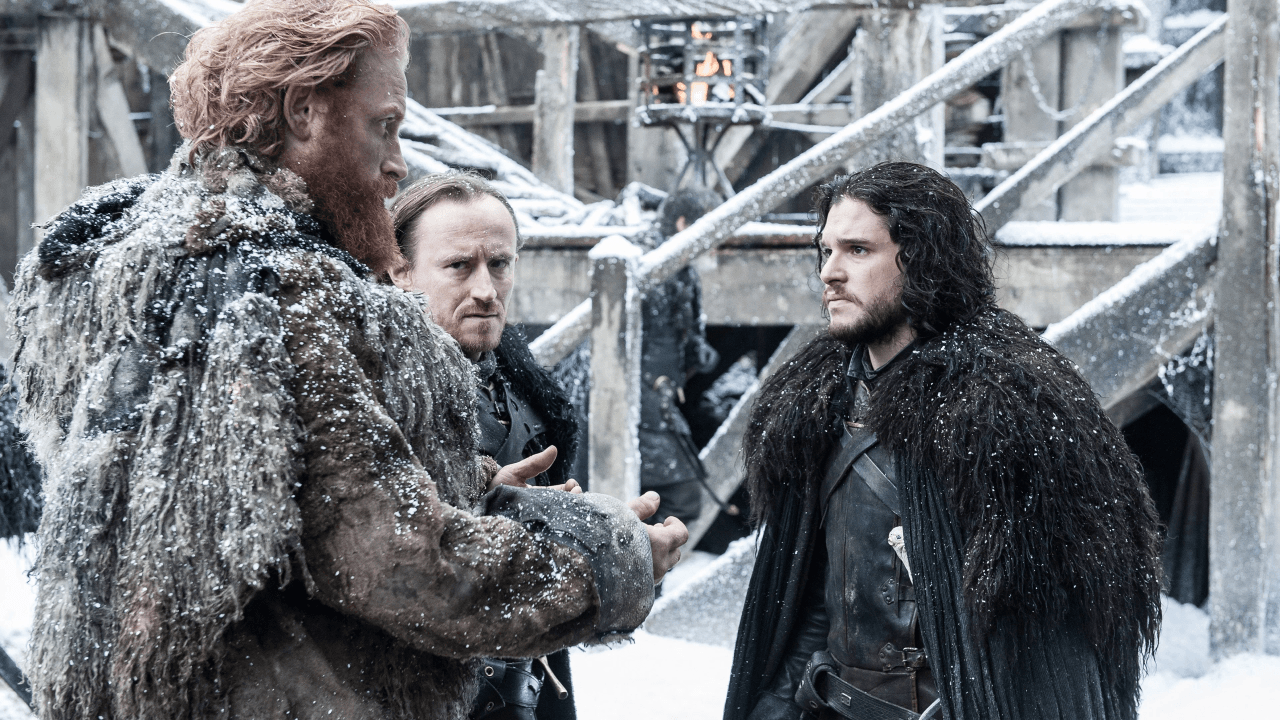
Jon Snow’s leadership is tested by the most practical threat of all: starvation. Supplies are thin, men are restless, and the Night’s Watch is still trying to function as an order built for a world that no longer exists. Jon has to manage both morale and material reality, which means every choice lands as a political statement.
The arrival of a gift of provisions changes the immediate crisis, but it also underlines a deeper truth: the Watch cannot survive on ideals alone. Jon’s need to accept help from old enemies and uneasy allies makes him look less like a triumphant commander and more like a leader trapped between principle and necessity.
That tension defines the episode. Jon is learning that governing is not the same thing as winning a fight.
Beyond the Wall and the edge of the realm
The episode also keeps the wildling threat alive, not as a distant memory but as a continuing military reality. The Wall is not secure because one battle was won; it is secure only as long as the people defending it can keep showing up.
This matters because the story keeps emphasizing a central idea: the realm’s old divisions are no longer reliable. The living must cooperate in ways that would once have been unthinkable. The episode keeps returning to the idea that survival is creating new political math.
In the North: family, inheritance, and a marriage under strain
The Northern storyline is where the episode gets most emotionally revealing. Sansa’s position remains fragile, and every household she enters feels like a negotiation. Her marriage is not just unhappy; it is a political tool being used in public, with very little private safety attached to it.
The episode shows how power in the North often hides inside domestic rituals. Meals, rooms, greetings, and small acts of control all carry the weight of hostage politics. Sansa’s scenes are effective because they show that cruelty in Westeros does not always need spectacle. Sometimes it is a matter of where you are allowed to stand and who gets to speak first.
Across the riverlands and crownlands: the wider war keeps moving
Other storylines continue to widen the board. Brienne’s pursuit of purpose remains tangled with her sense of oath and justice. Stannis’s camp keeps pushing toward a decision that feels both strategic and desperate. And the political order in King’s Landing continues to shift under the Faith’s growing influence.
Even when the episode leaves these plots briefly, it does so with the sense that every faction is being squeezed. No one is operating in a stable system anymore.
The key character moves
Game of Thrones S5E7 “The Gift” episode guide: who changes course here?
The value of this episode is not in a single giant twist. It is in the way it locks characters into new trajectories.
Jon Snow chooses necessity over pride
Jon’s strongest move is also his hardest: he accepts that survival may require compromise. That is a major shift for him. He has often been defined by rigid honor, but the Wall is teaching him that flexibility can be a form of duty.
What makes this compelling is that the compromise is not clean. Jon does not get to feel heroic for doing the practical thing. He has to live with the discomfort of it.
Sansa begins to look less passive and more strategic
Sansa’s story in this episode matters because it continues her transition from surviving power to reading it. She is still trapped in a hostile arrangement, but her understanding of the people around her is sharpening. She notices patterns, weaknesses, and emotional leverage.
That does not mean she suddenly controls the situation. It means she is becoming harder to fool.
Stannis remains locked into sacrifice-minded leadership
Stannis continues to frame the world as a problem that can be solved through resolve and legitimacy. But the episode keeps revealing the cost of that mindset. The more he pursues victory, the more the moral terms of his campaign narrow.
The Night’s Watch faces institutional collapse
The Watch is no longer just defending a wall. It is trying to remain a coherent institution while its oldest rules are failing. That is one of the episode’s smartest ideas. The danger is not only outside the gate. It is inside the order itself.
Lore implications and worldbuilding
This is one of the episode’s strongest areas for a compendium reader, because it uses everyday logistics to deepen the world.
The Wall as infrastructure, not mythology
The Wall is often treated like a legend, but this episode reminds viewers that it is also an engineering project with maintenance problems. That matters. The fantasy of the Wall is impressive, but the reality is men, food, labor, and discipline.
That shift in perspective makes the setting feel more grounded and more fragile.
The Night’s Watch is an exhausted medieval institution
The episode also clarifies that the Watch is not just underpowered; it is obsolete in a practical sense. Its vows are ancient, its resources are dwindling, and its political authority depends on a realm that barely respects it. The result is an order that still matters enormously while being unable to function on old assumptions.
Northern politics are still defined by hostage logic
The North remains a place where family names, old grudges, and public loyalty are inseparable. Even when characters appear to be making domestic choices, those choices are tied to succession, protection, and control. The episode keeps that logic front and center.
Standout scenes
A strong episode guide should flag the scenes that do the most work, and this hour has several:
- Jon confronting the reality of scarcity at the Wall
- The arrival of desperately needed supplies
- Sansa’s scenes that underline how vulnerable she still is in the North
- Brienne’s continued commitment to her self-made code
- The growing sense that every political alliance is temporary
None of these scenes are flashy in the usual sense, but they all matter because they alter how we understand the board.
The ending: why it lands
The ending of this episode works because it does not try to finish a story. It tightens several stories at once.
By the close of the hour, the audience understands three things clearly:
- The Wall is still one of the most important fronts in the series.
- Jon’s leadership now depends on compromise as much as courage.
- The North is still dangerous even when no battle is happening.
That combination makes the episode feel smaller than it is on first viewing. In hindsight, it is one of those chapters that quietly changes the terms of later events.
Why this episode matters to the larger series
For a full-series compendium, Game of Thrones S5E7 “The Gift” episode guide belongs in the “turning point by accumulation” category. It does not land like a shock episode. It matters because it shows the story moving from competing claims to exhausted governance.
Here’s why that matters in the larger arc:
- It deepens Jon Snow’s shift from idealist to pragmatic leader.
- It reinforces the Wall as the series’ most important frontier.
- It advances Sansa’s transformation into a more observant political survivor.
- It shows how the North is being shaped by coercion, not just banners and battles.
- It keeps the series’ larger winter crisis grounded in logistics, not just prophecy.
That last point is especially important. The best fantasy episodes do not only tell you what the danger is. They show you what it costs to keep a society standing while that danger approaches.
What new viewers should remember next
If you are building a rewatch guide or reading the season for the first time, keep these takeaways in mind after this episode:
- Jon’s decisions are increasingly about survival through negotiation.
- The Night’s Watch is being held together by urgency, not stability.
- Sansa is learning to read danger before she can escape it.
- The North remains politically unstable even away from the battlefield.
- The episode’s smaller scenes are setting up much bigger consequences.
Final takeaway
“The Gift” is one of those Game of Thrones episodes that rewards attention more than adrenaline. It is about shortages, obligations, and the uneasy bargains that keep people alive. If you are following the series closely, this is the hour where the Wall stops feeling like a distant frontier and starts feeling like the center of the story.
What did you think of this episode’s quieter power? Share your favorite scene or your take on Jon and Sansa’s moves in the comments.