
Retro Game Localization: How Translation Changed Classic Games
Retro game localization did far more than move text from one language to another. It changed the mood of scenes, the readability of menus, the harshness of difficulty, and sometimes the entire identity of a game. For a lot of classic titles, what players remember as “the game” is really a version shaped by editors, translators, line limits, censorship rules, and the strange constraints of cartridge-era development.
That is why retro game localization matters as a creative force, not a footnote. In the 8-bit and 16-bit eras, localization teams were often writing inside a box so small that every choice had visible consequences. A joke became a threat. A boss name became mythic. A simple item label made a system easier to understand—or made it look more mysterious than it actually was. Depending on region and edition, the same game could feel more serious, more comedic, more confusing, or simply harder.
Retro game localization was never just literal translation
Modern players sometimes assume localization means cleanly replacing words in one language with words in another. In retro gaming, that was rarely possible. Space was limited. Fonts were tiny. Dialog boxes had strict character counts. And many games were built around text that needed to work fast and fit neatly on screen.
So localization teams became interpreters, editors, writers, and sometimes emergency system designers.
They had to decide:
- whether to keep a name faithful or make it memorable
- whether to preserve awkward phrasing or smooth it into readable English
- whether a joke should survive even if the reference did not
- whether a mechanic description needed clarification to prevent frustration
- whether a line of dialogue should sound dramatic, playful, or threatening
Those choices shaped how players understood the game. A stiff translation could make a clever script feel wooden. A colorful one could make a game feel larger than life. A clarified menu could turn a confusing system into a workable one. In retro gaming, translation was part of design.
How translation choices changed difficulty
One of the most overlooked effects of retro game localization is difficulty. Not because the combat code changed, but because the player’s ability to understand the game changed.
Menu clarity can lower the real difficulty
A game with opaque menu labels is harder, even if the mechanics are identical. If a spell list is translated in a way that makes it difficult to distinguish healing from status effects, players waste turns. If item names are inconsistent, inventory management becomes guesswork. If a tutorial sentence is too literal or too cramped to explain the system, players learn by failure instead of instruction.
This is where retro game localization quietly becomes difficulty tuning.
Sometimes the local edition was actually more playable because the translated menus were clearer. Sometimes the opposite happened: a rushed localization made a straightforward system feel punishing. A poorly chosen term could hide the difference between an item that restores health and one that cures poison. A boss description might not reveal an elemental weakness that the original text implied.
Lost context can make games feel harder than intended
Older Japanese RPGs often assumed cultural familiarity, genre convention, or prior knowledge from players who had been following magazines and guides. When that context disappeared, the game could feel blunt or obscure.
A line that once nudged the player toward the next step might become vague. A clue that originally fit the world’s logic might turn into a cryptic aside. In practice, that meant localization could increase friction without changing a single enemy stat.
The difficulty was not always mechanical. Sometimes it was informational.
Fan-made myths often started with one awkward line
A single mistranslated ability or item description can create an entire layer of player folklore. If a special attack seems to be more powerful than it really is, people build strategies around it. If a name implies a hidden mechanic, players spend years testing a feature that never existed.
That is part of the charm of retro game localization. Errors and improvisations sometimes made the game harder to parse, but they also made it feel alive—like a text passed through multiple hands before reaching the player.
Tone shifts: when localizers changed the personality of a game
Tone is where retro game localization becomes unmistakably creative. Some classic games were made more comedic in translation. Others became more dramatic. Some acquired a strange, unforgettable personality that did not match the original tone exactly, but did give the game a stronger identity in the West.
Humor often replaced politeness
Direct translation can flatten humor, especially when the joke depends on timing, hierarchy, or wordplay. Localizers often had to choose between preserving meaning and preserving effect.
As a result, some games became snappier, brasher, or more theatrical than their source scripts. Characters who were mildly sarcastic in Japanese might become overtly funny in English. Small exchanges could gain a sharper comic rhythm. The result was not necessarily “more accurate,” but it was often more memorable.
Serious games became stranger, not always cleaner
Some localizations leaned into grand, sometimes slightly overblown English. That choice could make a fantasy game feel mythic in a way the original did not. It could also create dialogue that sounded formal, uncanny, or almost ritualistic.
For players, that tone became part of the classic experience. Entire franchises are remembered through those localized cadences. A clunky phrase can become iconic if it lands with enough force. A dramatic line can live forever because it sounds unlike anything else.
The identity of a classic often comes from its translated voice
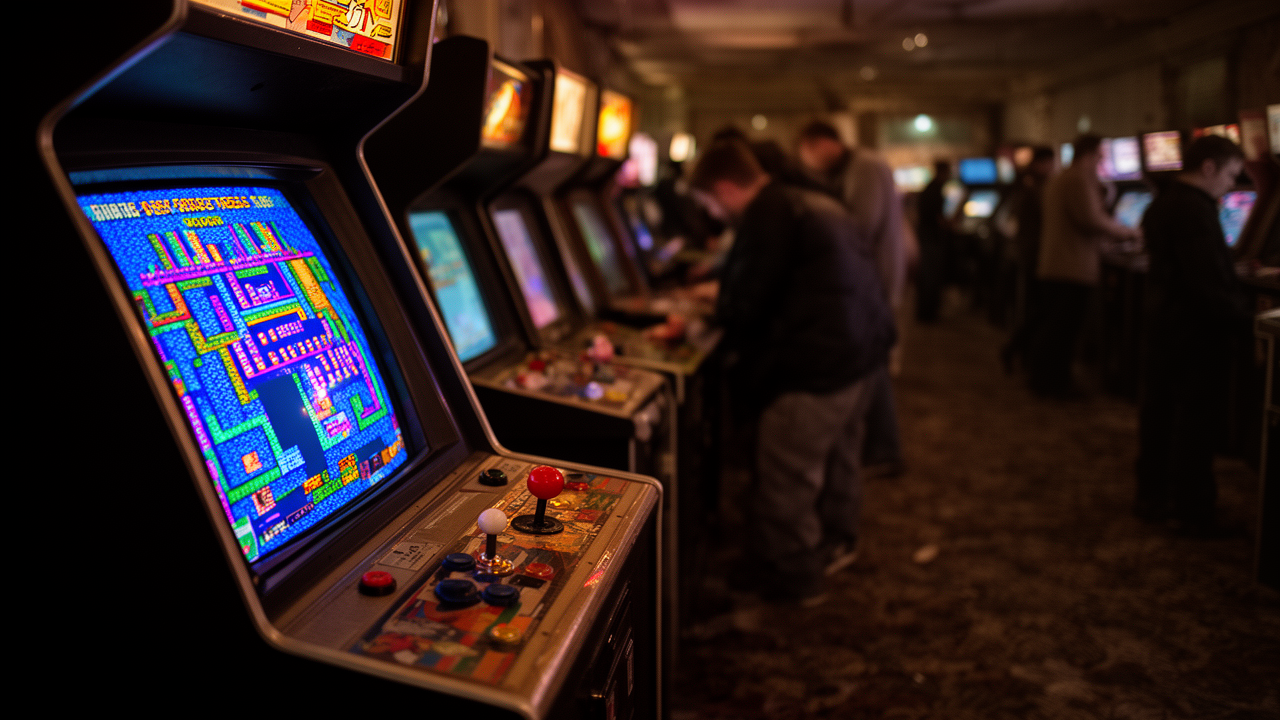
This is the part that people forget: for many English-speaking players, the localized version is not a secondary version. It is the version.
When we talk about a game’s personality—its wit, its warmth, its menace—we are often talking about the translation’s editorial judgment. A localizer’s taste can make a game feel warmer, colder, sillier, or more romantic. Those tonal shifts are not superficial. They determine how the game is remembered.
Item names, spell names, and the power of a good label
Few localization choices matter more than item and ability names. Retro games depend on concise labels. The best ones are functional and evocative at the same time.
A great name tells you what something does, but it also tells you how the game wants to feel. “Potion” is clean and practical. “Elixir” feels rare. A weapon named for its material feels grounded; a weapon named for a legend feels earned.
When localization gets this right, the game’s internal logic becomes easier to trust.
Naming can shape the whole fantasy
A name can make a spell feel like a tool or an incantation. It can make an item feel ordinary or sacred. It can make the world sound older, harsher, or more whimsical than it really is.
This is one reason why players often argue about original versus localized terminology. They are not just debating fidelity. They are debating atmosphere.
Consistency matters more than literalism
A literal name that conflicts with the rest of the UI can be worse than a slightly adapted one. Retro game localization works best when it creates a coherent vocabulary. Players should be able to infer what a thing does, how it fits into the world, and whether it is related to similar systems.
That coherence reduces friction. It also makes the game feel authored rather than patched together.
Accidental mythology: how localization invents memory
Some of the most durable legends in retro gaming came from translation choices that were not intended to be legendary at all.
A typo becomes a joke passed between players. A strange line becomes a meme long before the word existed. A boss title sounds so dramatic that it implies history, prophecy, and moral weight that the original text never fully spelled out. Over time, the localization creates a layer of lore that exists only in the player community.
That accidental mythology can outlast the game itself.
Why players cling to “wrong” versions
Players often remember the localized version because it gave them something to hold onto. Maybe it was clearer. Maybe it was more stylish. Maybe it sounded more dangerous. Even when it departed from the source, it created a stable emotional shape around the game.
That is especially true in older RPGs, strategy games, and action-adventure titles where text carries a large share of the worldbuilding. If the translation gave a faction a colder voice or made a villain sound more theatrical, that shape stuck.
And once players built theories, fan art, forum jokes, and guidebook notes around those choices, the localized text became part of the culture, not just the script.
Regional editions could feel like different games
The same title released in Japan, North America, and Europe could produce noticeably different experiences. Some versions had altered enemy behavior, adjusted balance, or censorship changes. Others mostly differed in text and naming. But even when the code was identical, the emotional read could shift dramatically.
That is why retro game localization is such a rich lens for understanding classic games. It explains why one region’s players may describe a title as bleak while another remembers it as playful. It explains why a game’s menus are praised in one edition and criticized in another. It also explains why preservation is so important: version history is part of the experience.
What changed most often across regions
Common localization differences included:
- rewritten dialogue to fit cultural expectations
- shortened or restructured menu text
- altered boss names and item names
- censored imagery or softened references
- changes to tutorials, hints, or flavor text
- bug fixes that unintentionally changed timing or balance
These are not minor cosmetic details. They affect pacing, comprehension, and mood. A cleaner instruction screen can make a game feel fairer. A harsher translation can make a hero seem less charming. A softened line can reduce the sting of a confrontation. Each edition carries a slightly different emotional contract.
The best localizations respected both function and feeling
The most successful retro game localization work did not merely “translate correctly.” It made the game playable, legible, and emotionally convincing in the target language.
That meant preserving intent when possible and adapting where necessary. It meant understanding that a joke has to land, a clue has to help, and a battle message has to read quickly under pressure. It meant knowing when a strange phrase should be improved and when its weirdness was part of the charm.
In the best cases, localization helped the game become itself for a new audience. Not the same self, exactly. A new self with its own accent, its own rhythm, and sometimes its own myths.
That is why some classics feel different depending on region and edition. The code may be the same, but the experience is not. Translation choices can make a game feel gentler or more brutal, clearer or more cryptic, intimate or theatrical. They can change how hard the game seems, how funny it feels, and what kind of world it appears to be building.
Retro game localization is one of the quietest forms of game design—and one of the most powerful.
If you have a favorite example of a localization that changed a classic for better or worse, or a regional version that completely altered your read on a game, share it in the comments.