
Image credit: Draft web reference from youtube.com
The Local Weirdness of Saturday Morning Local TV
Before streaming flattened everything into a single interface, Saturday morning local TV felt like a stack of tiny neighborhood customs taped together with cartoons. The shows were the bait, but the real personality lived in the spaces between them: the station bumper that introduced the block, the local host who popped in with a grin, the commercials that seemed aimed at your town specifically, and the scheduling habits that made one market feel wildly different from the next.
That is why people remember the experience as more than a lineup. They remember it as a broadcast ecosystem. If you grew up with it, you did not just watch cartoons on Saturday morning. You watched your station’s version of Saturday morning.
Saturday morning local TV was a patchwork, not a package
The myth of a unified Saturday morning always sounds cleaner than the reality. National networks may have supplied the cartoons, but local stations controlled a surprising amount of the surrounding atmosphere. They inserted themselves before, between, and after the content, often with short segments that made the whole morning feel local and slightly improvised.
In practice, that meant a child in one city might get a playful host in a studio, while another market got a voice-over bumper, and another got a station personality who seemed to appear only when the cartoons needed to pause. The effect was subtle but powerful. Even when the program was the same, the presentation was not.
That mattered because morning TV was built on repetition. If you watched every week, you started to recognize the station’s habits the way you recognized a neighbor’s driveway. The tone, the transitions, even the pacing became part of the ritual.
The bumpers were tiny, but they carried the whole mood
Station bumpers rarely lasted long enough to be called entertainment. That never stopped them from doing a lot of cultural work.
A bumper could be as simple as a logo animation, a mascot, a few upbeat notes, or a station ID delivered by an announcer with just enough personality to feel local. It was the broadcast equivalent of a handwritten note slipped into a school folder: brief, functional, and oddly memorable.
These little fragments did three jobs at once:
- They told you the channel was still there and still yours.
- They gave the morning a rhythm, breaking cartoons into recognizable chunks.
- They turned anonymous network programming into something that felt anchored to your city.
For kids, the details did not read as branding strategy. They read as atmosphere. A cheery bumper before a show could feel like an invitation. A weirdly earnest station jingle could become part of the memory of the show itself.
Local hosts made the block feel like an appointment
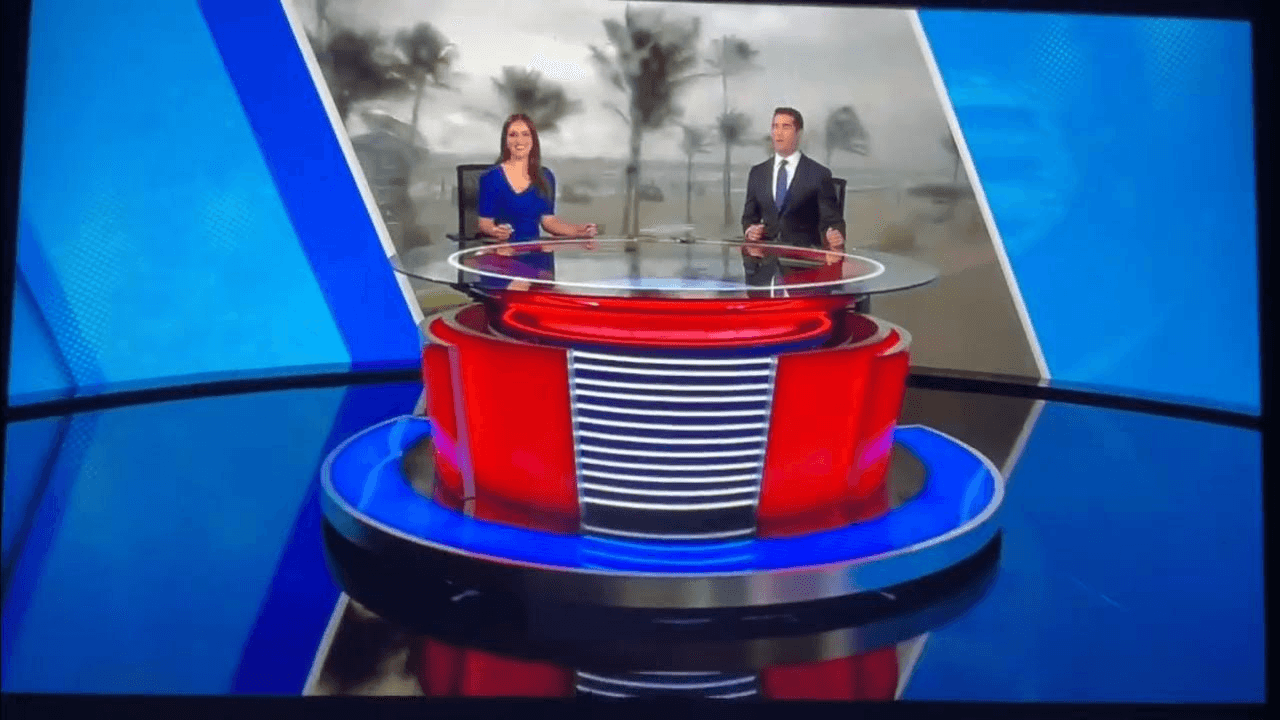
Some markets went beyond bumpers and used local hosts to frame the morning. These were the people who introduced cartoons, chatted briefly, or filled awkward gaps with jokes, contests, or low-budget charm. They were not always polished, and that was part of the appeal.
A local host could make Saturday morning local TV feel like a live event, even when most of it was pre-recorded. Their presence suggested that someone in your town was awake, watching the same thing, and talking directly to you from just off-camera.
That illusion of proximity mattered. A host could turn a generic block into a community ritual, especially when they repeated familiar bits every weekend. Kids did not need sophistication. They needed consistency and a hint of personality. A friendly host waving beside a cardboard set or standing in front of a painted backdrop could do more to define a local market than an expensive national campaign.
Commercials were part of the story, not just interruptions
It is easy to treat the ads as the disposable part of Saturday morning television. In reality, they were central to the memory. They were also where local and national broadcasting got especially strange.
National toy spots, breakfast cereal ads, fast-food tie-ins, public service announcements, and neighborhood car commercials all collided in the same morning. That mix could be jarring, but it was also revealing. The cartoons promised fantasy, while the commercials reattached you to ordinary life: groceries, chores, sales, weather, and the rhythms of the town outside the window.
Sometimes the ad load itself became part of the ritual. You learned which spots would appear during which shows, or which sponsor seemed to show up every week. In some markets, a local car dealer or appliance store became as much a fixture of the morning as the cartoons. That is one reason the era felt so personal. The ads were not abstract. They reflected the commercial landscape of your region.
Why Saturday morning local TV felt different by region
Broadcast habits changed by market, and that made a huge difference in how the morning played out. One station might start the block early. Another might delay a show, trim a segment, or wedge in local news, weather, or religious programming. The result was a national routine that kept getting bent around local priorities.
That regional variation could produce all kinds of odd experiences:
- One city’s children got a longer cartoon block than another’s.
- A station might preempt a favorite show for local coverage.
- Some markets leaned hard into kiddie hosts, while others stayed nearly invisible.
- Certain ads, promos, and station IDs became unforgettable simply because they were exclusive to that area.
For viewers, the differences were not theoretical. They were the texture of the morning. If you traded stories with someone from another state, you might discover that their Saturday looked nothing like yours. Same general idea, different broadcast culture.
The morning’s odd scheduling made it feel fragile and precious
Part of the charm of Saturday morning local TV was how easily it could be disrupted. A sports preemption, a news special, an unexpected station choice, or a local programming obligation could knock the whole plan off balance.
That fragility gave the block a strange kind of status. You could not assume it would always be there in exactly the same form. If something moved, got delayed, or vanished entirely, kids noticed immediately. The ritual depended on timing, and timing was always vulnerable to the station’s larger schedule.
That is one reason the experience felt so neighborhood-specific. It was not only the content that mattered. It was the fact that the station seemed to be negotiating with your morning in real time. You were not just consuming a product. You were sharing airtime with a local broadcaster that had its own priorities.
The whole thing trained you to notice broadcast personality
Modern viewing hides a lot of the machinery. Back then, the machinery was visible enough to become part of the fun. You learned the station’s signature sounds, recurring graphics, and tone of voice. You learned which channels felt playful, which felt corporate, and which seemed to be improvising their way through the morning.
That exposure taught a kind of media literacy before anyone called it that. Kids picked up on how programming was framed, how ads were placed, and how local stations established identity through repetition. They learned that television was not a neutral pipe. It had a personality.
And because every market handled it differently, the personality felt local. That is the secret ingredient people often miss when they remember the cartoons. The cartoons were the destination, but the station was the map.
Why the memory still feels so specific
When people talk about Saturday morning now, they usually start with the shows. But the deeper nostalgia often belongs to the in-between moments: the station sign-on feel, the cheerful bumper, the host who seemed half mascot and half babysitter, the cereal-and-commercial rhythm, the odd local ad that somehow lodged itself in your brain forever.
That is the real legacy of Saturday morning local TV. It was not standardized in the way modern media is standardized. It was a broadcast habit shaped by geography, station culture, and the practical quirks of live regional television. That made it imperfect, but it also made it memorable.
The morning felt like it belonged to your area, even when the cartoons came from somewhere else.
A broadcast ritual built from small local choices
The magic of the era was not only nostalgia. It was the accumulation of choices that created a sense of place. A local host. A homemade bumper. A station ID. A regional ad. A schedule shift. None of those things were big on their own, but together they made the viewing experience feel intimate and specific.
That kind of television is harder to reproduce now because the current system works against locality. Back then, the station was part broadcaster, part host, part gatekeeper, and part neighborhood signal flare. On Saturday mornings, that mix made the whole screen feel closer to home.
If you remember a station that did things its own way, or a local bumper that stuck with you longer than the cartoons, share it in the comments. I’d love to hear the weirdest, funniest, or most specific Saturday morning memories you have.