

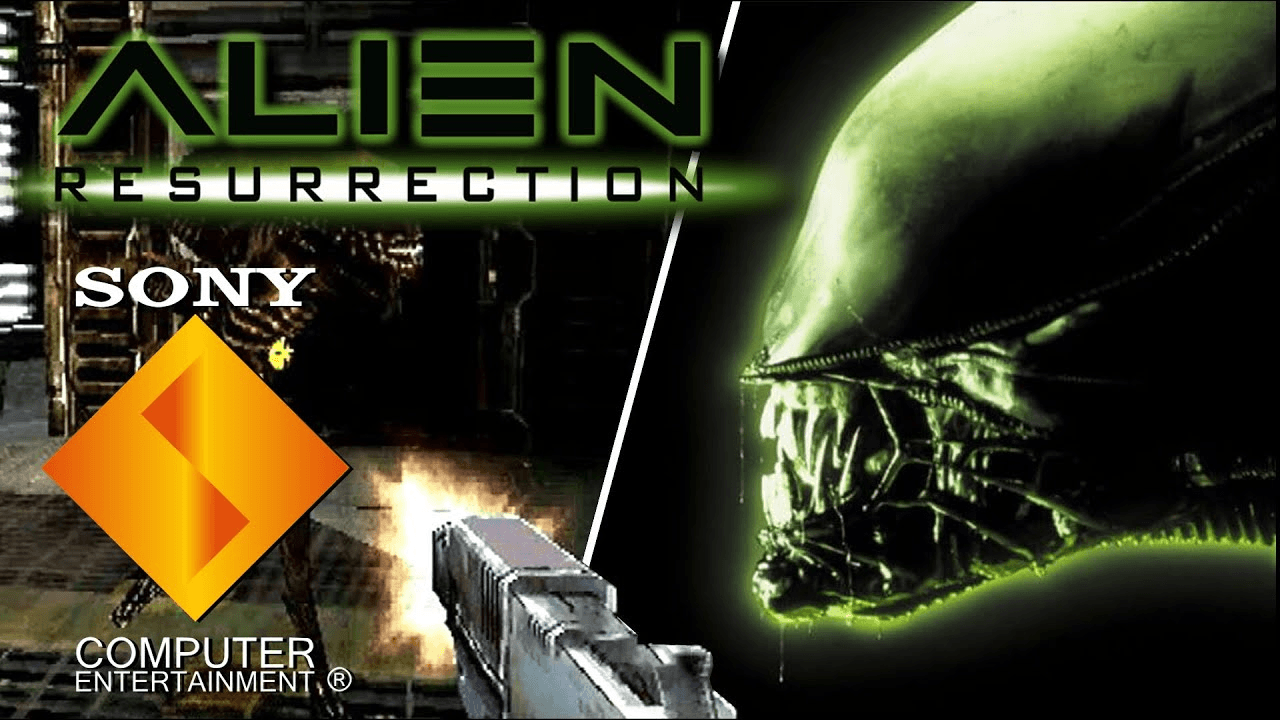
Image credit: Draft web reference from youtube.com
Alien Resurrection on PlayStation: A First-Time Player’s Guide to Its Strange Horror
Alien Resurrection on PlayStation is one of those games that gets remembered for the wrong reasons. People talk about the controls first, usually with a grimace, and only then about the tension, the pacing, or the way it turns a familiar sci-fi license into something lonely and mean. But if you’re coming to Alien Resurrection on PlayStation for the first time, that oddness is exactly the point. It is not a clean, comfy shooter pretending to be horror. It is a survival game that makes movement feel unsafe, aim feel deliberate, and every room feel like a trap waiting for you to notice it.
That makes it a fascinating first run, even now. The game asks you to slow down, learn its language, and accept that its friction is part of the mood. Once you do, it becomes much easier to see why so many players still find it memorable, even if they also find it exhausting.
What Alien Resurrection on PlayStation actually is
Released in 2000 for the original PlayStation, Alien Resurrection arrived late in the system’s life and looked forward in some ways while feeling stubbornly old in others. It is a first-person survival-horror shooter based on the film of the same name, but calling it a straightforward action game misses what makes it unusual. The game is built around pressure: scarce comfort, cautious exploration, and enemies that are less about spectacle than panic.
If you’re used to modern twin-stick shooters or even more conventional first-person controls, the game will feel strange almost immediately. That strangeness is not a bug you simply “get past.” It shapes the whole experience.
The controls are the first boss fight
The biggest hurdle for new players is the control scheme. Alien Resurrection is infamous because it does not handle like most PlayStation first-person games. It uses a layout that can feel like a primitive version of dual-stick movement: one set of inputs handles looking and aiming, while another governs movement. That alone makes it stand out on the original hardware, where many players expected tank-like, more rigid camera behavior.
For a first-time player, here’s the practical truth:
- You will probably feel clumsy for a while.
- You should expect to spend early minutes simply learning how to orient yourself.
- Strafing, backing up, and turning smoothly matter more than aggressive forward movement.
- Panic is punished. Hesitation is usually safer than charging.
That sounds restrictive, but it has a purpose. The game makes basic navigation feel precarious so that every hallway carries a little anxiety. You are not just fighting enemies. You are fighting your own sense of space.
What feels dated now
Some of the controls are dated in the way only late-1990s and early-2000s console experiments can be. The camera and movement can feel untidy, and the game never fully escapes the awkwardness of its era. New players may also find the interface sparse in places and the aiming system unintuitive until it clicks.
The important thing is not to treat that awkwardness as evidence that the game is broken. It is more accurate to say that it asks for a different kind of literacy. If you try to force it into the mold of a modern shooter, it will feel hostile. If you accept that movement itself is part of the tension, it becomes legible.
Why the atmosphere works so well
What surprises first-time players is how isolated Alien Resurrection feels. It is set in a hostile environment full of machinery, vents, metal corridors, and empty production spaces, but it rarely feels busy in the way action games do. Instead, it feels abandoned, compressed, and watchful.
That loneliness matters. Many horror games use noise to keep you alert. Alien Resurrection uses space. Long corridors, sudden dead ends, and moments of stillness build dread before anything attacks. You are often left listening, scanning, and inching forward rather than charging through encounters.
The result is a survival-horror mood that is less about theatrical shocks and more about sustained unease. It is not a game that wants to dazzle you with constant monster reveals. It wants you to worry about what is around the next bend, and then worry again when nothing is there.
The pacing is slow in a useful way
One reason the game remains misunderstood is that its pacing does not flatter players who want instant action. Levels often unfold in a cautious rhythm: explore, search, reposition, survive, repeat. That structure can feel sparse if you expect a more explosive shooter loop, but it gives the game a persistent tension that never quite lets go.
The pacing also helps the atmosphere breathe. If the game moved faster, the environment would become wallpaper. Instead, the slower tempo makes you notice every machine hum, every dark corner, every awkward angle where an enemy could appear.
How to approach the levels as a new player
A good first run is less about speed and more about habits:
- Move methodically. Rushing usually gets you cornered.
- Learn rooms before committing to them. A quick scan can save a lot of damage.
- Treat ammunition and health like they matter. The game is stingy enough to reward caution.
- Re-center after every encounter. Don’t carry panic into the next corridor.
- Accept trial and error. A few ugly deaths are part of learning how the game thinks.
That’s the key to appreciating the design. The levels are not just obstacle courses. They are anxiety machines built around spatial uncertainty.
Why the game’s reputation misses part of the story
Alien Resurrection has long been framed as an infamous oddity, and the control scheme is a big reason. But reputation tends to flatten the rest of the design. It is easy to remember “awkward controls” and forget that the game is using them to build a specific kind of vulnerability.
That’s what makes it more interesting than its reputation suggests. The game is not merely difficult to handle; it is carefully structured around discomfort. The awkwardness contributes to the mood in the same way a cracked floorboard or flickering light contributes to a haunted house. It can be frustrating, yes, but it is also part of the texture.
There is a real design idea underneath the rough edges: make the player feel exposed, make movement matter, and make every encounter feel earned. Even when the execution is messy, the intention is strong.
Why the horror lingers after you stop playing
The best survival-horror games tend to leave a residue. You remember where you were when you felt safe, and you remember exactly when that safety disappeared. Alien Resurrection on PlayStation does that well because it makes its spaces feel inhospitable from the start.
There are no extended comfort zones here. No cozy hub to reset your nerves. Just a sequence of environments that keep you alert and a control scheme that never lets you fully relax. That combination can be exhausting, but it also gives the game a unique identity.
It is easy to see why some players bounced off it immediately. It is just as easy to see why others still defend it. The game has a stubborn personality. It would rather be strange than smooth.
Should first-time players try it today?
If you’re curious about retro horror and willing to meet a game on its own terms, yes. Not because it is an easy recommendation, but because it is a revealing one. It shows how much mood can come from friction, how control can shape fear, and how pacing can do as much work as monsters.
If you want something polished and immediately comfortable, this is probably not the best place to start. If you want a survival-horror game with a harsh edge and a distinctive sense of isolation, Alien Resurrection on PlayStation has enough going on to justify the detour.
The best way to think about it is this: the game is not trying to win you over quickly. It is trying to make you uneasy, then make that unease feel purposeful. For a first-time player, that can be rough. It can also be memorable in exactly the way good horror should be.
If you’ve played it, I’d love to hear how you felt about the controls and the atmosphere—did it win you over, or did it lose you in the first few rooms?