

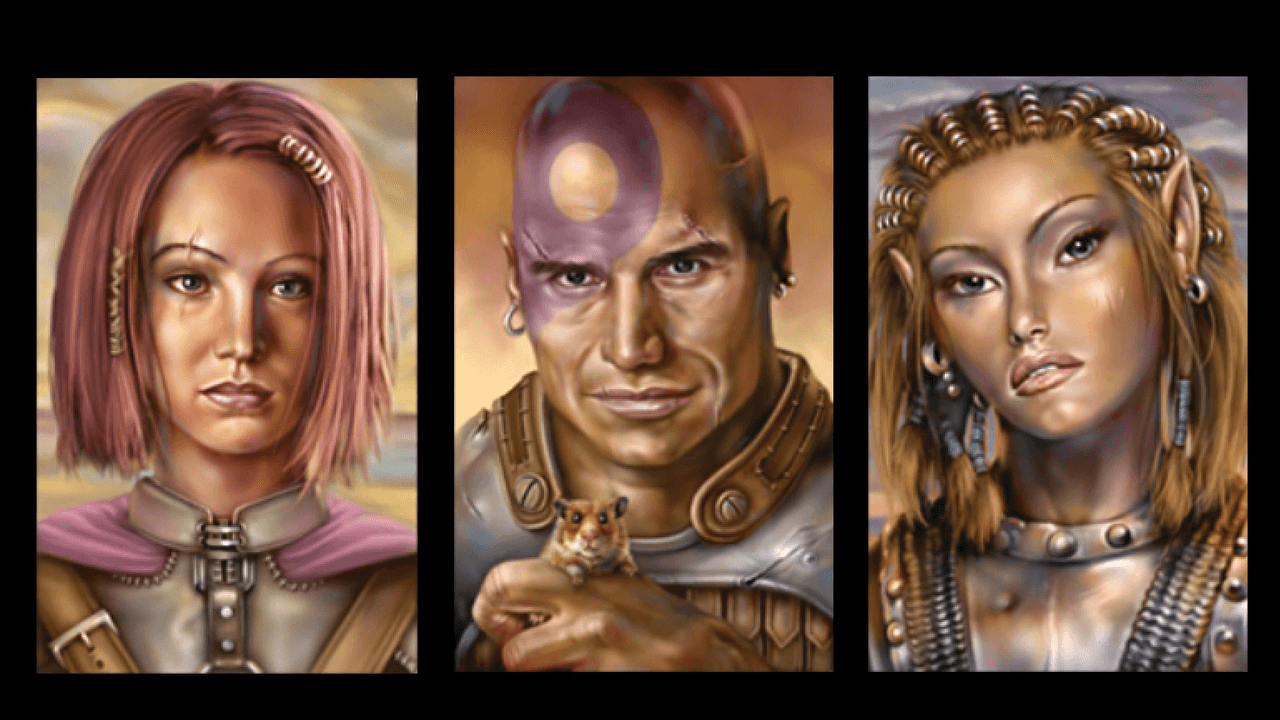
Image credit: Draft web reference from pcgamer.com
A computer RPG that learned to listen
Baldur’s Gate on PC did something that many roleplaying games still chase and only a few truly nail: it made the world feel like it was paying attention. Not just to your combat build or your selected dialogue line, but to the shape of your party, the order in which you explored a map, and the small decisions that happen between major quests. It is a game about moving through a fantasy setting with the patience of a tabletop session, where the fun is often in watching the group react to each other as much as it is in winning the next fight.
Released in 1998, it arrived at a point when computer RPGs were still defining what real-time tactical party play could look like on PC. Its legacy is not only that it was expansive or technically ambitious. It is that it treated roleplaying as a living conversation between systems: exploration, combat, dialogue, alignment, inventory, and companion behavior all feeding into one another.
The party is the point
A lot of RPGs promise choice. Baldur’s Gate on PC makes choice visible by embedding it in the group. You are rarely making decisions in a vacuum. You are managing a party of personalities, classes, and relationships, and that changes how every scene lands. A simple wilderness trek becomes a negotiation between caution and momentum. A shopping trip becomes a balancing act between scarcity, spell scrolls, and who gets the best gear. Even silence matters, because the game’s pacing gives you time to think like a dungeon master and a player at once.
That party structure gives the game a distinctive rhythm:
- Scout the area, then commit.
- Pause when the fight changes shape.
- Reposition casters before the front line breaks.
- Listen to companion reactions after a conversation.
- Return to the road with a better sense of what your group can handle.
This is why the game feels so strongly party-driven. It does not treat companions as disposable followers. They are part of the strategy, but they are also part of the fiction. Their presence changes the tone of the journey, and the journey changes the way you read them.
Reactive writing gives the map weight
The writing in Baldur’s Gate on PC is reactive in a way that still feels surprisingly modern. You are not simply selecting the “good” or “evil” answer and moving on. The game keeps track of context through tone, reputation, class, alignment, and who is standing nearby when you say something. That makes dialogue feel less like a menu and more like a social space.
This matters because the game’s world is built to be read, not rushed. Villages, inns, roads, temples, ruins, and forest paths all carry more meaning when the writing nudges you to treat each stop as a situation rather than a waypoint. The game invites you to ask questions that tabletop players know well: Who is lying? Who benefits if I trust this person? Should I press for more information, or walk away and come back later? Those questions are the real engine of the adventure.
The result is a world that feels textured even when the plot is moving slowly. A lot of that texture comes from how often the game lets conversation shape expectation. A character may warn you, mock you, or reveal useful context long before a combat encounter proves the point. That is reactive writing at work: the world is always answering back.
Why patience becomes a skill
Part of what made Baldur’s Gate on PC feel different in its era is that it did not flatter impatience. The game rewards careful observation, not just fast clicking. Maps open out in a way that encourages detours. Encounters are often more manageable if you stop, study the terrain, and think about positioning. Even the interface teaches a measured pace, because the pause function effectively turns real-time battles into tactical planning sessions.
That structure creates a specific kind of satisfaction. You are not only winning because your numbers are high. You are winning because you noticed the bridge, the choke point, the enemy caster in the back, the potion you should have used earlier, or the fact that your thief could solve the problem before swords were drawn. The game makes experimentation feel smart instead of reckless.
It is also why the game can be surprisingly forgiving of wandering. The structure invites you to take the long way around, talk to strangers, and test the limits of your party composition. Exploration is not filler. It is the method by which the game teaches you how to play it.
Combat works because the game understands tempo
Even when the game is at its most tactical, it never loses that tabletop sense of turn-by-turn consequence. Real-time with pause sounds like a compromise on paper, but in Baldur’s Gate on PC it becomes the core of the experience. Battles are not about perfect action reflexes. They are about reading momentum, then interrupting it at the right moment.
That makes enemy spellcasters feel dangerous, narrow corridors feel meaningful, and status effects feel like real events instead of minor debuffs. A fight can swing because one character gets held, because a summoned creature buys three seconds, or because you paused at exactly the right time to save the front line. The game respects planning, but it also leaves room for panic, improvisation, and lucky survival.
This balance is part of why the combat still works. It is not trying to be elegant in the modern action sense. It is trying to be legible. You can see the problem, understand the stakes, and respond with the tools your party actually has.
Exploration feels like reading a campaign notebook
The best way to understand Baldur’s Gate on PC is to think of exploration as annotation. Every area is a note in the margin of a larger adventure. The wilderness can feel empty at first glance, but that emptiness is part of the design. It gives you room to notice details, pursue rumors, and move between landmarks with the awareness that anything might matter later.
That sense of scale works because the game is willing to slow down. It trusts you to remember names, places, and the shape of the road. It trusts you to check your journal, compare clues, and return to a region with better equipment or a different party composition. In that respect, it resembles a long tabletop campaign more than a tightly scripted action game.
The structure creates a strong loop:
- Hear about a problem.
- Travel to investigate.
- Gather context from NPCs and the environment.
- Test a solution with the party you have built.
- Leave with a better story than the one you started with.
That loop is simple, but it is durable. It is one reason the game still feels like a template for later party-based RPGs rather than merely an early example of one.
The writing and systems reinforce each other
The real achievement of Baldur’s Gate on PC is not that it has good writing or strong systems. It is that each side deepens the other. A sharp line of dialogue lands harder when it changes your relationship to a companion. A hard battle feels more personal when the party members have already been arguing, teasing, or quietly revealing themselves over the course of the journey. A choice to help or ignore someone matters more when the game has trained you to think about consequences in layers.
That interlock is what made the game feel like a new kind of computer RPG. It was not just bringing tabletop flavor to a PC screen. It was translating tabletop attention into software: the sense that characters are present, that the world has memory, and that every decision sits inside a larger social and tactical web.
Even today, that remains the game’s best argument. It understands that roleplaying is not only about becoming powerful. It is about how a group moves through uncertainty together.
Why it still works
There are older games that survive on nostalgia, and there are older games that survive because their ideas were sturdy enough to outlive their own era. Baldur’s Gate on PC belongs to the second group. It still works because it asks the right things of the player: pay attention, think ahead, talk to people, and treat your party like a living unit instead of a stat screen.
That design attitude has aged well. Modern RPGs often have bigger worlds, cleaner interfaces, and faster combat, but few capture the same pleasure of patiently reading a situation and answering it with the right combination of people. That is the secret of its longevity. It does not just give you quests. It gives you a framework for understanding a fantasy world as a place where relationships, tactics, and curiosity all matter at once.
If you come to it now, the game still has a clear voice. It says: slow down, listen, and let the party tell you what kind of adventure this is going to be.
Baldur’s Gate on PC remains a landmark because it made the computer RPG feel conversational, tactical, and human all at once. If you have your own memories of the game, or a favorite moment where a party choice changed everything, share it in the comments.