
The strange durability of fear
Playing Silent Hill 2 on PlayStation 2 for the first time in the 2020s can feel almost unfair. So much horror today relies on speed, spectacle, or scripted shocks that announce themselves from a mile away. This game does something different. It moves slowly, speaks softly, and lets the unease build until ordinary spaces feel contaminated. That is why it still works.
What makes it especially striking for a new player is how little it tries to explain itself upfront. The town is empty, the soundtrack is sparing, and the camera rarely comforts you with a clean view of what is ahead. You are left to sit with uncertainty. The result is not just fear, but dread with memory in it.
Even now, it feels like a game that understands that horror gets stronger when it leaves room for the player to participate. You are not simply watching something terrible happen. You are interpreting it, carrying it, and, in a sense, completing it.
Why Silent Hill 2 on PlayStation 2 still feels unsettling
The first thing a modern player notices is atmosphere. Not “good atmosphere” in the generic sense, but a very deliberate sense that every surface has been arranged to make you uneasy.
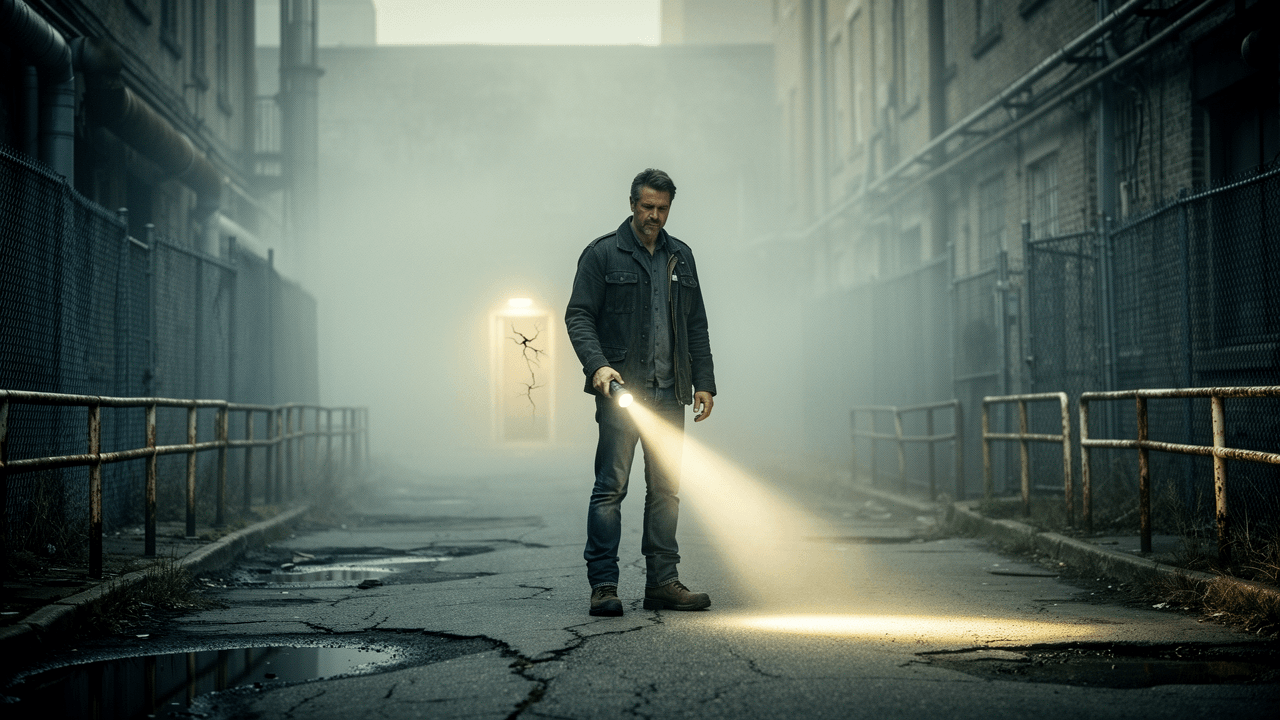
The fog is not just a technical trick from the era. It becomes part of the grammar of the game. It limits sight, but it also gives the town a dream logic. You are never quite sure whether you are walking through a place, a memory, or a punishment. The empty streets feel less like a level and more like an accusation.
The sound design does a huge amount of the work too. Silence is rarely total, and when noise arrives, it tends to be ugly, metallic, or wet. Footsteps echo too much. Doors groan too loudly. A distant scrape can make a hallway feel haunted long before anything appears.
For a first-time player, the most unsettling part may be that the game is so readable on a moment-to-moment level while remaining emotionally opaque. You can tell where to go. You can tell when you are in danger. What you cannot easily tell is what the town wants from you, or what it knows about the person you are controlling.
That tension is the engine.
A horror game that trusts implication
Modern horror often spells things out with documents, voice logs, flashbacks, or elaborate exposition. Silent Hill 2 is far more restrained.
It gives you:
- sparse dialogue
- strange environments that imply meaning without explaining it
- monsters that seem symbolic before they seem physical
- scenes that land harder the more you sit with them
That restraint is a big reason the game still feels powerful. It does not over-annotate its own symbolism. It lets the player notice patterns and sit in discomfort.
A first-time player’s view: what the game communicates clearly
One of the most impressive things about Silent Hill 2 on PlayStation 2 is that it remains surprisingly legible, even if it is deliberately opaque in theme. A new player in 2026 does not need to be an expert in survival horror to understand the core loop.
You explore. You listen. You manage resources. You open doors that should not be opened. The game is structurally simple, and that simplicity helps the emotional material stay in focus.
That matters because the story is not built like a puzzle box for its own sake. It is built around feeling, guilt, and self-recognition. The player can understand what is happening moment by moment without needing to solve the entire symbolic architecture in real time.
That clarity is one of the reasons the game has lasted. It does not depend on complicated systems to hold your attention. It depends on mood, pacing, and the slow revelation of character.
The symbolism is blunt enough to read, subtle enough to hurt
A lot of horror games are symbolic. Few are symbolic in a way that feels this clean.
The monsters in Silent Hill 2 do not read as random decorations. They feel designed to press on the protagonist’s mind, and the game is confident enough to let the player draw the connection. That confidence is what gives the imagery power. It is not trying to be clever for its own sake. It is trying to be psychologically specific.
A modern player may notice that the symbolism is not hidden so much as staged. The environments are theatrical. The enemies are expressive. The whole game feels like a nightmare made by someone who understands that dreams often communicate through repetition, distortion, and embarrassment as much as through terror.
That is a big part of why the game remains emotionally effective. It is not simply scary. It feels personal.
The town as a mirror
Silent Hill has always been a place that reflects the people trapped inside it, but this entry uses that idea with unusual precision. Every hallway, apartment, and hospital corridor seems to ask the same question: what happens when a person is forced to stand in front of their own damage?
For a first-time player, this can be more moving than frightening. The game’s horror is not only about what waits around the corner. It is about the emotional pressure of the world itself. The town is oppressive because it feels responsive.
Combat friction is part of the experience
This is where many modern players may feel the age of the game most sharply. The combat in Silent Hill 2 on PlayStation 2 is intentionally awkward. It is not built for elegance. It is built for vulnerability.
That friction is thematically appropriate, but it can still be frustrating. A new player may notice:
- sluggish aiming and movement
- clumsy hits that feel less empowering than in action-focused games
- enemies that are more annoying than thrilling to fight
- moments where the camera makes simple actions feel tense in the wrong way
Here, the old design philosophy is visible in full. The game wants combat to be a problem, not a power fantasy. You are meant to weigh whether a fight is worth the ammo, the health, and the risk.
That design supports the mood, but it also means the game can feel locked to its era. Some of the tension is intentional dread. Some of it is simply a product of early-2000s control standards.
What still works in the fighting
Despite the awkwardness, the combat has one major virtue: it reinforces helplessness without becoming a parody of it. You never really forget that the character is out of his depth.
That means even small encounters carry a kind of moral and emotional weight. Do you push through this hallway or retreat? Do you spend resources now, or save them for later? The friction becomes part of the atmosphere.
The storytelling is restrained in all the right ways
The writing in Silent Hill 2 is one of its most admirable qualities. It is not flashy. It does not drown you in lore. It keeps its emotional cards close enough to the chest that every revelation has room to land.
A first-time player in the 2020s might be surprised by how direct some conversations are and how elliptical others are. That contrast is part of the appeal. The game’s story is not “mysterious” in a puzzle-box sense. It is mysterious because the people in it are damaged, defensive, and often unable to say the thing they most need to say.
That restraint gives the game enormous emotional staying power. Instead of chasing twists, it lets character psychology create the tension. When the game reveals more, it feels earned rather than engineered.
And because the script is so focused, the emotional beats land with unusual force. Even players who come in knowing the broad outlines often find themselves surprised by how harsh, sad, or intimate the story feels in motion.
What a new player in 2026 will admire immediately
If you are approaching the game for the first time now, these are the qualities most likely to stand out fast:
- The atmosphere is relentless. The game rarely lets you relax.
- The symbolism is readable. It gives you enough to feel the meaning without flattening the mystery.
- The emotional tone is unusually mature. It is about grief, guilt, and self-deception, not just monsters.
- The world design is memorable. Every location feels haunted by purpose.
- The pacing is confident. It knows when to linger and when to move.
That combination is rare. Many games can be scary for a while. Fewer can remain psychologically present after you stop playing.
What feels locked to its era
A fair first-time review also has to say where the game shows its age.
The most obvious limitation is the control feel. Even when you understand the logic of the design, it can still feel stiff. The combat in particular may test the patience of players raised on smoother action or more forgiving camera systems.
Some of the environmental traversal also reflects older design habits. You may spend more time than you want confirming routes, checking doors, or wrestling with visibility in ways that modern games would streamline.
But these are not fatal flaws. They are the trade-off for a design that values unease over convenience. The game is not trying to be frictionless. It is trying to make you vulnerable, uneasy, and attentive.
That said, if you are coming in expecting a polished contemporary horror game, you will absolutely feel the age. The difference is that the age does not erase the achievement. It just frames it.
Final verdict: still essential, still miserable, still moving
So does Silent Hill 2 on PlayStation 2 still deserve its reputation?
Yes, emphatically. Not because it is perfectly preserved, and not because every system feels modern, but because its core strengths remain intact: atmosphere, symbolism, emotional restraint, and a deep understanding of psychological horror.
What still works best is the town itself, the soundscape, the visual language, and the way the game turns ambiguity into emotional pressure. What feels locked to its era is the combat, some of the movement, and the roughness of its controls.
But for a first-time player, that roughness may be part of the lesson. This is a horror game that asks you to sit with discomfort instead of escaping it. It is readable enough to follow, strange enough to haunt you, and emotionally precise enough to matter long after the credits roll.
If you are curious about classic survival horror and want to see why this one is still talked about in near-mythic terms, it remains one of the best places to start.
What did you think if you played it for the first time, or which detail in Silent Hill 2 has stuck with you the longest? Share your take in the comments.