
Image credit: Draft web reference from nmcb.napwasa.org
A Haunted House That Learned to Puncture the Screen: The 7th Guest on PC
When people remember The 7th Guest on PC, they usually remember the same three things: the mansion, the puzzles, and that unmistakable sense that the game was trying to do something video games were not yet fully ready to do. It was a haunted-house adventure, but also a CD-ROM showpiece, a puzzle box, and a very 1990s attempt to turn a computer into a stage for live-action spectacle.
That mix is exactly why it stuck. A lot of games from the era chased technology as a promise of realism. The 7th Guest on PC used technology as atmosphere. Its filmed scenes, pre-rendered rooms, and theatrical presentation did not just decorate the experience; they became the experience. The result is a game that feels less like a conventional puzzle title and more like an artifact from the brief moment when multimedia excess felt like the future.
The 7th Guest on PC was built around a very specific kind of wonder
In the early CD-ROM era, simply having lots of storage felt like a design opportunity. Developers could stuff in voice acting, video clips, richer music, and large amounts of visual data without worrying about cartridge limits. The 7th Guest on PC took that promise and ran with it.
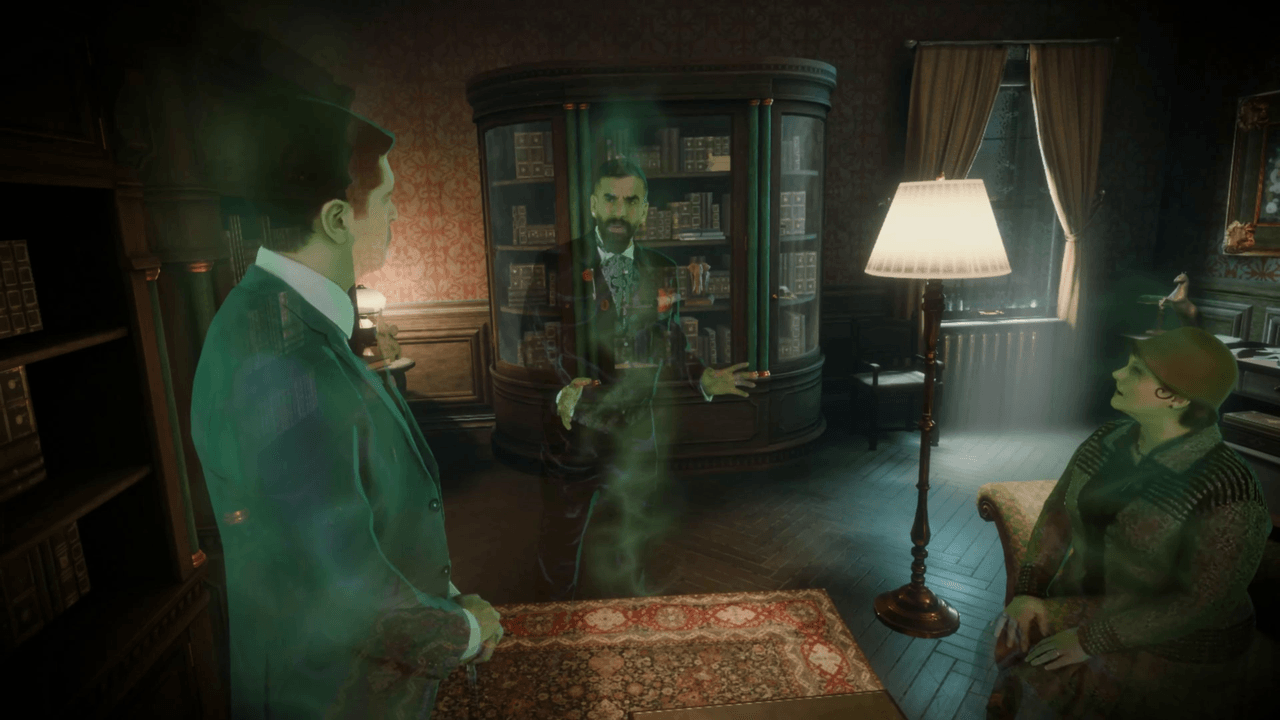
The mansion setting was a perfect fit for the format. A haunted house already invites curiosity, locked doors, and dramatic reveals. Add FMV fragments, moody narration, and rooms that seem staged like miniature theaters, and every hallway starts to feel like a performance. The game is not just asking you to solve puzzles. It is asking you to keep going because the next room might contain a sharper scare, a stranger sight gag, or a more unsettling burst of story.
That’s why the game still reads as unusual now. Its strengths are not the strengths of a cleanly engineered modern puzzle game. They are the strengths of a piece of showmanship that knows exactly how to use curiosity as fuel.
Why the presentation mattered so much
A lesser haunted-house game might have treated atmosphere as background dressing. This one made presentation the central trick.
- The mansion is designed to feel like a sequence of reveals rather than a single navigable space.
- FMV inserts give the game a human face, even when the tone is creepy or exaggerated.
- The room-to-room structure creates a rhythm of anticipation that carries weaker stretches.
- Visual flourishes make even simple transitions feel loaded with intent.
That last point matters more than it sounds. In a game like this, the act of opening a door or entering a new chamber is not trivial. It is part of the theatrical language. The game keeps reminding you that you are in someone else’s carefully arranged nightmare.
Puzzle pacing is the real reason it keeps getting discussed
People often describe old puzzle games as either elegant or obtuse, but The 7th Guest on PC lives in a more interesting middle ground. The puzzle design is not merely there to block progress. It creates a cadence: explore, absorb the mood, hit a puzzle wall, and then push forward into another story beat.
That structure gives the game a strange kind of momentum. The puzzles are the hinges between scenes. They slow you down just enough for the mansion to keep its grip.
Of course, that also means the game can feel uneven. Some puzzles are memorable because they are clever. Others are memorable because they are stubborn. But the pacing is part of the identity, not an accident. The game wants you to linger. It wants you to feel the friction of being trapped in a place that refuses to hand over its secrets quickly.
The mansion works because it turns delay into dread
Modern design often treats delay as something to eliminate. Here, delay is the point.
Every time you stop to solve something, the house breathes around you. You are not racing through a haunted setting; you are stalled inside one. That matters because the suspense in The 7th Guest on PC is not built on combat pressure or reflex stress. It comes from the feeling that the mansion is watching your progress and deciding when to let you continue.
That kind of pacing can be exhausting, but it is also what makes the game distinctive. If the puzzles were merely efficient, the mansion would lose some of its menace. If the FMV were stripped out, the experience would become much more ordinary. The tension lives in the overlap.
FMV spectacle gave the game its odd durability
Full-motion video is often remembered with a little embarrassment, as though the whole era were a string of technical misunderstandings. But The 7th Guest on PC is one of the better arguments for why FMV mattered at all. It gave the game texture. It gave the mansion a sense of authored presence. It made the whole thing feel like a performance unfolding in front of you.
That is also why the game has a long tail. Even people who do not especially love the puzzles tend to remember the vibe. The acting, the visual composition, the dramatic cuts, and the haunted-house melodrama all combine into something that feels larger than the mechanics alone.
It helps that the game never tries to hide its medium. The seams are visible, but that visibility is part of the charm. You can see the era in every room. You can feel the optimism of a moment when computers were being sold not just as tools or toys, but as gateways to a more cinematic kind of play.
A CD-ROM landmark in the most literal sense
Calling The 7th Guest on PC a CD-ROM landmark is not just nostalgic shorthand. The game is landmark-like because it made the format feel culturally legible. It showed what a disc could do when the goal was not simply more data, but a richer kind of presentation.
That does not mean it was the best pure puzzle game of its time. It means it was one of the clearest expressions of a transition point in PC gaming. It captured the excitement of technology becoming spectacle.
Why the haunted-house framing still works
The haunted mansion is one of the most durable settings in game design because it naturally supports secrets, pacing, and escalating reveal. The 7th Guest on PC understood that instinctively. The house is not just a backdrop. It is a structure for curiosity.
Each room feels like a variation on the same promise: there is more to see if you can just get past this obstacle. That simple loop keeps the game from feeling purely episodic. Even when individual puzzles slow the experience, the larger movement through the mansion stays compelling.
The weirdness comes from how seriously the game commits to tone. It is often theatrical, occasionally campy, and always aware that it is trying to create suspense through style. Yet that theatricality is exactly what makes it memorable. The game does not aim for subtlety. It aims for presence.
What modern players still notice first
If you boot up The 7th Guest on PC today, a few things stand out immediately:
- It feels like a hybrid of game, stage play, and haunted tour.
- The pacing is intentionally slower than most modern puzzle adventures.
- The FMV material gives the mansion a bizarrely human quality.
- Its visual identity is stronger than many of its mechanical systems.
- It captures a moment when “interactive” and “cinematic” still felt like a daring combination.
That last point is the one that best explains its reputation. The game is not famous because it solved some timeless design problem. It is famous because it bottled a historical moment: the belief that PCs could become portals to something stranger, grander, and more theatrical than the standard game box promised.
The legacy is bigger than nostalgia
A lot of retro games survive on reputation alone. The 7th Guest on PC survives because it represents a very specific kind of ambition. It is a reminder that game history is full of experiments that feel clumsy in one sense and visionary in another.
Its puzzles can be uneven. Its pacing can be testing. Its FMV can feel quaint. But taken together, those elements form a coherent identity. It is a haunted house built not just from fiction, but from the confidence of early multimedia culture.
That is why it still gets talked about. Not because it is pristine, but because it is unmistakable. You can recognize the moment instantly: the era when CD-ROM spectacle, puzzle friction, and gothic presentation lined up just right and made a computer game feel like a haunted event.
And that, in its own strange way, is the whole legacy of The 7th Guest on PC.
If you remember playing it, or you’re discovering it for the first time, I’d love to hear what stuck with you most in the comments.