

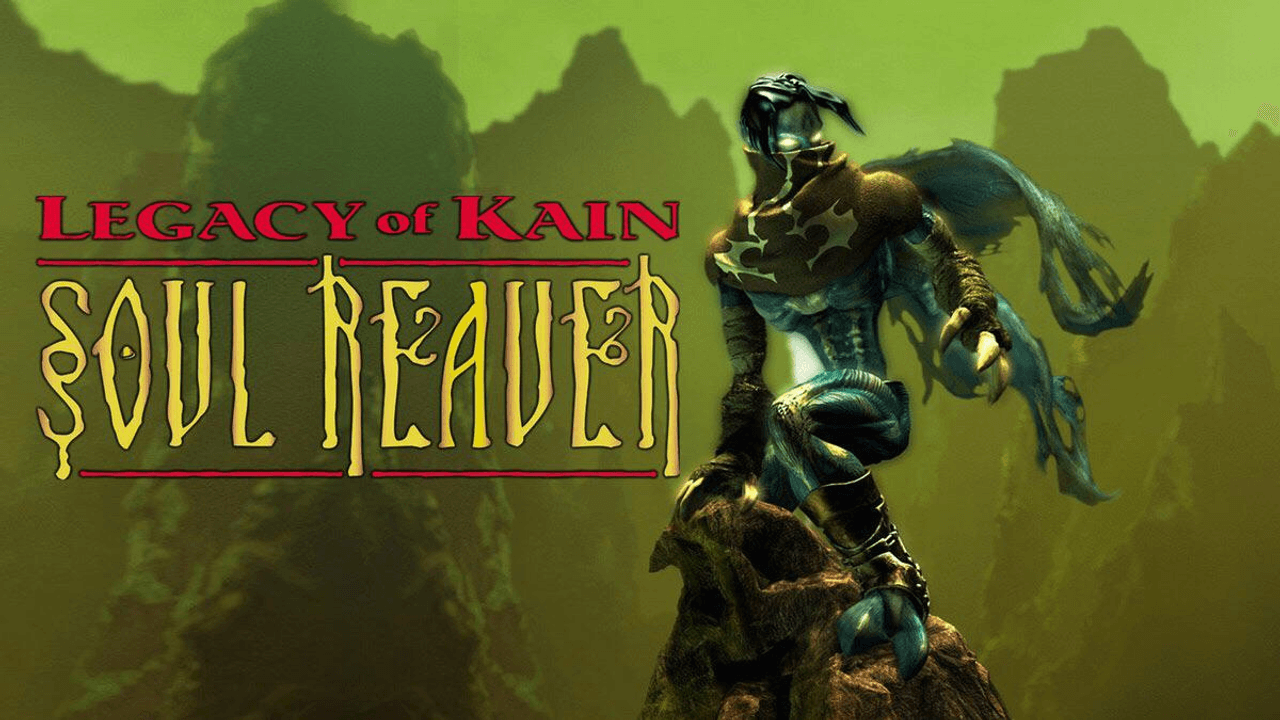
Image credit: Draft web reference from overloadgames.com.br
Why The Legacy of Kain: Soul Reaver on PlayStation Still Feels Ambitious
The first thing I noticed playing The Legacy of Kain: Soul Reaver on PlayStation for the first time is that it does not hurry to impress you. It does not fling mechanics at your face or explain itself with modern certainty. Instead, it asks you to stand inside its world for a minute, absorb the ruin, and accept that moving through it is the point. That patience is either the game’s greatest strength or its most persistent annoyance, depending on how willing you are to meet it halfway.
What surprised me most was not the lore, though the lore is indeed dramatic and gloom-heavy in the old gothic way. It was how much of the experience is built around movement as mood. Raziel does not just cross spaces; he inhabits them differently depending on whether he is in the material or spectral realm. That idea still feels bold, because the game uses it as more than a gimmick. It shapes navigation, puzzle solving, pacing, and even the emotional temperature of each area.
For a first-time player, that ambition matters. So do the rough edges. The question is not whether The Legacy of Kain: Soul Reaver on PlayStation is flawless. It is whether its ideas are still strong enough to carry the friction around them. In many places, they are.
The movement is slow, but not empty
A lot of older action-adventure games are remembered for atmosphere, but movement is where their real character lives. The Legacy of Kain: Soul Reaver on PlayStation understands this in a way that still stands out. Raziel climbs, glides, shimmy-walks, and pulls himself across ledges with a kind of grim ceremony. Every motion feels deliberate. Even when the controls are not especially loose or speedy, the game wants you to feel the body of the character pushing through the space.
That can be frustrating if you expect frictionless modern navigation. Raziel is not a sprinter, and the game does not pretend otherwise. But once you stop measuring it against later action-adventure polish, the deliberate pace starts to read as design intent. The world is built like a maze of broken monuments, flooded halls, and vertical traps. Fast movement would soften the place. Slow movement makes the environment feel heavier, older, and more hostile.
This is also where the game’s camera and collision quirks become impossible to ignore. There are moments where the game’s own architecture seems to fight your sense of direction. But even that tension is part of the experience: this is a world that resists mastery until you learn to read its surfaces and angles.
Why the traversal still works
The strongest movement systems usually give you a pleasure loop: you learn the rules, then you start thinking one room ahead. The Legacy of Kain: Soul Reaver on PlayStation does that through environmental reading rather than twitch skill. You are encouraged to notice:
- where a ledge can be climbed from a distance
- which wall surfaces invite shimming or jump timing
- how the spectral realm changes paths you thought were fixed
- when a drop is a shortcut and when it is a mistake
That kind of traversal rewards patience and attention. It also makes the game feel tactile in a way that many more fluent games don’t. You are always aware of stone, height, and distance.
The realm shift is still the game’s smartest idea
If there is one mechanic that justifies all the surrounding roughness, it is the constant shifting between the material and spectral realms. The Legacy of Kain: Soul Reaver on PlayStation does not treat this as a simple alternate mode. It is the structure that the entire game is built on.
The material world is the one where doors matter, gates lock, puzzles have physical solutions, and enemies feel like obstacles with shape and purpose. The spectral world is more unstable. Architecture warps. Space becomes stranger. Paths that are impossible in one realm may open in the other, and the act of shifting becomes a kind of spatial argument with the game itself.
What makes this still impressive is that the shift changes how you think, not just where you stand. In a lesser game, a second realm would be a palette swap with one or two exclusive tricks. Here, it is the key to the whole logic of exploration. It makes every room feel like a question with two answers.
That said, the mechanic can also undercut momentum. If you are backtracking through a stretch of dim corridors and you know the solution is hidden behind a realm swap, there is a real chance of fatigue setting in. The game makes you sit with its own rules. Sometimes that feels profound. Sometimes it feels like being asked to solve a puzzle by walking more slowly.
Puzzle structure: elegant ideas, uneven delivery
The puzzle design in The Legacy of Kain: Soul Reaver on PlayStation is at its best when it asks you to read space rather than memorize steps. A blocked passage, a raised platform, or a locked route becomes a spatial puzzle once you factor in the spectral realm. That approach gives the game a clean conceptual identity. You are not just searching for keys; you are learning the physics of the world.
The problem is that the game does not always communicate its intentions as clearly as it thinks it does. Some puzzles feel satisfying because they emerge naturally from the environment. Others become more about wrestling with the controls, camera, or pathfinding than about actually thinking.
That unevenness matters because the game asks for a lot of revision. You move back and forth between areas, test states, revisit rooms, and mentally map the shape of a place that rarely reveals itself all at once. When it lands, it feels smart and almost architectural. When it misses, it can feel like the game is hiding a simple answer behind an exhausting amount of traversal.
Still, I found the overall structure more interesting than most action-adventure puzzle systems of its era. It gives the game an identity beyond combat or lore. It makes the environment feel authored rather than merely decorated.
Mood does a lot of the heavy lifting
The storytelling in The Legacy of Kain: Soul Reaver on PlayStation is theatrical, mournful, and committed to its own shadowy seriousness. If you come in without nostalgia, that can be a double-edged sword. The dialogue is often grand to the point of excess. The villainy is operatic. Everyone seems to speak as if the world itself is a betrayal.
And yet the tone works because it is so consistent. The game never asks you to switch emotional registers. It lives in decay, vengeance, and doomed grandeur from start to finish. That coherence gives the world a strange credibility, even when the writing tips into excess.
The environments do almost as much storytelling as the script. Broken temples, dead courtyards, submerged chambers, and crumbling fortifications all imply a civilization that is beyond repair. The realm shift deepens that feeling. One world is physically ruined; the other feels spiritually unfinished. The contrast gives the whole game a haunted duality.
There is also real pleasure in how little the game rushes you through its atmosphere. Modern design often treats mood as something to be layered on top of efficient systems. Here, mood is the system. You are not pausing between story beats to get back to the action. The wandering, climbing, and shifting are part of the atmosphere.
Combat is serviceable, not the star
A first-time player has to be honest about this: combat is not why The Legacy of Kain: Soul Reaver on PlayStation endures.
The melee encounters can feel functional, and sometimes the game’s emphasis on positioning and finishers gives them a sharper shape than expected. But they are not deep enough to carry the experience, and they are not especially elegant compared with the rest of the design. The game is at its best when combat is folded into exploration rather than treated as its centerpiece.
That imbalance is not necessarily a flaw. It is simply revealing. The game is interested in terrain, mood, and transformation first. Fighting is a punctuation mark. When combat gets in the way of the larger movement-and-puzzle loop, you start to see the cracks. When it stays secondary, the whole thing feels more coherent.
What a modern first-time player will probably notice
A newcomer is likely to react to The Legacy of Kain: Soul Reaver on PlayStation in one of two ways: admiration for its ideas, or impatience with its friction. Both reactions are fair.
Here is what still feels striking:
- the linked realm structure, which remains genuinely distinctive
- the heavy, deliberate traversal, which gives the world personality
- the oppressive mood, which the game sustains with confidence
- the way exploration, lore, and puzzle logic are woven together
Here is what feels dated or rough:
- the control precision, which can be stubborn
- the camera, which sometimes makes simple movement feel more complicated than it should
- the pacing, which can become repetitive during longer backtracking stretches
- the combat, which rarely rises to the level of the rest of the design
That balance is why the game is still worth talking about. It is not preserved by nostalgia alone. It survives because its central ideas are still unusual, and still coherent enough to matter.
So does the ambition outweigh the rough edges?
For me, yes — but not by a huge margin.
The Legacy of Kain: Soul Reaver on PlayStation is one of those games where the ambition is visible in almost every room. It wants to make movement expressive, space mutable, and atmosphere inseparable from play. Those goals still hold up. They still feel specific. They still make the game easy to identify in memory, even if you are only now seeing it for the first time.
But the game also asks you to accept a lot of friction in exchange. Some of that friction deepens the experience. Some of it is just old game design being old game design. The reason the game still matters is that the former outweighs the latter more often than you might expect.
If you come to it expecting a sleek relic, you may find it stubborn. If you come to it looking for a gothic action-adventure that built its identity around shifting worlds and deliberate movement, it still has a lot to offer.
That is the real takeaway: The Legacy of Kain: Soul Reaver on PlayStation is not graceful in the modern sense, but it is unusually purposeful. And purpose ages better than polish sometimes does.
If you’ve played it before, or you’re coming to it fresh, I’d love to hear whether its mood and movement still work for you — share your thoughts in the comments.